
Source: Gulf of Tonkin incident | Definition, Date, Summary, Significance, & Facts | Britannica
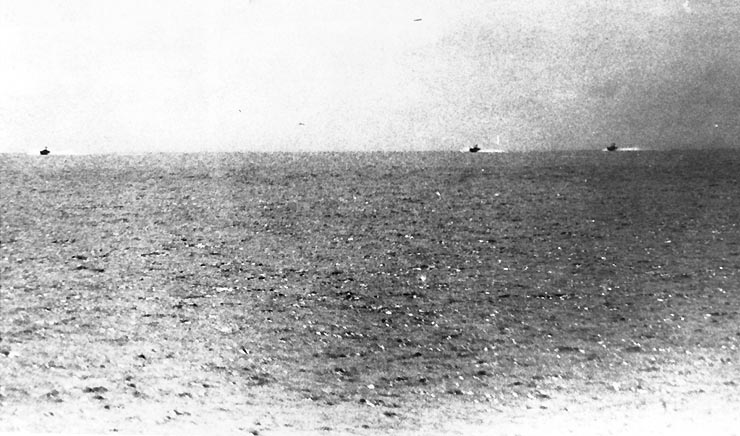
Gulf of Tonkin incident, complex naval event in the Gulf of Tonkin, off the coast of Vietnam, that was presented to the U.S. Congress on August 5, 1964, as two unprovoked attacks by North Vietnamese torpedo boats on the destroyers Maddox and Turner Joy of the U.S. Seventh Fleet and that led to the Gulf of Tonkin Resolution, which allowed President Lyndon B. Johnson to greatly escalate U.S. military involvement in the Vietnam War.
The destroyers were sent to the area in 1964 in order to conduct reconnaissance and to intercept North Vietnamese communications in support of South Vietnamese war efforts. At the same time, the Vietnamese navy was undertaking a mission under the oversight of the U.S. Department of Defense to attack radar stations, bridges, and other such targets along North Vietnam’s coasts. On the night of July 30–31, 1964, South Vietnamese commandos attacked North Vietnamese radar and military installations on Hon Me and Hon Ngu islands in the Gulf of Tonkin. The Maddox, on patrol in the area but probably unaware of the raids that had taken place, observed torpedo boats sent out in pursuit of the South Vietnamese vessels and thus withdrew, but it returned on August 1. The following day, the Maddox found that it was being approached by three North Vietnamese torpedo boats. The Maddox fired warning shots, but the torpedo boats continued and opened fire in return. The Maddox called in air support from a nearby carrier, the Ticonderoga. In the ensuing firefight, one of the torpedo boats was badly damaged, but the Maddox escaped harm.




 DAVE DOES HISTORY
Leave a comment