
 Source: The Admission of North Carolina and Rhode Island into the Union – Journal of the American Revolution
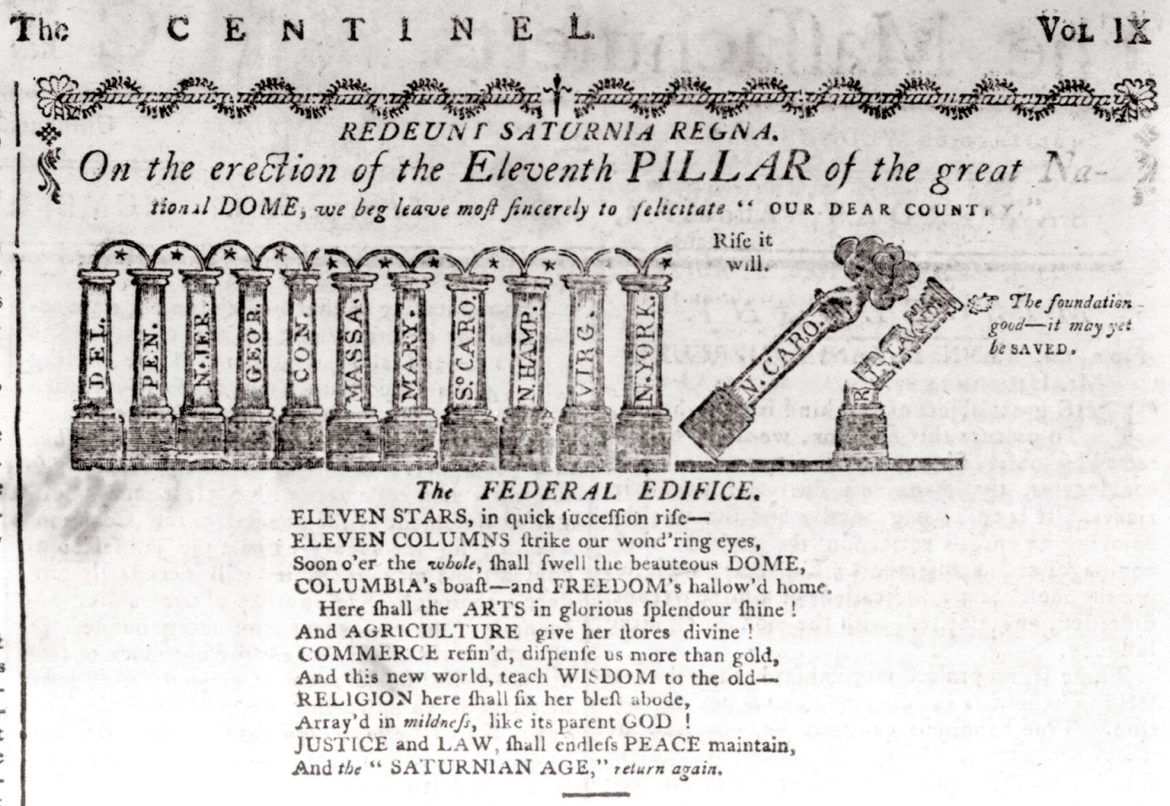
On November 21, 1789, the people of the state of North Carolina ratified the United States Constitution. On May 29, 1790, the people of the State of Rhode Island also ratified the U.S. Constitution. Yet, despite the good-faith acts of these two states and their citizens, the respective admission into the United States of both polities was characterized by an aberration which rendered their admittance constitutionally suspect. More specifically, by the time North Carolina and Rhode Island ratified the Constitution, it was already in effect. Both states were, therefore, independent political societies that had no constitutional relationship with the United States. Accordingly, under the express terms of Article IV, §3, of the U.S. Constitution, it was necessary to admit them by an Act of Congress.
Congress, however, inexplicably neglected to perform the constitutional due diligence required of it and did not pass legislation to admit either North Carolina or Rhode Island, choosing instead to acquiescently accept their respective ratifications as the legal instrument of admission. By allowing the ratifications to stand, Congress manifestly failed to observe the carefully-specified requirements for the admission of new states. Because the Constitution was in effect and operative, its provisions were ineluctably and indisputably the supreme law of the land…




 DAVE DOES HISTORY
Leave a comment