
Tuesday, October 20, 2026
Episode: The Times That Try Men’s Souls Thomas Paine, The American Crisis, and the Fight to Keep the Revolution Alive
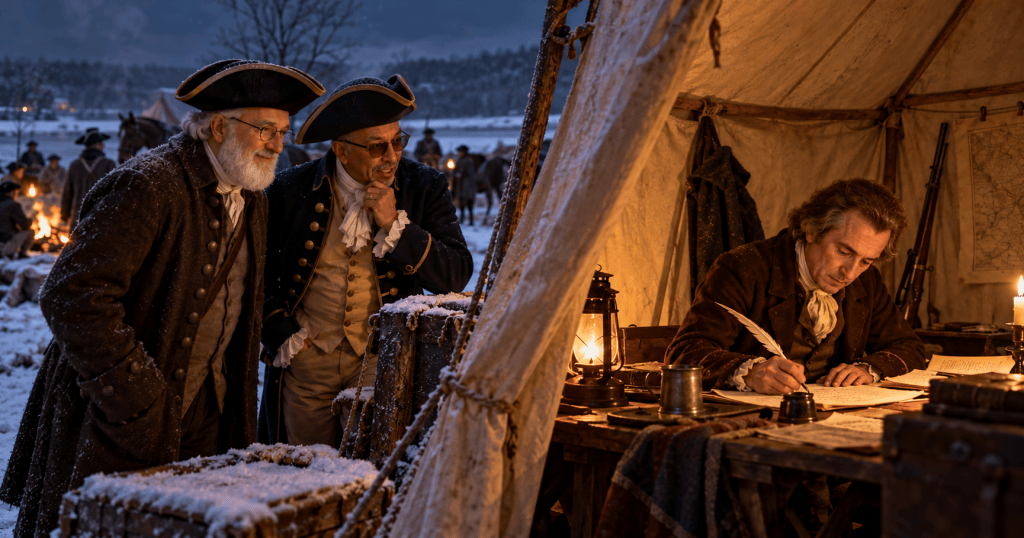
Central Theme: In January 1776, Thomas Paine helped convince Americans to seek independence. By December, with Washington’s army retreating and the Revolution in danger of collapse, Paine faced a different challenge: convincing Americans that independence was still worth fighting for.
INTRO MIX
SEGMENT I
Approximately 12 minutes
- December 1776: Washington’s army has retreated across New Jersey. The Revolution faces a serious crisis.
- Thomas Paine’s earlier success with Common Sense and his changing role in the Revolution.
- December 19, 1776: Publication of The American Crisis, Number I.
- The famous opening: “These are the times that try men’s souls.”
- The “summer soldier” and “sunshine patriot”: Who remains committed when the cause becomes difficult?
- Paine’s appeals to patriotism, personal sacrifice, honor, and faith.
Discussion: Why did Americans need to be persuaded to continue fighting only five months after declaring independence?
SEGMENT 2
Approximately 12 minutes
- Paine’s argument that British authority had become tyranny.
- Liberty comes at a price. Why does Paine believe sacrifice gives freedom its value?
- His condemnation of Loyalists and those unwilling to support independence.
- The tavern keeper who wanted peace in his own lifetime rather than securing it for his children.
- Paine’s firsthand account of Washington’s retreat through New Jersey.
- How Paine used fear, shame, religion, and patriotism to encourage resistance.
Discussion: Was Paine offering reasoned political persuasion, wartime propaganda, or some combination of both?
SEGMENT 3
Approximately 12 minutes
- How Paine’s writings reached ordinary Americans through newspapers, pamphlets, and public readings.
- Why his straightforward language was so effective.
- The famous account of Washington having The American Crisis read to his troops before Trenton. A popular tradition, but the specific event lacks contemporary confirmation.
- The relationship between Paine’s words and the American victories at Trenton and Princeton.
- The American Crisis continued throughout the war, with subsequent essays responding to changing circumstances.
- The limits of political writing: words could inspire soldiers, but could not provide supplies or win battles by themselves.
Discussion: Can words genuinely change the course of a war, or do they merely reflect what people already believe?
SEGMENT 4
Approximately 12 minutes
- The difference between convincing people to begin a revolution and convincing them to finish one.
- Paine’s writings as a contemporary record of the Revolution’s uncertainty.
- What The American Crisis reveals about citizenship, sacrifice, political disagreement, and national commitment.
- The distinction between Paine’s historical observations and his political advocacy.
- The lasting influence of his language on American political thought.
- The 250th anniversary of The American Crisis in December 2026.
Closing Discussion: Would the American Revolution have survived without Thomas Paine? What does his work tell us about the relationship between public opinion and national survival?
Production note for Bill: This episode focuses primarily on The American Crisis, Number I, rather than repeating the military history of Washington’s New Jersey campaign that we’ve already covered. The emphasis is on Paine’s arguments, how he communicated them, and their significance to the survival of the Revolution. Segments are designed for approximately 12 minutes each, leaving room for introductions, transitions, and listener questions.
Primary sources: Thomas Paine, The American Crisis, Number I (1776); The Writings of Thomas Paine, Volume I. Supporting historical context from Rick Atkinson, The British Are Coming, and the accompanying episode notes and outline.

