
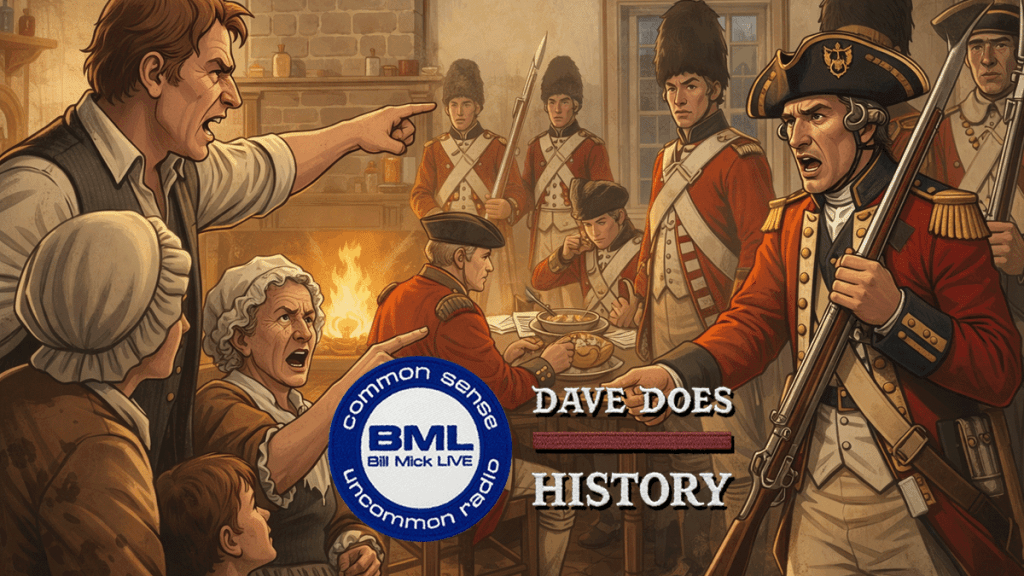
This week’s installment of Dave Does History on Bill Mick Live unfolded less like a quiet trip through the archives and more like a reminder that the past enjoys tapping modern listeners on the shoulder to say that old problems have a way of returning. Dave Bowman and Bill Mick took their audience into one of the Declaration of Independence’s most pointed grievances, the one that questions who controls judges, who pays them, and what happens when justice itself becomes a bargaining chip. It felt uncomfortably familiar, which was part of the point.

The conversation opened with a modern idea that has been floating around for years, the concept of professional juries. On the surface it seems reasonable until the question is asked, who signs the paycheck. The founders worried about arrangements like that, and Jefferson said so directly when he wrote that the King made judges dependent on his will for their office and for their salaries.
From there Dave turned to the story of Peter Oliver, a Massachusetts judge who might have lived out a quiet life if not for the moment King George III decided that colonial judges would no longer receive their pay from the colonies. The King would handle it personally. Oliver accepted the change, believing he could remain impartial. The public did not believe that, and the political temperature rose. The Massachusetts House moved to impeach him. Oliver refused to give up the royal salary. The Assembly refused to back down. Eventually, the relationship between colony and Crown split along the same fracture lines that Oliver himself exposed.
Dave then widened the lens to North Carolina, a colony that spent more than three years without a functioning court system because the King withheld assent to a law he disliked. What historians describe as obstruction, Dave framed as administrative hardball that froze justice entirely. Debts could not be collected. Serious trials could not be held. Ordinary citizens learned that the judicial system could be shut down from afar with the stroke of a royal pen.
Throughout the episode Dave returned to the idea that these conflicts are not dusty relics. They echo into the present. The founders argued about judicial independence. Americans argue about it still. Do citizens trust judges. Do they understand the forces that shape the judiciary. Do they notice when politics and the courts become entangled.
The episode served as a reminder that the struggle between power and principle never really stops. Jefferson and his contemporaries fought it in their time. Dave and Bill walked listeners through those same questions today, showing that the concerns that helped spark a revolution remain very much alive.



 DAVE DOES HISTORY
Leave a comment