
In the wooded uplands of South Carolina, where old trading paths crossed and the wild Cherokee frontier began, there stood a small village with a curious name: Ninety Six. It was never meant to be the scene of great armies or grand declarations, yet it became both a spark and a symbol of the American Revolution’s southern fury. The name, derived from its supposed distance of ninety six miles to the Cherokee town of Keowee, came to represent something far greater than a number on a map. It was a vital crossroads, a courthouse, and a trading post that served as a heartbeat of the backcountry. Whoever controlled Ninety Six held the keys to South Carolina’s wild and divided interior. During the Revolution, both Loyalists and Patriots understood that truth all too well.
Ninety Six was the site of two extraordinary clashes that mirrored the broader story of the war itself. In November 1775, it witnessed the first land battle of the Revolution south of New England. Six years later, it endured the longest siege in the entire war, a 28 day standoff between British Loyalists and American Patriots. Between those two sieges lay years of bitterness, betrayal, and blood. The Revolution in South Carolina was not just a fight for independence but a civil war among neighbors. Nowhere did that truth ring louder than in Ninety Six.
Before the smoke of rebellion ever reached its fields, the backcountry of South Carolina was already restless. The planters and merchants along the coast, centered around Charlestown, held power and privilege. They levied taxes and controlled the colonial government, while those living inland felt ignored and exploited. The backcountry settlers, tough independent farmers and traders, believed they were taxed without representation not only by London but by their own colonial elites. They were Scots Irish Presbyterians, Germans, and frontier folk, often resentful of Anglican authority. When the Continental Association formed in June 1775 to enforce the boycott of British goods, it deepened those divisions. To the Patriots, it was a moral stand against tyranny. To the Loyalists, it was a reckless act of rebellion.
Three Patriot militia regiments were raised in the backcountry, but Loyalists quickly mobilized their own under Colonel Thomas Fletchall, Major Joseph Robinson, and Moses Kirkland. These men saw the rebellion as a betrayal of lawful order and believed their loyalty to the King was loyalty to stability. Early confrontations soon followed. On July 12, 1775, Patriot forces seized Fort Charlotte on the Savannah River. Only days later, Captain Moses Kirkland switched sides, convincing his men to surrender nearby Fort Ninety Six to the Loyalists.
The Patriots sent out emissaries to calm the storm. William Henry Drayton, Reverend William Tenant, and Reverend Oliver Hart traveled through the backcountry, preaching unity under the revolutionary cause. But their efforts fell flat. The settlers were not easily persuaded to choose sides in a distant quarrel between London and Charleston. The situation grew so tense that both sides sought a temporary peace. On September 16, 1775, Drayton and Fletchall signed the Treaty of Ninety Six. The agreement pledged neutrality: Loyalists would not take up arms against the Patriots, and in return, the Patriots would respect those who declined to join The Association. For a brief moment, it seemed the storm might pass.
It did not. By November, the uneasy peace was broken. The Patriot Council of Safety in Charleston ordered the arrest of Robert Cunningham, a leading Loyalist, accusing him of inciting resistance. They also sent a shipment of gunpowder and ammunition westward, officially to supply the Cherokee, who were potential allies. To the Loyalists, it looked like the Patriots were arming the Indians against them. Outraged, Patrick Cunningham, Robert’s brother, and Major Robinson rallied their men to intercept the wagons. They captured the shipment bound for the Cherokee town of Keowee, and with that act, civil war in South Carolina began.
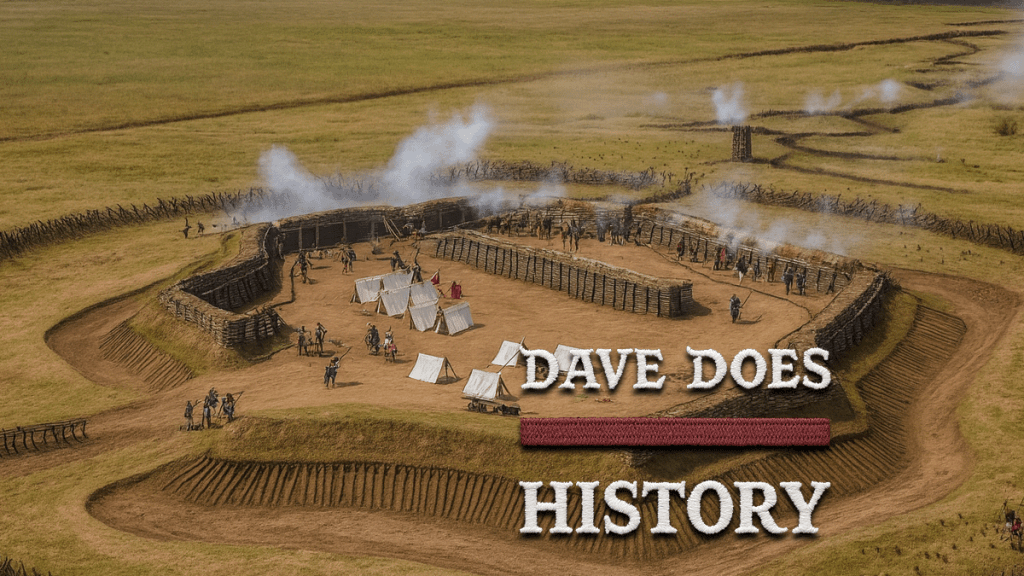
Colonel Andrew Williamson of the Patriot militia took it upon himself to restore order. Hearing of the Loyalist mobilization, he gathered about 560 men and marched toward Ninety Six. Learning that the Loyalists were already on the move, he stopped at a plantation known as Savage’s Old Fields, owned by John Savage, and began building defenses. Using fence rails, barn wood, and straw, his men hastily threw together a crude fort. It was more desperation than design, but it would have to do.
On November 19, 1775, a force of between 1,500 and 2,000 Loyalists under Patrick Cunningham and Major Robinson arrived. They demanded Williamson surrender. He refused. After a failed parley, the Loyalists seized two Patriot militiamen, and gunfire erupted. The Loyalists occupied a nearby brick jail and fired on the Patriot position. Williamson’s men returned fire with muskets and two small swivel guns, which proved unexpectedly effective.
The Loyalists tried everything to drive the Patriots out. They attempted to set the fort ablaze, but the ground was too wet from recent rains. They rolled forward a makeshift wagon shield to protect advancing troops, but it fell apart under Patriot fire. The battle devolved into a chaotic exchange of volleys that lasted through the night. For two days, both sides endured sporadic attacks and counterattacks, the air thick with gun smoke and tension.
By November 21, Williamson’s men were nearly out of ammunition. They had only thirty pounds of powder left, barely enough for one more serious fight. Williamson decided to gamble on a night raid to break the siege. But fate intervened. A deserter named Emanuel Miller slipped away and warned the Loyalists of the plan. At the same time, news arrived that Colonel Richard Richardson was leading a massive Patriot force from the Lowcountry toward the backcountry. Fearing encirclement, the Loyalists sought a cease fire.
On November 21, the two sides agreed to a truce. The next day, a treaty was signed ending hostilities for twenty days. Williamson agreed to dismantle his fort, and both sides released their prisoners. The battle had claimed few lives, only one Patriot, James Birmingham, was killed, with a dozen wounded, but it was enough to ignite a lasting bitterness. The siege at Savage’s Old Fields marked the first real land battle of the Revolution south of New England. It also marked the beginning of a brutal internal war that would consume South Carolina.
After the truce, Richardson’s Snow Campaign swept through the backcountry. With more than 4,000 Patriot militia, he captured or dispersed the Loyalists, including Colonel Fletchall, and restored nominal Patriot control. For several years, the backcountry remained quiet, but the peace was deceptive. When the British shifted their focus south after the fall of Charleston in 1780, old loyalties reawakened. The backcountry became a battleground again, this time with professional armies and fortified positions.
Recognizing Ninety Six’s importance, the British fortified it heavily. Under their direction, a complex of defenses was built: a stockade fort, earthworks, and an eight pointed Star Fort of remarkable design. The Star Fort was a feat of engineering, its angled bastions allowing defenders to fire in multiple directions and cover every approach. It was built from earth rather than stone, but its geometry and sloped walls gave it surprising strength. It stands today as the only surviving example of its kind from the war.
By May 1781, the Revolutionary War in the South had reached a turning point. Lord Cornwallis had moved north into Virginia, leaving smaller British garrisons to hold the Carolinas. General Nathanael Greene, commanding the southern Continental Army, saw an opportunity. His strategy was simple: drive the British from their inland outposts and cut them off from their coastal supply lines. Ninety Six was one of the most important of those outposts. Greene knew it had to fall.
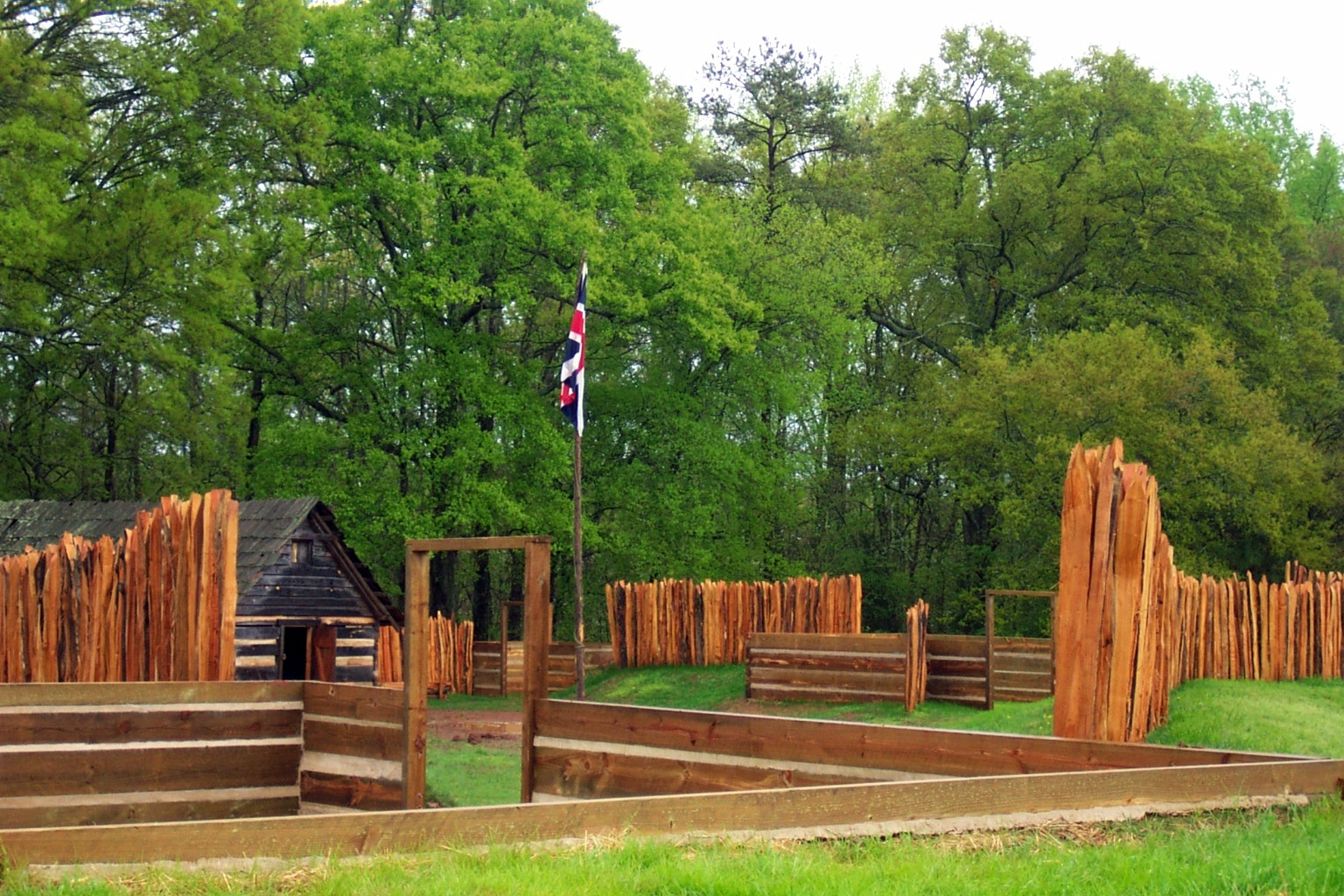
Inside Ninety Six, the British garrison consisted of about 1,274 men under Lieutenant Colonel John Harris Cruger, a capable Loyalist officer. Greene approached with 1,074 Continentals and militia. The siege began around May 22, 1781. Greene’s engineers, led by the Polish patriot Tadeusz Kosciuszko, began the methodical process of besieging the Star Fort. Trench by trench, they dug zigzag approaches toward the British lines, advancing their artillery and riflemen closer each day. The Loyalists held their fire until the Patriots came within range, then unleashed musket and cannon fire to slow the digging.
Kosciuszko, ever the innovator, conceived a daring plan. He began tunneling a mine toward the fort, intending to plant explosives under the British works and blow a breach in the defenses. It was the only military mine constructed during the entire Revolutionary War. The work was slow and dangerous, but it showed the technical skill and determination of Greene’s army. Meanwhile, the Loyalists dug counter trenches and managed to maintain control of the Spring Branch water source, denying Greene one of his key objectives.
On June 8, Greene’s army was reinforced by Lieutenant Colonel Henry “Light Horse Harry” Lee and Andrew Pickens, who brought 550 men fresh from victory at Augusta. Lee directed his attention toward the smaller Stockade Fort while Greene continued to focus on the Star Fort. The siege tightened. Trenches crept closer. The Patriots built a wooden tower from which sharpshooters fired down into the British works. Yet despite the pressure, Cruger’s men held firm.
Then came troubling news. British reinforcements were marching north from Charleston to relieve the garrison. Greene realized time was running out. On June 18, he decided to risk everything in a final assault. At dawn, the Patriots attacked. Lee’s men overran the Stockade Fort after a fierce fight, while the Continentals stormed the Star Fort’s outer defenses, tearing sandbags from the parapets and driving deep into the works. For a few moments, it looked as though victory was within reach.
But Cruger’s Loyalists rallied. With bayonets and clubbed muskets, they surged forward, pushing the attackers back. The fighting was savage, hand to hand, and desperate. Greene watched from the trenches as his men were repulsed again and again. After several hours, he called off the attack. The Americans had suffered 147 casualties. The British and Loyalists lost around 85.
Though Cruger held the fort, Greene’s campaign was far from a failure. The siege had drained the garrison and isolated the post. Within weeks, Cruger and his men abandoned Ninety Six, destroying the fortifications as they left. Greene’s larger objective, to break British control of the backcountry, was achieved. The British soon found themselves confined to Charleston and Savannah. Ninety Six, once a symbol of Loyalist strength, was reduced to ruins.
In the aftermath, the town briefly revived. Some settlers returned, renaming it Cambridge in 1787. But the prosperity of the old trading crossroads never truly came back. By the mid 1800s, the place was largely deserted. What remained were earthworks, ditches, and the outlines of the Star Fort, all slowly reclaimed by the Carolina pines.
Today, the Ninety Six National Historic Site preserves that landscape. It is one of the most intact Revolutionary War sites in America, with archaeological remnants of its trading post origins, its colonial courthouse, and its wartime defenses. The Star Fort’s angled bastions still rise from the earth, weathered but unmistakable. The line of Kosciuszko’s mine remains visible, a silent reminder of ingenuity born in desperation. Visitors can still walk the same ground where Andrew Williamson’s makeshift fort once stood and where Nathanael Greene’s Continentals dug their trenches toward the Loyalist walls.
The story of Ninety Six is not just about strategy or fortifications. It is about neighbors divided by loyalty and conscience, about how the Revolution in the South was not clean lines of blue and red but gray and blood streaked. The first siege at Savage’s Old Fields revealed how fragile unity could be. The second siege at the Star Fort showed how stubborn courage could outlast even failure. Both together remind us that liberty in the backcountry was not born in grand cities or among famous names but in muddy fields and crude forts built from fence rails.
The Revolution in the South was, in many ways, America’s first civil war. It pitted brothers against brothers, friends against friends. Ninety Six was its microcosm. The Loyalists who fought there did not see themselves as traitors but as defenders of order. The Patriots who fought them did not see rebellion but redemption. Between them lay all the chaos and conviction of a people learning what independence really meant.
In the end, Ninety Six stands as both a beginning and an ending. It was the site of the South’s first battle and its longest siege. It began as a courthouse and trading town on the edge of the wilderness and ended as a fortified ruin, a testament to how far the war had reached into every corner of the colonies.
Its legacy remains in the earthworks that still guard the field, in the artifacts buried beneath the soil, and in the memory of men who fought there, some for a king, some for a cause, and all for their idea of home. Ninety Six is a reminder that the American Revolution was not just fought to win a nation but to decide what kind of nation it would become.

 DAVE DOES HISTORY
Leave a comment