
He is the modern President because he decided to be one. That is the shortest way to say it. Theodore Roosevelt took an office that had been sleepwalking through the late nineteenth century and gave it lungs, legs, and a taste for altitude. He moved the center of American politics out of the cloakrooms and into the White House, then out of the White House and into the public square. He did it with a restless mind, a moral argument about fairness, and a willingness to use the lawful powers of the executive with energy that made old party bosses blink. Call it the Square Deal at home and the Big Stick abroad. It was one program with two faces. Reform that protected the many from the few. Strength that kept the peace by making troublemakers calculate the cost. That is the frame. The life that built it is the story.
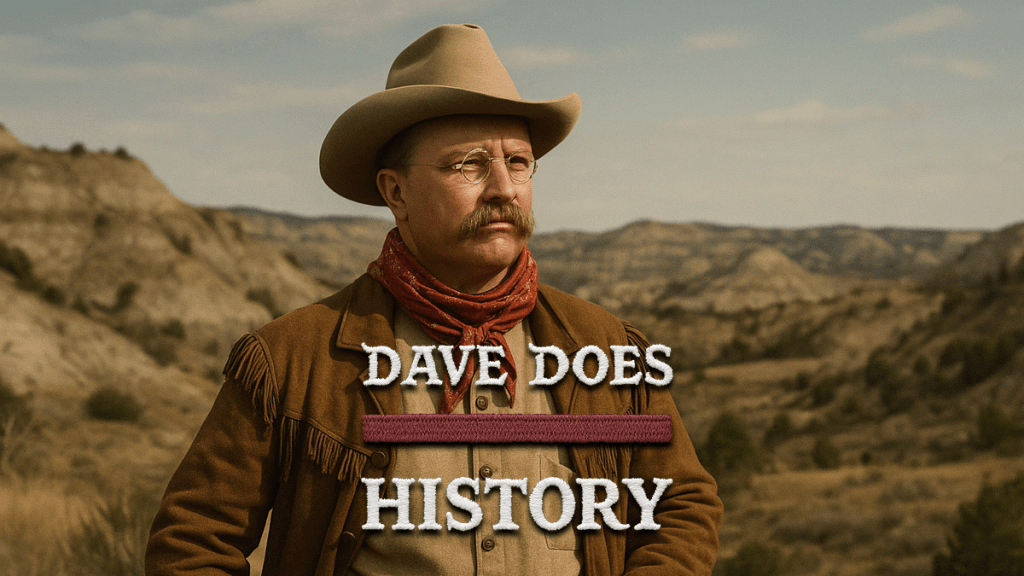
He arrived in this world on October 27, 1858, a small boy with a bad set of lungs and a large set of eyes. New York City was his classroom. Asthma tried to keep him still. He refused. He studied animals, people, and politics with the same curiosity. When he found his body was weak, he set about making it strong. He trained with dumbbells and bars. He hiked. He boxed. He wrote that one must strive for a strenuous life, not as a slogan, but as a survival plan. The lesson stuck. Difficulty did not frighten him because he went out looking for it and learned to manage it.
Harvard polished the mind that the streets had sharpened. He read law and history, tried natural science for a time, and fell in love with words and their power to move men. In 1880 he married Alice Hathaway Lee. Four years later fate hit him with a hammer. On the same cold February day of 1884 his mother died and then his wife died. He put a black cross in his diary and wrote a sentence that cut like ice. The pain drove him west. He needed distance and he needed work.
The Badlands of Dakota gave him both. He bought cattle. He rode fence lines. He punched out thieves and swore in deputies. He learned what a river flood can do and what a winter can take away. He failed at ranching when the blizzards killed his herds, but he did not fail at becoming the kind of man who could keep moving when plans collapse. The plains toughened his sense of duty. They also gave him a taste for the romance of the American landscape that later became policy rather than poetry. He came back east lean, confident, and determined to put that energy to civic use.
He married Edith Kermit Carow in 1886. Their home filled with six children and the lively chaos he adored. Public work matched the home at a different temperature. He had already served in the New York Assembly. He had already made enemies by attacking corruption. He took a federal job on the Civil Service Commission and treated it like a crusade. The spoils system had corroded the government. He pushed merit. He fought patronage. Then he took command of the New York City Police Board and shook it until the coins stopped rattling. Night patrols, honest examinations, rules enforced on everyone rather than on opponents alone. Old line machine men gritted their teeth. Citizens began to notice that the law was real again.
He brought that same vigor to Washington as Assistant Secretary of the Navy in 1897. He saw what sea power meant in the age of steam and steel. He pushed preparation. He put the fleet on alert after the Maine exploded in Havana Harbor. When war with Spain came, he left his desk and went to where the bullets were. The Rough Riders were a strange and brilliant idea that matched the moment. Ivy League polo men rode beside cowboys and New Mexico trackers. He led from the front at Kettle Hill and San Juan Heights and came home famous, which he never bothered to hide but did try to use.
The governorship of New York followed in 1898. He made party bosses miserable by acting like the voters were the people he worked for. Tom Platt wanted peace, not headlines. Roosevelt wanted clean government and rules that constrained big money. Platt and national fixers like Mark Hanna thought they had found a way to remove the problem without a fistfight. Put him on the ticket with McKinley in 1900. Move him up and out. Make him Vice President. He will sit. He did not. McKinley was assassinated in September 1901. Roosevelt took the oath and the country got a President who did not believe in small uses of large authority.
His governing idea was simple enough to write on the back of an envelope. Fair play for ordinary Americans. A square deal rather than a crooked bargain. Government as the instrument that could restrain predatory wealth and keep the checks honest. He had watched the great trusts manipulate markets and politics. He had watched railroads hand out rebates to favored shippers and squeeze the rest. He did not hate enterprise. He hated privilege that called itself enterprise. So he used the law.
The Elkins Act in 1903 hammered the rebate racket and gave the Interstate Commerce Commission the ability to make those rules mean something. The Hepburn Act in 1906 lifted the ICC from a weak forum to a real regulator with power to set maximum rates. The Department of Commerce and Labor, established in 1903, provided a home for federal oversight of corporate behavior. He wanted sunlight and he wanted enforcement. When a case had to go to court, he sent it there. Northern Securities learned the lesson. Other giants took note and began to accept regulation as the price of running big enterprises in a republic.
Consumers needed protection as much as shippers. The Pure Food and Drug Act and the Meat Inspection Act of 1906 did not write themselves. They came from muckraking journalists, outraged citizens, and a White House that believed the label on a bottle should tell the truth. Vaccines and serums needed standards as well. The Biologics Control Act of 1902 began the long federal role in setting those standards and saving lives quietly, which is how honest public health work usually succeeds.
Labor disputes often ended with troops and truncheons. Roosevelt tried another way in the coal strike of 1902. The country needed heat. The miners needed a living and respect at the bargaining table. He called the parties to the White House. He pried open ground where trust had collapsed. He did not command a settlement. He created one. That set a public expectation that Presidents would not be neutral when the public interest itself was hostage. He supported safety appliances on railroads, made carriers liable when they injured their own employees, and pushed for laws that cleaned up the worst abuses. He even stretched the Union pension program by declaring old age a disability for Civil War veterans, a policy choice that looks like the first rough plank in a broader social insurance bridge.
Conservation is where the boy who loved birds and the man who studied watersheds finally fused. He did not treat nature as a shrine or as loot. He treated it as a trust. Wise use was the phrase. Leave some places untouched. Manage others so that timber, water, and soils would serve people now without ruining the inheritance of those not yet born. He created the United States Forest Service in 1905 and set aside 150 national forests. He launched the Reclamation Service in 1902 and built projects that turned deserts into fields. He established federal bird reserves, starting with Pelican Island in 1903, because a bird on a rookery has a claim the market should not always be allowed to erase. He signed the Antiquities Act in 1906 and used it with cheerful regularity. Eighteen national monuments followed, including the Grand Canyon, where he warned that man can only mar what the ages have made. Count the totals and the scale becomes clear. Roughly 230 million acres were shielded from the kind of appetite that goes through a continent and leaves stumps, gullies, and regrets.
Abroad, his rule was not to go looking for fights and not to pretend weakness is peaceful. He liked the old proverb about speaking softly and carrying a big stick. To him that meant diplomacy backed by force and law rather than force advertised for its own sake. The Panama Canal turned that theory into geography. Colombia would not make a deal. Panamanian separatists did not want to be ruled from Bogotá. Warships showed up, Panama declared independence on November 3, 1903, and the Hay Bunau Varilla Treaty gave the United States a ten mile wide zone and a responsibility it could not shrug. The canal that opened in 1914 changed the map. Ships no longer had to round Cape Horn. The Navy could shift between oceans. Commerce found a new artery. It was a staggering engineering job and a statement of national confidence.
The Western Hemisphere had another problem. European creditors kept looking for excuses to send gunboats into Caribbean harbors. The Monroe Doctrine told them to keep out, but it did not say what would happen when a small state could not meet its bills. Roosevelt added the corollary that made the doctrine into a policy. The United States would police the neighborhood when chaos invited predators. That principle justified receiverships in places like the Dominican Republic and interventions in Cuba and Nicaragua. It kept European fleets away. It also fostered a pattern of American meddling that Latin Americans have never forgotten. Honest history records both facts at once.
Power did not blind him to the uses of negotiation. He had read his Thucydides and his Lincoln and he understood that wars begin for reasons, then grow for their own reasons, then often end when the cost pile finally buries pride. He used his prestige to broker the Treaty of Portsmouth in 1905, which ended the Russo Japanese War. The Nobel committee gave him a prize in 1906. He took less pleasure in the medal than in the proof that a great power could be an honest broker and not only a buyer of bases.
After two terms he kept his word and left. He hunted in Africa and drew crowds in Europe. Back home he watched his chosen successor, William Howard Taft, try to be a cautious conservator of Roosevelt policies without Roosevelt heat. That did not last. The split between progressive heirs and regular Republicans widened. By 1912 Roosevelt decided the party had closed the door to the reforms he considered urgent. He walked out and created the Progressive Party. Reporters asked him how he felt. He said fit as a bull moose. The name stuck and the movement took on a life of its own.
The Progressive platform in 1912 was not a set of neat bullet points for a tidy age. It was a map for a country struggling with the hard edges of industrial life. He attacked the old party convention system and argued for direct primaries. He supported the initiative and the recall of public officials. He even proposed popular review of state court decisions that struck down reform laws. To lawyers trained in classic constitutionalism, that sounded like a bridge to chaos. To citizens whose laws kept being killed by judges wearing blinders, it looked like a chance to govern themselves. Roosevelt called his speech a confession of faith. He said the fight was nothing less than Armageddon because he believed self government was on the line, not as a metaphor but as a work schedule.
He also laid out social and economic policies that would wait for another Roosevelt and a deep depression before they became law. An income tax. An inheritance tax. Limits on court injunctions aimed at unions. Liability laws that recognized a worker’s body as something covered by more than sympathy. A national system of social insurance against sickness, unemployment, and old age. He did not pretend that markets were evil. He insisted that the commonwealth had claims on those markets and that liberty without security is a thread that snaps too easily.
Taft answered with a warning. Pure democracy, he said, would trample constitutional checks and create an unruly majority. He defended the balance of powers as the barrier between reform and mob rule. That debate never really ended. Wilson won the election with his own brand of progressive ideas. The Progressive Party faded, but the agenda endured. You can see it later in the New Deal and in mid century liberalism and even in conservative insistence that the administrative state requires clearer limits. Roosevelt made the questions impossible to ignore. Others wrote answers with different pens.
So what remains of him after the shouting and the parades. Start with the office he left behind. The Presidency as he practiced it was not a clerkship. It was a focal point for national action. He used the press like a conductor uses a baton. He invited reporters in and gave them stories, then took his case to the country and asked the country to push Congress. He did not destroy the separation of powers. He made the executive a creative force constrained by law and energized by public opinion. Charisma is a soft word that often hides hard labor. He put in the labor.
Add the progressive precedent. By placing the prestige of the Presidency behind social welfare and regulation, he made reform respectable rather than subversive. He was not the first to argue that government should check corporate power. He was the first President to make that argument the daily business of the national administration. He did not invent consumer protection. He made it federal and durable. He did not invent conservation. He gave it scale and teeth.
Then there is the ground he saved. Five national parks created or expanded. Eighteen national monuments from canyon country to prehistoric ruins. One hundred fifty national forests. Fifty one bird reservations. A quarter of a billion acres protected in one form or another. Look at a map of the American West. Look at the wildlife refuges that line coasts and rivers. That is a living legacy, not a museum case. He loved the West enough to tell miners and loggers that lines must be drawn, and he loved it enough to build dams where farms and towns needed water. Critics on both sides still argue about those choices. The mark is still there.
No fair reckoning avoids the uncomfortable subjects. He was an expansionist and spoke about civilization in racial terms that read harshly today. He admired the martial virtues and treated empire as a schoolmaster that could lift weaker peoples, a view that carried arrogance and injury along with roads and courts. He believed the United States had the right to acquire land from Native Americans when policy demanded it, which meant the policy itself could blind the conscience that wrote it. He did condemn lynching. He did invite Booker T. Washington to dine at the White House and took the blowback. He also held a late Victorian faith in Anglo American stewardship that slid quickly into white supremacy when others used it without his scruples. History requires both columns. Sympathy and steel, uplift and blindness, reform at home and hard fists abroad.
Compare him to Franklin Roosevelt and the scale changes again. TR built a framework for federal action in a time of rising industry and corruption. FDR tested that framework against the Great Depression and global war. TR wrestled trusts and built forests. FDR saved the banking system and armed the democracies. One laid the track. The other drove heavy trains across it. It is not a contest with a single blue ribbon. It is a lineage. The Square Deal walked, then the New Deal ran. Later presidents borrowed both the stride and the route. Truman with the Fair Deal. Kennedy with the New Frontier. Johnson with the Great Society. Even presidents who scorned the progressive label inherited the expectation that the chief executive would lead with a national program and a national voice.
If you strip away the monuments and the punchy quotes, what remains is a theory of democratic leadership that still provokes and still instructs. The President is a steward of the public welfare. If the Constitution does not forbid an action and the public good requires it, the executive should act within law and then face the people with the results. That view pulled power toward the White House and away from state capitals and party caucuses. It created the modern spectacle of national leadership as daily theater. It also gave the republic a way to make decisions when paralysis threatened to become our default mood.
It is easy to write him as a saint of vigor. He would hate that. He liked winners, but he loved strivers. He did not clean up every mess he found. He created a few that others had to mop up. He took risks that look romantic in bronze and more complicated in the light of morning. He built a canal and a habit of intervention. He saved forests and sparked fights about who gets to use them. He lifted the standing of workers and the reach of Washington. He made America bigger in its own eyes and in the eyes of allies and rivals. He insisted that a wealthy republic could be both fair and strong, and that those two aims hold each other up.
You can still hear the echo of his voice in the arguments that rule our news cycles. Should government regulate tech giants that shape speech and commerce. He would answer that private power that sets public terms must be answerable to the public. Should the United States arbitrate foreign quarrels or retreat behind oceans. He would say that retreat invites wolves and that honest mediation backed by strength prevents larger wars. Should presidents talk directly to the people rather than to committees. He would smile, step onto the platform, and do what he always did. Make the case, call for action, and accept the verdict.
If your taste runs to quiet men in quiet times, he is not for you. If your taste runs to a democracy that keeps its promises and protects its lands, you will find yourself nodding even as you argue with his methods. He was a conservative reformer who treated tradition as a living thing that must be guarded from those who would loot it and from those who would embalm it. He did not worship the past. He used it as a compass and then walked into the wind.
So yes, he built the modern presidency. He did it with law, with newspapers, with coal dust on his shoes, and with a map of the American West on his desk. He pushed corporations toward rules and pushed the government toward accountability. He treated birds on a rookery and men in a mine as subjects worthy of national care. He believed character counts in leaders and in citizens. He is gone, but the arguments he started refuse to leave the room.
In the end the verdict is not mysterious. Theodore Roosevelt transformed American democracy by gathering the energies of the nation into the executive branch and then turning that energy toward the problems the industrial age had dumped at our feet. He proved that a President could be both a guardian of order and a champion of the weak. He gave this country a model of public power that tries to balance liberty with fairness and strength with restraint. The causes he carried still live because they were never only his. They were, and are, the work of a people who expect government to be honest, powerful when necessary, and restrained when possible. That is a high bar. He liked high bars. He reached for them and taught the office to jump.



 DAVE DOES HISTORY
Leave a reply to 41 Cold War Sentinels: USS Theodore Roosevelt SSBN-600 – Patrol Reports Cancel reply