
There’s something about Wyoming that just settles the soul. Maybe it’s the wind, honest and unfiltered. Maybe it’s the sky, open enough to fit all your thoughts at once. Maybe it’s the land itself, untouched in places, wild and unwilling to be tamed. I’ve spent years traveling the West, reading its stories, walking its ghost towns, breathing in its high plains dust. And if life aligns just right, I could see myself finishing my days there. Not in retirement, but in restoration.
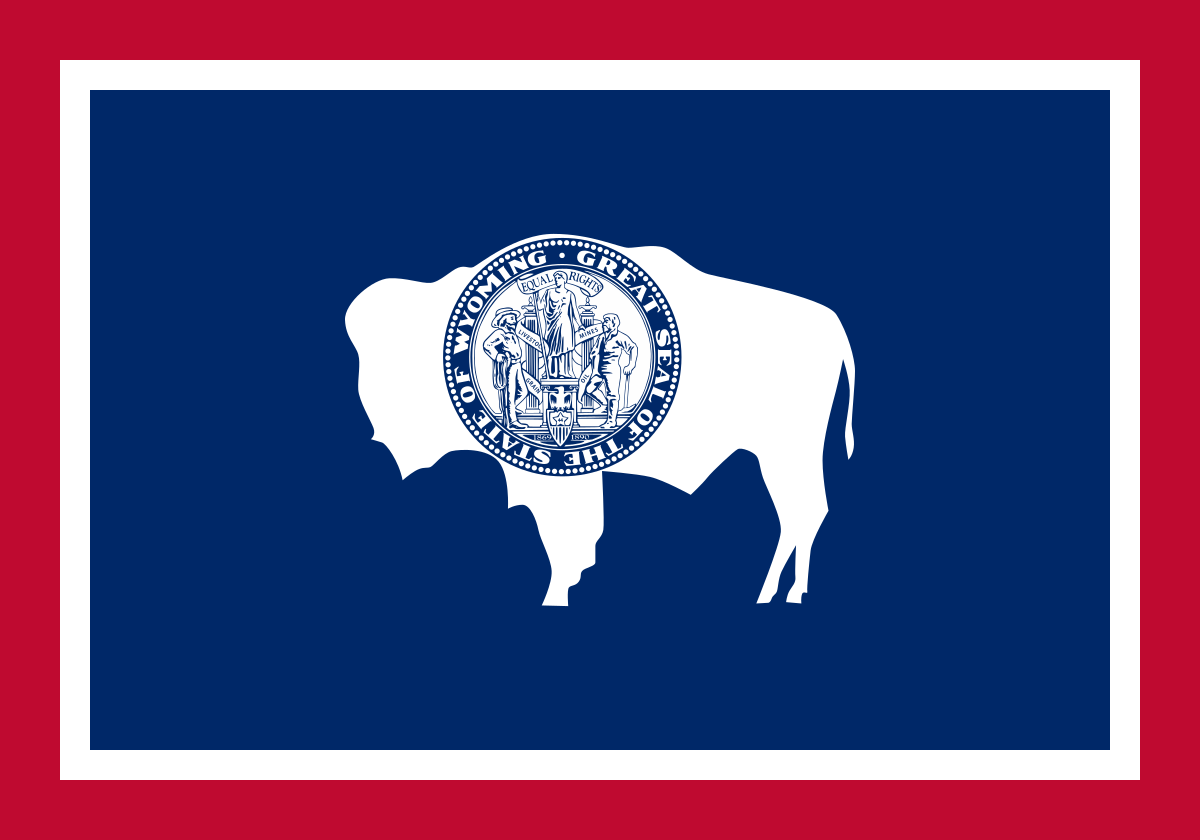
But long before Wyoming became a refuge for old historians or a playground for tourists with fly rods, it was a stretch of land tangled in a messy and magnificent story. It is a story that stretches from mammoth hunters to suffragists, from obsidian blades to steam engines, from tribal sanctuaries to territorial skirmishes.
Long before state lines carved out Wyoming’s square silhouette, people lived there. Not a few scattered nomads, but deep-rooted cultures that walked those valleys when ice still crowned the mountains. Archaeologists have uncovered tools from the Clovis, Folsom, and Plano cultures going back nearly 13,000 years. The Big Horn Medicine Wheel, though its age is still uncertain, mirrors other sacred stone structures that stretch back to 3200 BCE.
This wasn’t just a stopping point. It was a center. Obsidian from Yellowstone has been found as far away as the Hopewell burial mounds in Ohio. Trade routes, spiritual paths, and survival patterns ran through these hills long before anyone imagined a transcontinental railroad.
When European-American explorers finally staggered into the region, they encountered nations already shaped by centuries of intertribal war, hunting practices, and tradition. The Arapaho, Shoshone, Cheyenne, Crow, and Lakota knew the land not by maps but by memory and movement. They didn’t discover Wyoming. They were part of it.
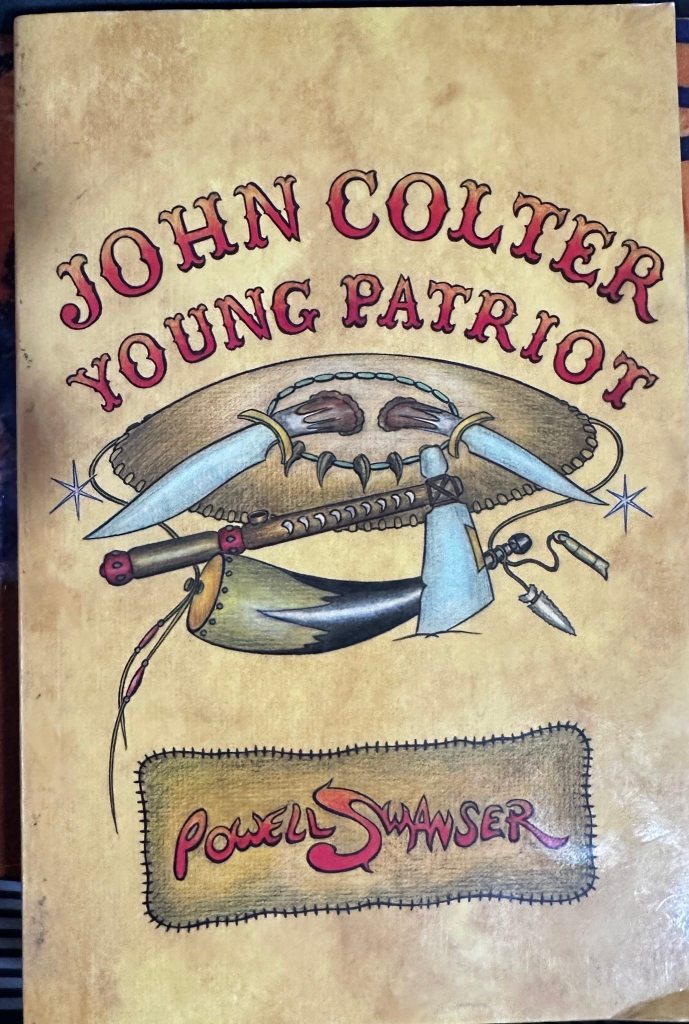
Enter John Colter in 1807, wandering solo after breaking from the Lewis and Clark Expedition. He brought back tales of boiling earth, geysers, and other impossibilities. Most folks back East didn’t believe him. Jim Bridger followed not long after, mapping passes and spinning tales that felt just as tall.
Then came the fur trappers. Mountain men chasing beaver along the Snake, the Wind River, and into the deep folds of the Rockies. Rendezvous gatherings became the stuff of frontier legend. This was not civilization. It was something older and rougher.
By the 1830s, the Oregon Trail began carving its way westward, joined later by the Mormon and California Trails. Over 350,000 emigrants passed through what would become Wyoming between 1840 and 1859. South Pass, a relatively gentle crossing of the Rockies, became the gateway to the American West. But gates can swing both ways, and what settlers saw as open opportunity, the tribes saw as trespass.
The Treaty of Fort Laramie in 1851 tried to keep the peace, but peace rarely holds when someone starts paving a new shortcut. The Bozeman Trail, cut through hunting grounds the treaty had promised to leave untouched, lit the fuse. Red Cloud’s War burned bright and bloody until 1868, ending with a second treaty that closed the Powder River Country to white settlement.
Briefly, it seemed like the line would hold. It didn’t.
On July 25, 1868, President Andrew Johnson signed the Wyoming Organic Act. The new Territory of Wyoming emerged from chunks of Dakota, Idaho, and Utah. It was a fresh experiment, not yet populated enough for statehood, but strategically planted where railroad ambition met unsettled ground.
The capital landed in Cheyenne, a railroad town that had barely existed two years prior. The Union Pacific had thundered into town in 1867, bringing with it settlers, soldiers, merchants, and enough steam to launch a civilization.
The name “Wyoming” came from a poem. Gertrude of Wyoming, penned in 1809 by Thomas Campbell, was about Pennsylvania, not the West. But the name stuck, drawn from a Delaware word meaning “at the big river flat.” The word was lyrical. The land it would name was not.
Wyoming didn’t wait for permission to be bold. On December 10, 1869, it granted women the right to vote. The first future state to do so. Not everyone was thrilled. A repeal was nearly passed but was stopped by a single veto. Women sat on juries, served as bailiffs, and even ruled from the bench. Esther Hobart Morris became the first female justice of the peace in the country—appointed in South Pass City in 1870.
By 1872, the territory had divided itself into five rectangular counties. Population grew slowly. No gold rush came to swell the towns. No silver lured outlaws and gamblers. Instead, it was cattle. The open range. And coal, which the Union Pacific mined by the ton to fuel its steel empire.
Wyoming’s state constitution, drafted in 1889, declared all water to be state property. It kept suffrage for women. When Congress hesitated to admit such a radical state, Wyoming fired back: if you won’t take us with our women voters, we won’t come at all.
Congress blinked.
On July 10, 1890, Wyoming became the 44th state.
Wyoming’s gift to the nation isn’t measured in skyscrapers or shipping ports. It is measured in principles. Liberty on the frontier. Equality by choice, not convenience. From Yellowstone, the world’s first national park, to Devils Tower, the first national monument, to Shoshone, the first national forest—Wyoming has always stood at the front edge of the American experiment.
This land, born from geological violence and political compromise, matured into something quiet, strong, and strangely wise. It remembers. It holds the echoes of trails and treaties. It speaks of freedom, not in slogans, but in the wind over the high plains and the hush of snowfall in the Tetons.
And if I get my wish, one day I’ll call it home. Not because it changes with the times, but because it reminds us who we were before time rushed in.



 DAVE DOES HISTORY
Leave a comment