
 Step into the world of George Mason, a Founding Father whose ideas shaped the very fabric of American liberty—yet whose name often lingers in the shadows of history.
In this episode, we uncover the fascinating life of a man who championed the rights we hold dear, from free speech to a fair trial, while refusing to sign the Constitution he helped craft. Why would a man so integral to America’s founding stand apart at its defining moment? Join us as we explore Mason’s journey from a reserved Virginia planter to a revolutionary thinker, his role in drafting the Virginia Declaration of Rights, his fiery debates at the Constitutional Convention, and his enduring legacy in the Bill of Rights.
If you’ve ever wondered about the unsung architects of freedom, this is an episode you won’t want to miss.
In the shadow of the titans of America’s founding—Washington, Jefferson, Franklin—stands George Mason, a man whose ideas shaped the essence of liberty and justice but who avoided the spotlight his contemporaries seemed to embrace. Mason was a revolutionary without ambition for power, a constitutional framer who refused to sign the Constitution, and a steadfast advocate for the rights of the individual in a world increasingly governed by central authority. His life, filled with contradictions and brilliance, reflects the complexities of the birth of a nation.
George Mason was born on December 11, 1725, into the genteel world of Virginia’s planter elite. His family’s estate, Gunston Hall, situated along the Potomac River, was emblematic of the privilege and opportunity afforded to the colony’s landowning class. But Mason’s early life was not without hardship. His father drowned in a boating accident when George was just ten years old, leaving his mother, Ann Thomson Mason, to manage the estate and raise her son with a focus on education and responsibility.
Mason’s education was a blend of private tutors and voracious self-study. He delved into law, history, and philosophy, becoming a student of Enlightenment thinkers like John Locke and Montesquieu. These influences would later underpin his approach to governance and individual rights. By his late teens, he was managing the family’s expansive landholdings, cultivating both tobacco and his reputation as a capable and principled leader.
For much of his early adulthood, Mason preferred the quiet life of a planter. However, the growing tensions between Britain and her colonies drew him out of his comfortable world and into public service. In 1769, he co-authored the Fairfax Resolves with George Washington, a bold declaration of colonial rights and grievances against British overreach.
Unlike many of his contemporaries, Mason avoided fiery rhetoric in favor of carefully reasoned arguments. The Resolves outlined the colonies’ inherent rights to self-governance and economic independence, setting a tone of measured defiance that resonated throughout Virginia and beyond. Mason’s role in drafting the Resolves marked his emergence as a leading intellectual force in the Revolutionary cause, though he remained content to let others take center stage.
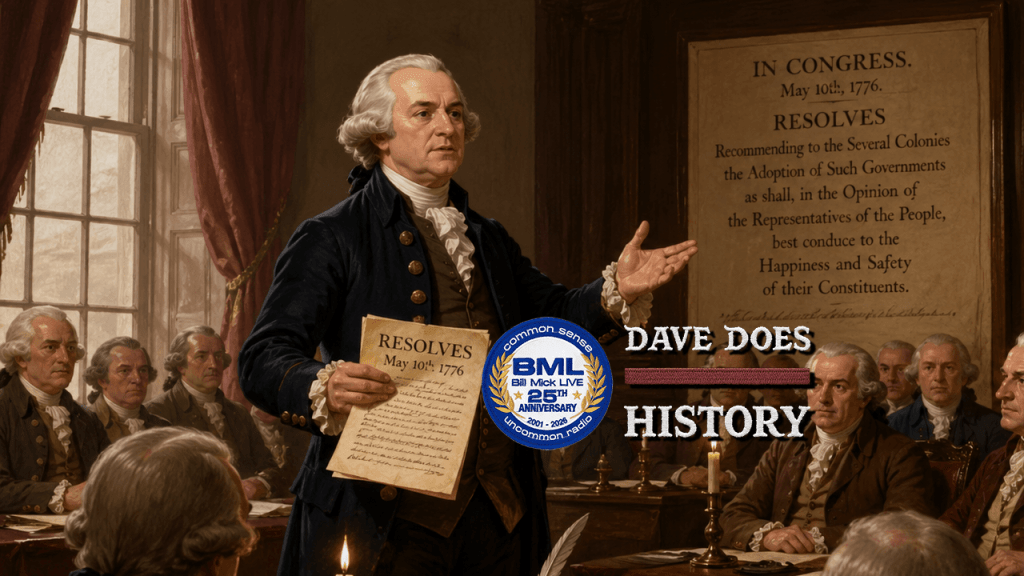
In 1776, as revolution swept the colonies, Mason penned what would become his most enduring contribution to American political thought: the Virginia Declaration of Rights. This groundbreaking document asserted that “all men are by nature equally free and independent,” laying the foundation for the inalienable rights enshrined in the Declaration of Independence and, later, the Bill of Rights.
The Virginia Declaration not only championed individual liberties like freedom of the press, trial by jury, and protections against excessive punishment but also addressed broader principles of governance. It declared that power is derived from the people, a radical departure from monarchical rule.
Mason’s document influenced Thomas Jefferson’s Declaration of Independence, James Madison’s Bill of Rights, and even the French Revolution’s Declaration of the Rights of Man and of the Citizen. Yet, Mason himself remained modest about his work, describing it as simply “a rough draft of fundamental principles.”
Mason’s role in the American Revolution positioned him as a key figure in shaping the post-war government. In 1787, he reluctantly agreed to represent Virginia at the Constitutional Convention in Philadelphia, despite his misgivings about leaving home. Once there, Mason became an active participant in the debates, advocating for a balanced government that protected individual rights while avoiding the excesses of centralized authority.
Mason’s sharp intellect and deep concern for justice led him to champion several key provisions, including the separation of powers and a system of checks and balances. However, he grew increasingly disillusioned with the direction of the convention. He opposed the Constitution’s lack of a Bill of Rights, its granting of unchecked executive power, and its tacit approval of the slave trade, which he denounced as “disgraceful to mankind.”
When the final draft of the Constitution was presented, Mason famously refused to sign it, declaring, “There is no Declaration of Rights, and the laws of the general government being paramount to the laws and constitutions of the several states, the Declaration of Rights in the separate states are no security.”
Mason’s dissent at the Constitutional Convention thrust him into the forefront of the Anti-Federalist movement. He joined other critics in warning that the proposed government would erode state sovereignty and individual freedoms. During the Ratification Debates, Mason’s arguments became a rallying cry for those demanding amendments to protect civil liberties.
At the Virginia Ratification Convention, Mason sparred with Federalists like James Madison, insisting that a Bill of Rights was essential to prevent tyranny. Though Virginia eventually ratified the Constitution, Mason’s efforts directly influenced the addition of the first ten amendments, solidifying his legacy as the “Father of the Bill of Rights.”
Mason’s steadfast principles strained his relationships, particularly with George Washington. Once close allies, the two men grew estranged over their differing views on the Constitution and federal power. Washington, now a Federalist and the first President, saw Mason’s Anti-Federalist stance as obstructive. Mason, for his part, viewed Washington’s policies as a betrayal of the Revolution’s ideals.
Mason’s commitment to principle extended to his resignation from the Fairfax County Court in protest of a congressional oath he believed infringed on state rights. His actions underscored his lifelong belief that liberty required vigilance and, often, personal sacrifice.
By the early 1790s, Mason’s health was failing. He withdrew further from public life, focusing on his family and estate. On October 7, 1792, he passed away at Gunston Hall at the age of 66. His death was mourned by contemporaries, including Thomas Jefferson, who praised him as “a man of the first order of greatness.”
Despite his influence, Mason’s name faded into relative obscurity, overshadowed by the more prominent figures of his time. Yet his ideas endured, woven into the fabric of American democracy.
George Mason was a man of contradictions: a defender of liberty who owned slaves, a reluctant politician whose ideas shaped a nation, a founding father who refused to sign the document he helped create. His life reminds us that the pursuit of justice is rarely straightforward and that even flawed individuals can leave a profound impact on history.
Mason’s insistence on individual rights and his refusal to compromise on principle continue to resonate. The Bill of Rights, inspired by his Virginia Declaration of Rights, remains a cornerstone of American democracy. His story is a testament to the power of ideas—and the courage it takes to stand by them, even when it means standing alone.




 DAVE DOES HISTORY
Leave a reply to Grumpy Guy Cancel reply