
October 20, 1973 is a date that stands out in the annals of American history as one of the most turbulent and crucial moments during the Watergate scandal. This was the evening that came to be known as the “Saturday Night Massacre,” a pivotal point in the slow unraveling of Richard Nixon’s presidency. Decades later, its reverberations still linger in the corridors of power, reminding the nation of the fragility of its democratic institutions and the unwavering importance of the rule of law.
The backdrop to the Saturday Night Massacre was the Watergate break-in of 1972 and the subsequent investigation. At its core was the question of President Nixon’s involvement and whether he had obstructed justice.
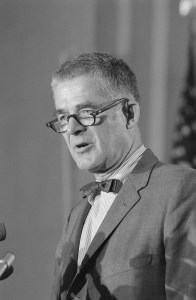
Public Domain
On that fateful Saturday, Archibald Cox, the special prosecutor appointed to investigate Watergate, made a formal request to the White House to release tape recordings of Oval Office conversations. Nixon, believing the tapes would be detrimental to his standing and perhaps incriminate him, refused.
That evening, in a move that shocked the nation, Nixon ordered Attorney General Elliot Richardson to fire Cox. Richardson, understanding the gravity of the situation and valuing his integrity over obedience, resigned in protest. The duty then fell to Deputy Attorney General William Ruckelshaus, who also chose to resign rather than carry out the president’s directive. Ultimately, the unenviable task fell to Solicitor General Robert Bork, the third in command, who complied and dismissed Cox.
The nation was stunned. The sequence of resignations and firings that evening was not only unprecedented but also seemed to confirm the worst suspicions about the Nixon administration’s willingness to obstruct justice to protect itself.
Public outcry was swift and loud. The events sharply intensified calls for Nixon’s impeachment. It became clear that the president was willing to take drastic actions to preserve his own interests, even at the risk of undermining the nation’s democratic institutions.
In the immediate aftermath, the White House was inundated with telegrams, phone calls, and letters from outraged citizens. The media, including this publication, highlighted the gravity of the situation, pushing for further investigations into the president’s activities.
The Saturday Night Massacre is often cited as the beginning of the end for Nixon’s presidency. Less than a year later, facing almost certain impeachment and removal from office, Nixon would resign, making him the first U.S. president to do so.
The event also underlined the importance of the separation of powers and the need for checks and balances in the U.S. government. It showcased the potential dangers of unchecked executive power and underscored the vital role of an independent judiciary and a free press in preserving democracy.
Moreover, the Massacre reinforced the idea that no individual, not even the president, is above the law. This principle has since been cited in numerous legal and political debates, setting a precedent for holding the highest office in the land accountable.
To this day, the Saturday Night Massacre serves as a reminder of the delicate balance of power in American governance and the crucial role of integrity, transparency, and accountability in preserving the republic.
Archibald Cox had a distinguished career in academia before his Watergate appointment, having been a professor at Harvard Law School. After the Massacre, he returned to Harvard and resumed his teaching duties. He continued to contribute to legal scholarship and remained a respected figure in the legal community.
He became an advocate for campaign finance reform. He chaired Common Cause, a nonpartisan grassroots organization that aims to hold power accountable and ensure transparent governance. Under his leadership, the organization lobbied for reforms in campaign financing, among other issues.
Cox’s commitment to the rule of law and his role in the Watergate investigation cemented his legacy as a defender of the Constitution and American democratic principles. He passed away on May 29, 2004, at the age of 92.






 DAVE DOES HISTORY
Leave a reply to FTB1(SS) Cancel reply