
October 6, 1981 will forever be etched in the annals of Middle Eastern history as the day Egyptian President Anwar Sadat was assassinated. His death marked a watershed moment in the politics of Egypt and the broader Arab world, punctuating a controversial and transformative tenure.
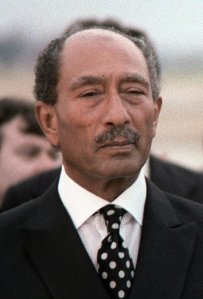
Public Domain
The motivations behind the assassination of Sadat were a complex tapestry woven from religious zealotry, nationalist fervor, and deep-seated political grievances.
1. Peace with Israel: Sadat’s most controversial act was signing the Camp David Accords in 1978, which led to a peace treaty with Israel in 1979. This was seen by many Arabs as a betrayal of the Palestinian cause and a compromise of Arab unity. The normalization of relations with Israel deeply antagonized many in the Arab world, particularly radical Islamists who saw it as a betrayal of Islamic principles.
2. Internal Repression: Inside Egypt, Sadat’s regime was known for suppressing dissent, particularly from Islamic groups. His crackdowns on these organizations, most notably the Muslim Brotherhood, bred animosity and a desire for revenge among radical factions.
3. Economic Grievances: Sadat introduced the Infitah (open door) policy, which aimed to liberalize the Egyptian economy. However, this resulted in increased economic disparities, inflation, and widespread corruption, leading to disenchantment among several segments of the population.
The assassination was orchestrated by a radical Islamist group called *Jihad Group* (Tanzim al-Jihad). Its members believed that by killing Sadat, they could pave the way for an Islamic state in Egypt.
The assassination took place during the annual victory parade held in Cairo to celebrate Operation Badr during the October War of 1973 against Israel. Using the parade as a cover, Lieutenant Khalid Islambouli and his associates infiltrated the event. As the parade unfolded, Islambouli and his co-conspirators broke ranks and charged toward the president’s stand, hurling grenades and firing automatic weapons. In the ensuing chaos, Sadat and eleven others were killed, while twenty-eight were wounded.
The swift and brutal nature of the assassination sent shockwaves through the nation and the international community, raising serious questions about security lapses and the depth of radicalization within the Egyptian military.
Sadat’s assassination had profound implications:
1. Consolidation of Power: Vice President Hosni Mubarak, who was injured in the assassination but survived, ascended to the presidency. He would hold power for nearly 30 years until his ouster during the 2011 Egyptian Revolution. Mubarak’s regime further clamped down on Islamist groups, culminating in the mass imprisonment of their members.
2. Enduring Peace with Israel: Despite Sadat’s assassination and the turmoil it engendered, the peace treaty with Israel held. It remains one of the cornerstones of regional stability.
3. Stemming Radical Islam: Sadat’s assassination served as a wake-up call for many governments in the region about the threat posed by radical Islamist groups. Many launched campaigns to counteract their influence.
4. Reassessment of Sadat’s Legacy: Over time, many Egyptians began to appreciate Sadat’s efforts to achieve peace, recognizing his courage in reaching out to a historic adversary. While his economic policies and political repression remain contentious, his pursuit of peace with Israel has garnered greater respect with the passage of time.
In conclusion, the assassination of Anwar Sadat was a pivotal event in the modern history of Egypt and the Middle East. It illuminated the deep divisions within Egyptian society and the broader Arab world, but it also highlighted the resilience of diplomatic achievements and the ongoing struggle between secular governance and radical ideology in the region.

CC BY-SA 3.0




 DAVE DOES HISTORY
Leave a comment