
On September 28, 48 BCE, the ancient world witnessed the tragic demise of one of its most celebrated military and political figures: Gnaeus Pompeius Magnus, or Pompey the Great. His murder at the hands of agents in Egypt not only marked a pivotal moment in the history of Rome, but also served as a testament to the volatile politics of the late Republic.
By 48 BCE, Rome was in the throes of a civil war. Pompey and Julius Caesar, once allies in the First Triumvirate, had become bitter enemies. Pompey represented the senatorial elite and the status quo, whereas Caesar embodied the populist cause and sought to dismantle the rigid senatorial power structure.
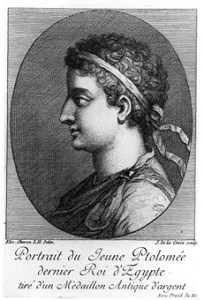
The crucial Battle of Pharsalus, fought earlier that year, saw a decisive victory for Caesar over Pompey. Following this loss, Pompey sought refuge in Egypt, expecting sanctuary from the young Pharaoh Ptolemy XIII. However, the strategic landscape in Egypt was complex. Ptolemy was embroiled in a power struggle with his sister and co-regent, Cleopatra VII. By this time, Egypt was a client kingdom of Rome, and Ptolemy’s advisers believed that by killing Pompey, they would win Caesar’s favor and ensure Rome’s support against Cleopatra.
Public Domain
Thus, in a cruel twist of fate, Pompey was betrayed and murdered upon setting foot in Egypt, presented to Caesar as a token of loyalty. Contrary to Ptolemy’s expectations, Caesar was horrified by the treachery, demonstrating that political miscalculations have profound consequences.
Pompey’s contributions to Rome were manifold. He was a brilliant military commander who expanded the Roman Empire’s reach from Hispania (modern-day Spain) to Syria. His extraordinary campaign against the pirates of the Mediterranean earned him a reputation as a protector of Rome’s economic interests, and his efforts in the East provided Rome with new territories and wealth.
Moreover, he was instrumental in major infrastructure projects, notably the construction of Rome’s first stone theater. He was a statesman whose influence went beyond military conquests, leaving an indelible mark on the civic and cultural life of Rome.
Pompey’s death marked the end of an era. While Caesar was already the preeminent power in Rome following Pharsalus, the murder of Pompey eliminated the last vestige of senatorial resistance against him. This event paved the way for Caesar to consolidate his authority, culminating in his declaration as dictator perpetuo (dictator in perpetuity) of Rome.
Yet, the manner of Pompey’s death also played a role in turning sentiment against Caesar in the longer term. The overt treachery and brutality of Pompey’s assassination painted Caesar in a negative light to many in Rome, even if he was not directly responsible. It provided ammunition for his detractors and was among the grievances cited by those who, just a few years later, plotted and executed Caesar’s own assassination.
In conclusion, the murder of Pompey the Great was more than the end of a distinguished Roman figure. It was a seismic event in the complex political landscape of the late Republic, ushering in a new chapter of Roman history, ultimately leading to the rise of the Roman Empire under the Caesarian dynasty.




 DAVE DOES HISTORY
Leave a comment