
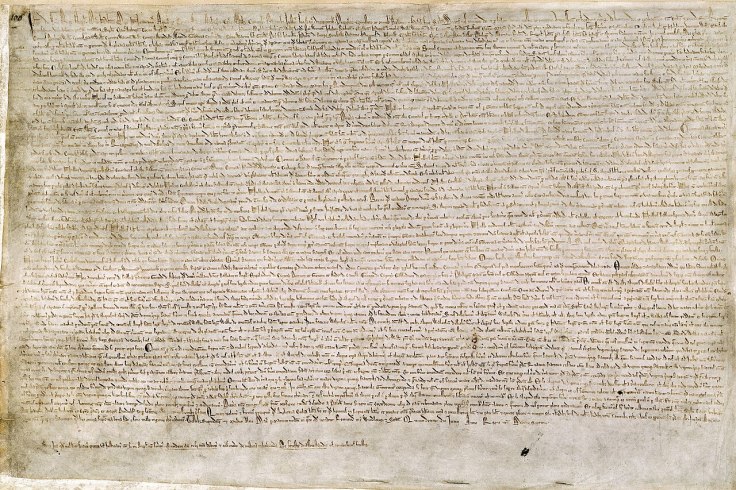
On June 15, 1215, a group of English barons forced King John of England to seal the Magna Carta, a revolutionary document that sought to limit the power of the monarchy and protect the rights of the nobility. But just over two months later, on August 24, 1215, Pope Innocent III, one of the most powerful and politically active popes of the Middle Ages, issued a papal bull that declared the Magna Carta null and void. Why did the Pope intervene in what was essentially a domestic matter for England? And what did he hope to achieve?
Public Domain
Pope Innocent III’s reasons for condemning the Magna Carta were manifold:
1. **Protection of Papal Authority**: At this time, King John had already surrendered England as a fiefdom to the Pope in 1213, effectively making the Pope his feudal lord. Any attempt to undermine the king’s authority could also be seen as an indirect threat to papal power over England.
2. **Procedure & Coercion**: Pope Innocent III believed that the Magna Carta was sealed under duress. In the papal bull, he stated that King John had been “forced by violence and fear” to agree to the terms, which made it illegitimate in the eyes of the Church.
3. **Divine Right of Kings**: The medieval belief in the divine right of kings held that monarchs derived their authority directly from God. By this ideology, any attempt to limit a king’s power was not just a political act, but a challenge to God’s will.
The papal bull, known as *Etsi Karissimus*, was unequivocal. It declared the Magna Carta “null, and void of all validity for ever.” Innocent III expected his decree to achieve a twofold purpose:
1. To strengthen the papal position and the position of the Church in the geopolitics of Europe.
2. To stabilize King John’s reign and thereby solidify the bond between the English throne and the Papacy.
However, the issuance of the papal bull did not lead to the peace and stability Pope Innocent III might have hoped for. Instead, England was plunged into the First Barons’ War (1215-1217) as the barons, frustrated by both the king’s and the Pope’s refusal to honor the Magna Carta, rebelled. They even went so far as to invite Prince Louis of France to invade England and claim the throne.
The war raged on until 1217. Although King John died in 1216, his successor, the young King Henry III, with the guidance of regents, eventually reissued a modified version of the Magna Carta in 1217 to placate the rebelling barons and mark the end of the war. This version, and subsequent reissues, did not face the same papal opposition and became ingrained in English law.
In the longer term, the papal bull failed to suppress the ideals embodied in the Magna Carta. The document would be invoked multiple times throughout English history, and its principles formed the bedrock of many constitutional developments, not only in England but also in other parts of the world.
Public Domain
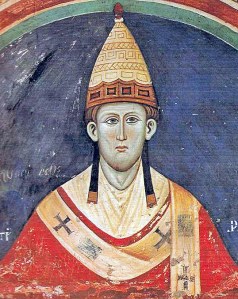
Pope Innocent III’s intervention in the matter of the Magna Carta was consistent with his vision of a powerful, politically involved papacy that had a decisive voice in the affairs of European monarchies. While he might have momentarily halted the progress of the Magna Carta with his papal bull, he could not stop the tide of history. The Magna Carta’s ideals of limited monarchical power and the rule of law persisted and evolved, leaving an indelible mark on the annals of governance and human rights.


 DAVE DOES HISTORY
Leave a comment