
Operation Gomorrah was a massive strategic bombing campaign carried out by the British Royal Air Force (RAF) and the United States Army Air Forces (USAAF) against the German city of Hamburg during World War II. The operation began on July 24/25, 1943, and continued until the end of August 1943. It was one of the most devastating aerial bombing campaigns of the war and had a profound impact on both military and civilian targets.
By mid-1943, Germany was heavily involved in the war on multiple fronts and had suffered significant defeats in North Africa and the Eastern Front. As part of the Allied strategy to weaken German morale and infrastructure, the bombing campaign shifted towards targeting major industrial cities deep within Germany.
Hamburg, located in Northern Germany, was a vital industrial and port city, known for its shipbuilding and manufacturing capabilities. It was also a key transportation hub and a center for the German war effort.
The mission goals of Operation Gomorrah were primarily focused on crippling the industrial capacity of the German city of Hamburg and disrupting its transportation networks. The operation aimed to achieve these objectives through a sustained and massive strategic bombing campaign carried out by the British Royal Air Force (RAF) and the United States Army Air Forces (USAAF).
1. Disrupt Industrial Production: Hamburg was a major industrial center in Germany, known for its shipbuilding, manufacturing, and other war-related industries. One of the primary goals of Operation Gomorrah was to significantly disrupt and incapacitate this industrial capacity. By targeting factories, shipyards, and other production facilities, the Allies sought to reduce Germany’s ability to produce war materiel and sustain its war effort.
2. Target Transportation Infrastructure: As a vital port city, Hamburg played a crucial role in Germany’s transportation and logistical operations. The bombing campaign aimed to disrupt and paralyze the city’s transportation networks, including railways, roads, and canals. By hampering the flow of supplies and reinforcements to and from the city, the Allies intended to hinder German military operations and weaken the overall war effort.
3. Undermine German Morale: Operation Gomorrah was also designed to undermine German civilian morale and create a sense of fear and vulnerability among the population. The strategic bombing aimed to demoralize the German people by inflicting heavy casualties, destroying homes, and causing widespread devastation. The hope was that the psychological impact of the bombing would weaken support for the Nazi regime and its war policies.
4. Test Firestorm Tactics: During the operation, the Allies aimed to experiment with firestorm tactics, particularly the creation of intense and uncontrollable firestorms through the use of incendiary bombs. The goal was to study the effectiveness of firestorms as a means of causing maximum damage to cities and to assess their potential in future aerial operations.
It’s important to note that while the immediate objectives of Operation Gomorrah were to disrupt industrial production, target transportation, and impact civilian morale, the broader strategic goal was to weaken Germany’s war effort and contribute to the eventual defeat of Nazi Germany. The campaign marked a significant escalation in the Allies’ strategic bombing strategy, emphasizing the use of heavy bombing to target major cities and industrial centers deep within enemy territory.
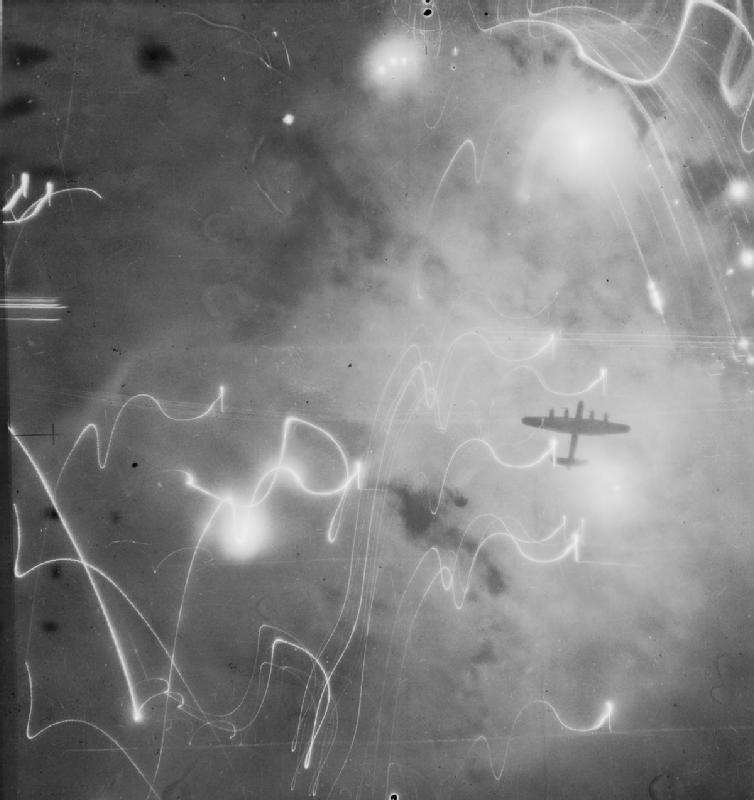
(Public Domain)
The bombing raids began on the night of July 24/25, 1943, with waves of British Lancaster and Halifax bombers dropping incendiary bombs on the city. These bombs were intended to start massive firestorms that would burn out of control, causing widespread destruction.
The following nights saw additional waves of bombing attacks, including those by American B-17 Flying Fortress bombers during daylight hours. The USAAF’s “precision bombing” strategy focused on specific industrial and military targets.
One of the most significant and devastating aspects of Operation Gomorrah was the creation of a firestorm during the night of July 27, 1943. This firestorm was caused by the large number of incendiary bombs dropped in a concentrated area, creating a tornado-like effect with winds reaching hurricane force. The intense heat generated by the firestorm caused the air to rise rapidly, drawing in oxygen and fueling the flames even more.
The firestorm created an inferno that engulfed the city, destroying vast areas and causing a humanitarian catastrophe. The extreme heat and winds trapped people in burning buildings and streets, resulting in a high number of casualties and civilian deaths. It’s estimated that around 42,600 people were killed, and over one million were left homeless during the entire Operation Gomorrah campaign.
Operation Gomorrah had a significant impact on the city of Hamburg and the German war effort. The destruction of industrial facilities, transportation networks, and housing severely disrupted daily life and war production in the city. The bombing campaign also inflicted heavy casualties on the German population and contributed to a decline in morale.
The operation demonstrated the destructive power of strategic bombing and raised debates about the ethics of targeting civilian populations during warfare. Additionally, the operation further intensified Germany’s resolve to continue fighting, as the civilian population rallied around the war effort in the face of the devastating air raids.
Overall, Operation Gomorrah stands as a poignant example of the devastating consequences of aerial warfare and the immense toll it can take on civilian populations caught in the midst of conflict.




 DAVE DOES HISTORY
Leave a comment