
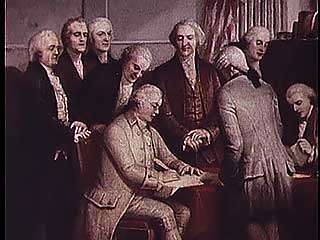
 Constitutional Convention: Constitutional Convention, in U.S. history, convention that drew up the Constitution of the United States in 1787.
Source: Constitutional Convention | History & Compromises | Britannica.com
Discarding the idea of amending the Articles of Confederation, the assembly set about drawing up a new scheme of government but found itself divided, delegates from small states (those without claims to unoccupied western lands) opposing those from large states over the apportionment of representation. Edmund Randolph offered a plan known as the Virginia, or large state, plan, which provided for a bicameral legislature with representation of each state based on its population or wealth. William Paterson proposed the New Jersey, or small state, plan, which provided for equal representation in Congress. Neither the large nor the small states would yield. Oliver Ellsworth and Roger Sherman, among others, in what is sometimes called the Connecticut, or Great, Compromise, proposed a bicameral legislature with proportional representation in the lower house and equal representation of the states in the upper house. All revenue measures would originate in the lower house. That compromise was approved July 16.
The matter of counting slaves in the population for figuring representation was settled by a compromise agreement that three-fifths of the slaves should be counted as population in apportioning representation and should also be counted as property in assessing taxes. Controversy over the abolition of the importation of slaves ended with the agreement that importation should not be forbidden before 1808. The powers of the federal executive and judiciary were enumerated, and the Constitution was itself declared to be the “supreme law of the land.” The convention’s work was approved by a majority of the states the following year.
This article was most recently revised and updated by Adam Augustyn, Managing Editor.




 DAVE DOES HISTORY
Leave a comment