
The smoke still hangs in the air when this episode begins.
Not metaphorically. Historically.
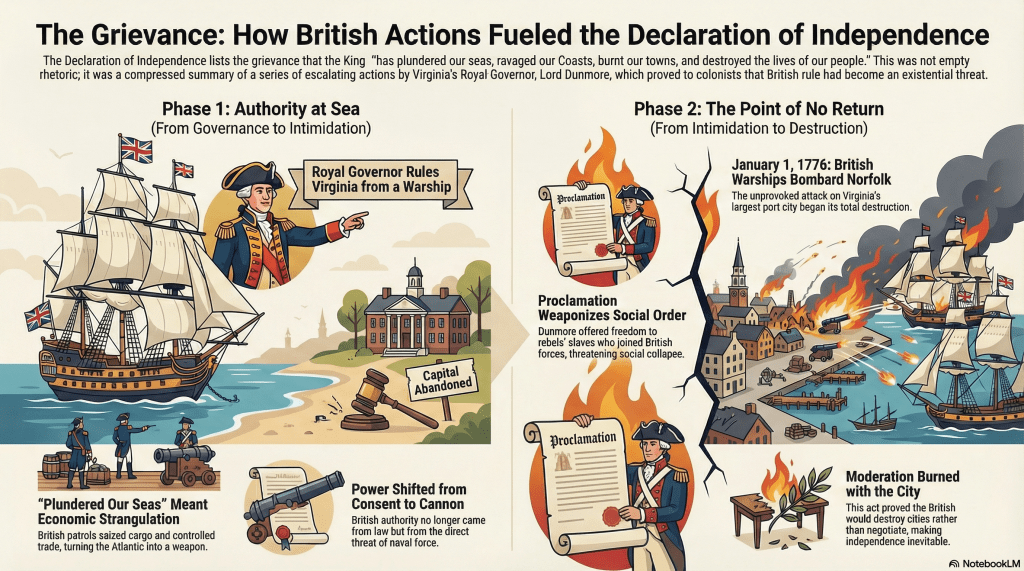
This week on Dave Does History with Bill Mick, the Liberty 250 series moves from pamphlets and protests into something far less abstract. Fire. Shells. Families running inland with what they can carry. A royal governor ruling from the deck of a warship because the land beneath him has rejected his authority. History stops being theoretical and starts burning.
The grievance Jefferson would later compress into a single sentence, “He has plundered our seas, ravaged our coasts, burnt our towns, and destroyed the lives of our people,” is not rhetorical flourish. It is eyewitness testimony. And in this episode, Dave Bowman walks through the winter of 1775–1776 to show exactly how that line earned its place in the Declaration.

What The Frock – The Musical
The focus is Virginia, the colony that on paper should have stayed loyal. Anglican establishment, deep British ties, commercial dependence on imperial trade. Yet Virginia does not drift into rebellion. It is shoved. Hard. Lord Dunmore, the king’s royal governor, evacuates Williamsburg, rules from offshore, and chooses a policy of fear. He burns towns. He recruits enslaved people into a military unit not to end slavery, but to weaponize it. He turns social order itself into a battlefield.
Norfolk becomes the turning point. On January 1, 1776, British ships open fire without warning. Heated shot. Wooden buildings. Wind-fed flames. What begins as a bombardment becomes an inferno. The Patriots, facing a city already lost, make a grim calculation and finish what the British started. Norfolk is erased. Commerce collapses. Families scatter. Virginia’s most important port ceases to exist.
What follows is not a debate over who lit which building. Dave makes the point bluntly. None of that matters to the people watching their livelihoods collapse into ash. What matters is that reconciliation cannot survive fire. Petitions do not rise from rubble. Once imperial authority answers resistance with destruction, the argument is over.

This episode also strips away the comforting myth of centralized control. No instant orders from London. No tidy command structure. Decisions made locally, brutally, and irreversibly. Dunmore believes fear will restore obedience. History has little patience for that belief.
By the time the episode closes, the listener understands something essential. The Declaration is not radical theory scribbled in a quiet room. It is a legal indictment written with smoke still in the lungs. The fire reaches Philadelphia long before the ink dries.
And next week, the spark becomes a pamphlet.
 DAVE DOES HISTORY
Leave a comment