
There is a particular kind of pride that settles in the bones of a place, the kind that refuses to be talked over by the mapmakers or tidied away by administrative rearrangements. Lancashire has carried that sort of pride for a very long time, and Lancashire Day puts it squarely on display. Every year on November twenty seven, the people who claim the old red rose county as their own stop for a moment to recognize something that is at once simple and surprisingly deep. They remember where they come from. They remind the rest of England that historic boundaries do not disappear because Parliament drew new lines on a chart fifty years ago. They listen to a proclamation that sounds like it could have been read in the age of Edward I, and they lift a glass to the Duke of Lancaster, who happens to be the reigning monarch. The day feels both new and ancient. Perhaps that is the only way a tradition survives these storms of modern life, it stands in two centuries at once.
The modern observance itself is straightforward. Town criers gather at midday. A formal proclamation is read. A toast rises at nine in the evening. People share good food, good drink, and the sort of good humor that comes from knowing you belong to something older than your own lifetime. That is the essence of Lancashire Day, or at least the surface of it. Underneath is the story of a county that helped shape the spine of England and never lost its taste for standing up for itself. If you spend a little time with the old documents, the kind with frayed edges and marginal notes that look like they were written with a quill, the continuity becomes even clearer.
The date, November twenty seven, reaches back to the year 1295, to a chilly day when King Edward I called together representatives from across his realm for what historians later named the Model Parliament. Edward did not use the phrase himself, he was far too busy trying to fund wars in Wales and Scotland to worry about branding. The gathering included knights, burgesses, and clergy. Lancashire, still a young county by English standards, sent its own men to speak for it. The moment mattered. It showed that Lancashire was already woven into the political fabric of the kingdom, not some lonely stretch of moorland on the northwest coast. When the Friends of Real Lancashire chose the date for Lancashire Day in 1996, they picked it with care. They knew exactly what signal they were sending. This county has a seat in the long story of English self governance, and that seat was earned early.
The Friends of Real Lancashire deserve a quiet word here. They formed to preserve the historic boundaries of Lancashire after the 1972 reorganization, the one that placed parts of the old county into new administrative creations such as Greater Manchester, Merseyside, and Cumbria. Many offices shifted. Many signs were replaced. But history did not. The Friends insisted that the county palatine of Lancashire, the Lancashire of the centuries, remained entirely intact. The annual celebration was not a protest as much as a reminder. Ask a Lancastrian why the date matters and you will likely get a shrug followed by something along the lines of, “Because it always did.” Pride does not need a thesis statement. It simply needs enough voices to keep the sound alive.
It helps that Lancashire’s ties to the Crown have always been peculiar and strong. The county belongs to the Duchy of Lancaster, a private estate held by the reigning sovereign, and that alone gives it a character no boundary commission can alter. The title Duke of Lancaster has been worn by monarchs for more than six centuries, regardless of gender. Charles III holds it at this moment. His mother held it before him. It is one of the odd threads of continuity in a country that can alter cabinet ministers faster than some people change shoes. To understand why this duchy matters, one has to go back to the middle of the fourteen hundreds, when Edward III created the first Duke of Lancaster, Henry of Grosmont. The chroniclers of the age praised Henry as a man of astonishing feats of arms. They were not shy about laying it on thick, but that is how medieval admiration worked. Henry earned the praise. The duchy he led was powerful, wealthy, and politically respected.
Then came the shift that locked Lancashire deep into the heart of the Crown. Henry’s daughter married John of Gaunt, son of Edward III. Their child, Henry Bolingbroke, inherited the duchy, then seized the throne in 1399 and became Henry IV. At that moment the Duchy of Lancaster merged with the Crown. It was a political marriage that England never untangled. Later kings made its status explicit. Edward IV confirmed that the duchy would always pass to the monarch, yet remain legally separate from the broader Crown Estate. That arrangement still stands. It means that the duchy is both part of the monarchy and apart from it, a kind of historical pocket sewn into the king’s coat.
The Duchy of Lancaster today is a substantial operation. Its lands stretch across England and Wales with holdings measured in tens of thousands of acres. It generates independent income for the sovereign, which the old documents call the privy purse. The estate value reached more than six hundred fifty million pounds by the early months of 2022. Some of the most beautiful tracts remain in the north, including nearly four thousand hectares across five rural estates. Names like Myerscough, Salwick, Wyreside, and Whitewell sound like they have been part of the county since the last glacier melted. The duchy still owns Lancaster Castle, a constant reminder that the monarchy’s presence in Lancashire is not symbolic. It is literal.
Then there is the Forest of Bowland, an Area of Outstanding Natural Beauty. It once served as a royal hunting ground. It remains an anchor of the county’s landscape. If you have ever walked its hills in late autumn, you know the feeling. The wind carries a kind of quiet authority. The land seems content to let you pass through, but it does not pretend to belong to you. That is the story of Lancashire itself, a place that has welcomed generations of workers, traders, farmers, sailors, and industrialists, yet keeps a sharp memory of its own identity.
Because the duchy is tied to the historical county, it also plays a ceremonial role in the modern world. The monarch, in the capacity of Duke of Lancaster rather than King or Queen, appoints the high sheriffs and lords lieutenant in the old county’s territory. These appointments cover not just present day Lancashire, but also Merseyside and Greater Manchester. That is why so many residents of those areas insist that they are still Lancastrians. The crown agrees with them.
This brings us to the boundaries themselves, the ones that Lancashire Day celebrates. The Lancashire being honored is the County Palatine, the one that has existed since the year 1168. Its reach runs from the Mersey up to the fells of Furness and from the Irish Sea to the Pennine hills. Administrative reshuffling in the last century left many people unsure where they stood. Lancashire Day answers the question with confidence. It reminds people from Salford, Liverpool, and Barrow that their ancestors were Lancastrians and that they remain so in the eyes of history.
The proclamation read aloud every year makes this clear. It names the historic hundreds, those old administrative divisions that once carried the business of governance. Lonsdale North of the Sands. Lonsdale South of the Sands. Amounderness. Leyland. Blackburn. Salford. West Derby. These names feel like they were carved into the English soil with a spade. The language of the proclamation is firm, almost defiant. It declares that the people of the County Palatine are true Lancastrians. It celebrates the Red Rose, a symbol older than the Tudors and sharper than a coat of arms painted on a council wall.
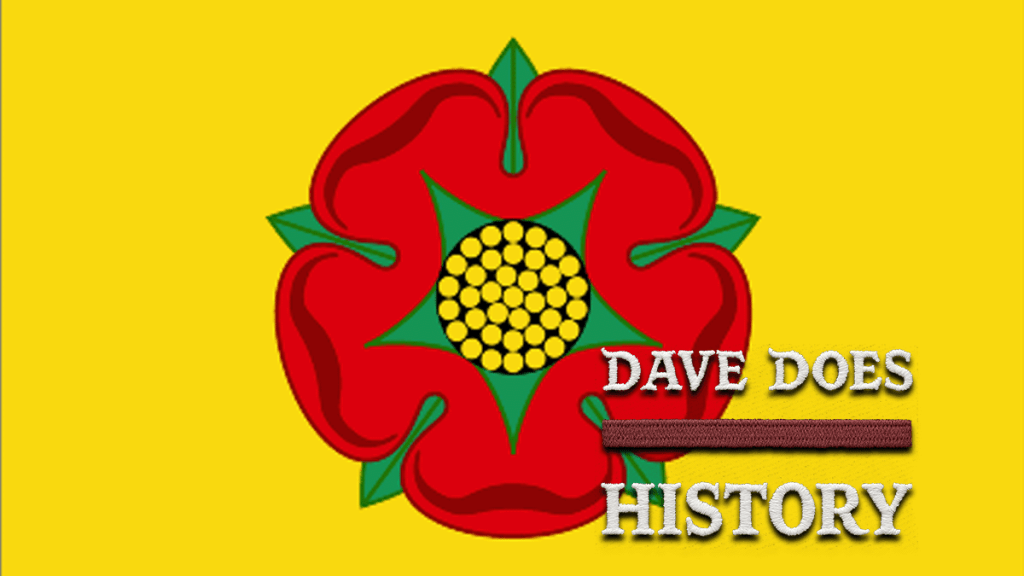
The Red Rose of Lancaster emerged from the heraldic traditions of the royal House of Lancaster in the fourteenth century. It became famous for its rivalry with the White Rose of York. Shakespeare helped cement that imagery in English memory. Henry VII later combined the two roses into the Tudor Rose, which was meant to signal unity. Even so, the older symbols never faded. The Red Rose is still everywhere across the county. You see it in local government insignia, including the three rose emblem that Lancashire County Council adopted. The official Lancashire flag puts a bright red rose on a yellow field, a color choice made after the College of Arms found that a previous design was already registered elsewhere. The symbol also accompanies the Duke of Lancaster’s Regiment, one of the proud British Army infantry regiments with roots and recruits in the region.
When Lancashire Day comes around, the proclamation is read by town criers. Some of these men and women have been at it for decades. Roland Hailwood of Clitheroe has been calling out that proclamation for more than forty years. It is a public moment that feels like a private ritual. The voice rises over the market square. People stop and listen. For a few minutes the clock seems to turn back to a time when public announcements mattered because they were the only way most people heard the news.
Later in the evening comes the toast. At nine o clock Lancastrians around the world lift a glass to the Duke of Lancaster. It is a tradition that stretches across oceans, because many Lancastrians left the county during the industrial age, seeking work or opportunity in places far away. The toast ties them back to home. It does not require fine wine or ceremonial punch. Local spirits do nicely. The county has revived its distilling trade, and modern Lancashire gins such as Cuckoo, Goosnargh, Wild Fox, and Lytham have earned respect. Beers from Bowland Brewery or Lancaster Brewery are equally suited to the occasion. Some prefer tea, the kind sold in simple packets labeled Lancashire Tea. The specific drink matters less than the intention.
Food plays its own part in the celebration. Lancashire has produced hearty dishes for centuries. A proper Lancashire hotpot, layered with lamb and potatoes, still tastes like something designed to keep a mill worker standing through a winter shift. Lancashire cheese has a gentle crumble and a clear flavor that pairs with almost anything. Chorley cakes remain one of the county’s underrated treasures, less sweet than their Eccles cousins and all the better for it. Bury black pudding has earned a reputation far beyond its home market. Butter pies, strangely enough, tell their own story. They are meatless, a holdover from Catholic communities that avoided meat on Fridays. Ormskirk gingerbread rounds out the list. None of it is fancy. All of it is comforting.
Modern Lancashire also holds more than its share of high end restaurants. Moor Hall has Michelin stars stacked like cordwood. Local venues prepare special Lancashire Day menus. Farmers’ markets fill with customers looking for regional ingredients. D.Byrne and Co. in Clitheroe, a wine shop with a cellar that feels like a time tunnel, becomes a pilgrimage site for anyone who wants something appropriate for the day.
People mark the celebration by stepping outside as well. Lancashire’s landscape rewards anyone who takes the time. Pendle Hill looms in the imagination as much as in the sky. Walkers make their way up its paths, some seeking views and some seeking the stories that cling to its slopes. The region offers wildlife walks, guided foraging, and the simple peace of wandering through land that has not forgotten itself. Clitheroe Castle provides long views across the Ribble Valley. Lancaster Castle remains a solemn monument to centuries of law and punishment. Whalley Abbey’s ruins sit quietly by the river, a reminder of the monasteries that once anchored English community life until Henry VIII swept them aside.
Communities gather for events large and small. Sometimes it is just a crowd in a market square listening to a proclamation. In other places the celebrations stretch for days. The Made Here in Lancashire Festival brings together local makers, musicians, and families. There are choirs, crafts, and workshops. Someone always seems to be teaching people how to build wreaths for Advent. All of it reinforces the larger point. This is a county that takes pride in what it creates.
Even the language becomes part of the celebration. Lancashire dialect has softened over the years, but traces remain. Definite Article Reduction still pops up, the habit of dropping the “the” sound into a simple “t” as in “t road” or “t house.” Words like “mardy” and “nowt” remain cheerful reminders that the tongue is as stubborn as the county itself.
When the day winds down, the meaning lingers. Lancashire Day is a moment to remember the county’s long history, including its role in the Industrial Revolution. Cotton mills, engineering shops, and shipyards once drove the engines of British industry. The pride that comes from that legacy does not fade easily, nor should it. The celebration ties people together across modern boundaries, across old loyalties, and across generations. It connects them to a monarch who holds the title Duke of Lancaster, though few can articulate what that means in legal detail. They simply know it matters.
What keeps Lancashire Day alive is not nostalgia. It is recognition. People honor the food, the land, the symbols, and the shared memory that refuses to dissolve. The tradition has enough humility to survive and enough grit to thrive. The red rose still blooms, even in November.
And that is no small thing in a world that keeps trying to move on too quickly.
 DAVE DOES HISTORY
Leave a comment