
I have a theory about writing stories about submarines. I came up with this years ago, back when people who wanted to write about submarines but had no actual experience aboard one would offer to take me to dinner so they could pick my brain about their latest idea. I got a lot of free meals out of it, but to my knowledge, not one of those stories ever made it into print.
So take my advice for whatever it is worth.

Just tell a good story.
There are not that many submariners in the world who are going to read it anyway. And the ones who do read it have nothing better to do than pick it apart and then point out every mistake you ever made, including those that have nothing to do with your story. Then they will bitch-slap you for being dinq.*
So, unless you are trying to sell your story to the American Submariner magazine, and you’re not, actual experts on submariners are not going to read it anyway. So, you should just tell a great story that surface people will read and pretend that they know something about submarines. If you do that, you’ll be happy, they’ll be happy and all the actual experts will criticize you as you cash your residual cheques from the publisher. You won’t care because… well… Ka-Ching!
That is it. That is my advice to prospective submarine story writers.
Which brings me to the new PBS Ken Burns documentary “The American Revolution.”
My advice about that is simple. Don’t watch it with a historian or a Revolutionary War buff. Since I am both, I would not recommend sitting down with me in my studio to see it. You are not invited anyway unless you bring a lot of pizza. Hawaiian for me, pepperoni for Ben.
Otherwise, don’t bother. I am exactly the kind of expert who will pause the show every few minutes and launch into a lecture about why Burns got something wrong or why he did not go into enough detail to satisfy my own biases and particular interests.
That is not to say Burns did a bad job. Not at all.
That has not stopped every historian in the country from weighing in with their praise or criticism. The praise is fine, and he gets plenty of it from people hoping for free tickets or a drink with him in some fancy New York place. That is not me.
The criticism has ranged from the technical to the microscopic. Someone complained that there were no Hessian drummers at Lexington. Others pointed out the firearms on screen did not match the ones used in the period. There has even been a full-blown debate over Rick Atkinson saying that much of the war was fought hand to hand with lots of bayonets. This produced charts and graphs “proving” that Americans preferred to fight at a distance and that only about a quarter of the postwar pension claims included bayonet wounds.
I am into this kind of thing and I was bored stiff. It was picking at the smallest of nits. It never really addressed the bigger question of why the two sides were shooting or stabbing each other in the first place.
Which brings me back to my point.
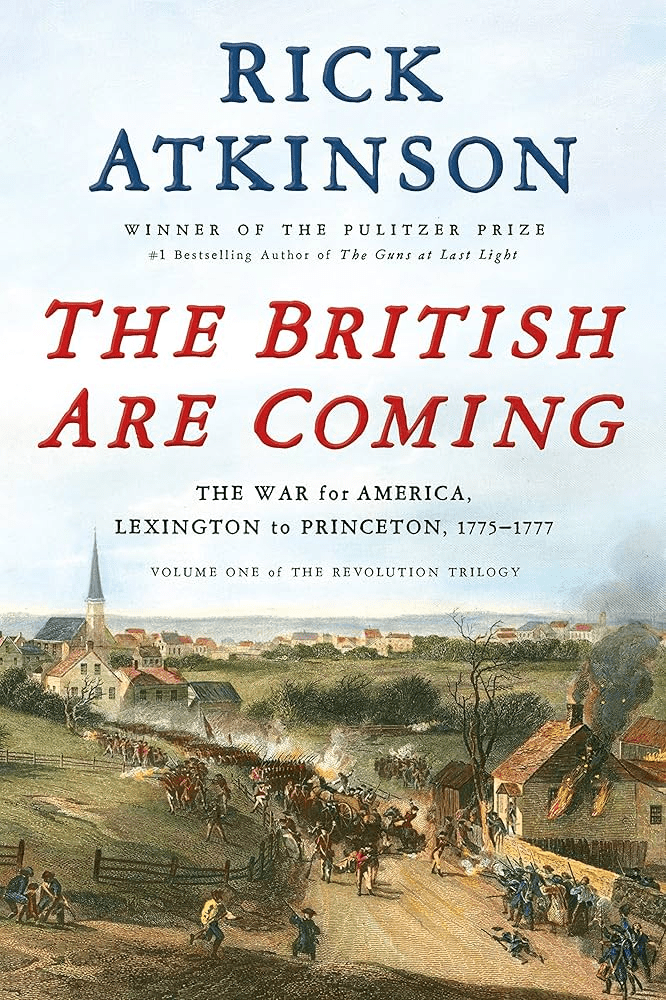
If you are watching this program so you can pick apart every little detail, you are not going to enjoy yourself. And for what it is worth, Rick Atkinson has written extensively on the war. I have the first two of his Revolutionary War books and they are fantastic. Ken Burns got paid so he doesn’t really care what the people picking it apart think. Ka-Ching!
The nature of human history is this: nobody can ever detail every single event, thought, or motivation behind anything that has ever happened. No Ken Burns documentary can cover every detail to the satisfaction of every historian, professional or amateur. I can tell you from experience that no matter how many times I say “This is just scratching the surface” on Dave Does History, the emails and calls still roll in telling me I forgot something or accusing me of having left out something.
And the assumption is always the same. If a historian leaves something out, it must have been for political or ideological reasons.
That has already started with the American Revolution documentary too. According to one critic, every time something positive is said about George Washington, two negative things follow.
Maybe that is ideological or politically motivated. The real question is this: was it, you know… true?
Here is what I think about the PBS documentary “The American Revolution.” If you want to know something about the American Revolution, watch it. You will learn something. And like all good history should do, it may encourage you to go study the subject for yourself. Maybe you will find mistakes or some indication of political bias.
But how would you know unless you go look for yourself?
There is more than one documentary about the war. There are thousands of books about it, including Atkinson’s, that can give you more detail than you could possibly absorb in a lifetime. Ask me for a reading list. I am always happy to share it.
Watch it or don’t. Understand this though: all written history is editorial. Someone had to decide what to include or to not include. Someone had to decide what conclusions can be drawn or what any of it means. Every historian has a different philosophical bent and a different idea of what is important.
You can learn from all of them. The Roman poet Ovid once said that it is right to learn, even from one’s enemy (my paraphrase).
And this part is important, so listen well:
You are allowed to enjoy it, because it’s telling a great story…
*dinq (dink) – noun – qualifications delinquent
1. a non-qual on a submarine who is behind on his/her submarine qualifications. 2 – a useless as can possibly be person who has no business saying anything about submarines. 3. a person who is a useless as tits on a boar hog and lower than whale dung.



 DAVE DOES HISTORY
Leave a comment