
UNCLASSIFIED
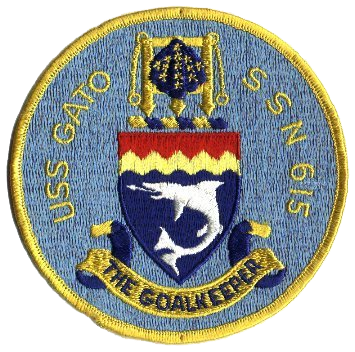
The Barents Sea was gray and angry on November 15, 1969. Beneath those frigid waves, two nuclear submarines—one American, one Soviet—found themselves in a dance of shadows that neither captain intended to finish with a crash. The USS Gato, an American attack submarine built for silent hunting, and the Soviet K-19, a ballistic missile boat already infamous among sailors as “the Widowmaker,” collided 200 feet below the surface. No lives were lost, no missiles fired, but for a few long seconds, the Cold War trembled on the edge of disaster. What followed was a cover-up so complete that even the men who served aboard Gato rarely spoke of it for decades. The “Barents Bump,” as it’s come to be called, was one of the closest peacetime encounters between nuclear powers that could have turned catastrophic.
By 1969, submarine warfare was the unseen frontier of the Cold War. The surface fleet was for show. The real contest played out beneath the waves, in darkness, where a mistake could start a nuclear exchange before any admiral knew what had happened. The Soviet Union had spent the 1960s trying desperately to close the technology gap with the United States. Their early nuclear submarines were noisy, accident-prone, and limited in range, but they carried one essential asset: nuclear-tipped ballistic missiles. These subs gave Moscow the ability to retaliate even if its land-based missiles were destroyed. For a regime obsessed with deterrence, that was everything.
The K-19 was the first of its kind, a Hotel-class ballistic missile submarine that gave the Soviet Navy its first credible nuclear deterrent at sea. By Western standards, it was crude—its missile range barely reached beyond the Barents—but it was a beginning. American submariners called such Soviet boats “boomers,” and they made it their job to find and follow them. The United States developed fast, quiet attack submarines—like the USS Gato—to stalk these SSBNs. Gato’s job was to gather intelligence on Soviet missile patrols and to be ready, in wartime, to destroy them before they could launch. It was a dangerous, invisible war of nerves fought in silence.
USS Gato (SSN-615) was a Thresher/Permit-class nuclear-powered attack submarine, a machine built for speed, stealth, and lethality. She displaced about 4,200 tons submerged and could dive well beyond 1,300 feet. Commissioned in January 1968, she was still a relatively new boat in 1969, commanded by experienced officers and armed with torpedoes and SUBROC nuclear depth rockets. She was part of an elite fleet that carried out the U.S. Navy’s most secret missions, codenamed Holystone. These operations sent submarines deep into Soviet waters to record radio traffic, monitor missile tests, and trail ballistic submarines leaving their northern bases.
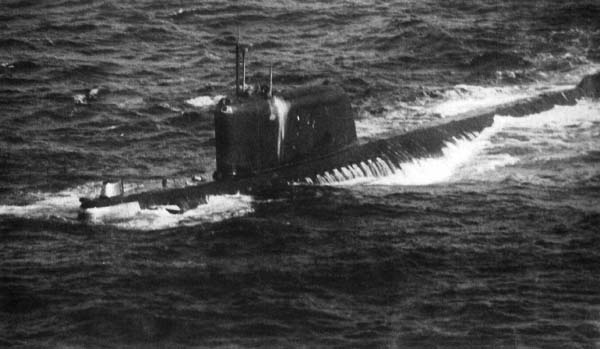
K-19, by contrast, was already infamous within the Soviet Navy. Laid down in 1958 and commissioned two years later, she was an engineering triumph on paper but a deathtrap in practice. Even before her launch, workers had died building her—fires, chemical leaks, accidents, and even an ill-fated christening where the champagne bottle refused to break, an omen sailors did not forget. In 1961, disaster struck during a patrol when a reactor coolant pipe ruptured. The crew, trapped far from help, improvised a repair that saved the boat but exposed them to lethal radiation. Eight died immediately, and fifteen more succumbed later. The Soviet Navy repaired K-19, but her reputation never recovered. Sailors called her “Hiroshima.” Still, the Soviet Union could not afford to scrap her. She continued to serve, an aging relic of Moscow’s first attempt at nuclear sea power.
On November 15, 1969, K-19 was on patrol in the Barents Sea, a routine mission near the edge of Soviet territorial waters. The USS Gato was somewhere nearby, running silent, perhaps a hundred feet deeper. Gato’s crew was performing standard intelligence-gathering work, possibly recording communications or sonar profiles from Soviet ships leaving Severodvinsk. At 200 feet, she was in perfect position to shadow a Soviet submarine without being detected. The tactic was well-practiced: find the Soviet boomer, settle in behind it, and ride its noise like a ghost in the wake.
The blind-spot tactic was both ingenious and perilous. Soviet submarines, especially the early Hotel and Echo classes, generated a loud propeller wash that created a dead zone aft where sonar could not detect anything. American boats learned to exploit this, slipping into that cone of silence and following the Soviet submarine so closely that their own noise blended with that of the target. But the closer you got, the smaller the margin for error. If the Soviet captain made an abrupt turn—a “Crazy Ivan”—the American submarine might find itself suddenly in front of a 5,000-ton battering ram moving through the dark.
That appears to be exactly what happened. K-19’s captain, possibly executing one of these rapid turns to check for a trailer, suddenly crossed Gato’s path. At about 200 feet below the surface, steel met steel. The impact was not catastrophic, but it was violent enough to throw men from their stations and set alarms blaring on both vessels. Gato’s hull rang with the sound of twisting metal. On K-19, the sonar dome was obliterated, and the forward torpedo tube covers were smashed inward. The Soviet crew scrambled to control flooding and check the reactors.
Inside Gato, the immediate reaction was shock followed by fear. For an instant, the men in the control room did not know what they had hit. It could have been a rock outcropping, an iceberg, or a Soviet counterattack. The weapons officer began readying a SUBROC—a rocket-propelled nuclear anti-submarine weapon—and three nuclear-armed torpedoes. The order to fire was seconds away when the captain intervened, stopping the sequence before it could begin. Had he hesitated, the world might have learned about this encounter in the worst possible way: as the opening shots of a nuclear war.
Both submarines survived the impact. Gato sustained only minor dents, likely on the reinforced section near her reactor compartment. Her systems remained functional, and she continued her patrol. K-19 was not so fortunate. The Soviet boat suffered extensive damage, including the destruction of her sonar gear and bow planes. Without sonar, she was effectively blind. Her captain blew emergency ballast tanks and surfaced, limping back toward her base for repairs. Soviet sources later suggested that if K-19 had been traveling two or three knots faster, the collision would have sliced Gato in half.
The aftermath of the collision was handled with the secrecy that defined the Cold War. On the American side, reports indicate that Gato’s commanding officer was ordered to falsify the submarine’s log, recording the patrol as ending two days earlier due to mechanical failure. According to some accounts, he refused, perhaps believing that history deserved a more accurate record. The Navy buried the incident in classified archives, and the crew was told not to discuss it. The Soviets, for their part, issued no protest or diplomatic complaint. They may not have even known for certain what they had struck, only that one of their subs had returned damaged from an unknown encounter.
The Gato returned to her normal duties, the collision known only to a handful of officers. K-19 was patched up once again, her luck somehow continuing to hold. But her reputation darkened further. Three years later, in February 1972, she caught fire during a patrol, killing twenty-eight men. She was repaired again, sent back to sea again, and again misfortune followed. It seemed that fate had marked her from the beginning. When she was finally decommissioned in 1991, sailors of the Northern Fleet were glad to see her gone.
The Barents collision was not unique. Throughout the Cold War, U.S. and Soviet submarines collided more often than either side admitted. The silent war beneath the sea was full of close calls. In 1970, the Soviet K-108 and the USS Tautog collided in the Pacific. In 1981, the K-211 struck either USS Sturgeon or the British HMS Sceptre. Even as late as 1992, after the Soviet Union had collapsed, the USS Baton Rouge and the Russian K-276 Kostroma bumped hulls near Murmansk. Each time, the public learned little, and both navies quietly moved on.
These collisions were symptoms of a broader truth: the Cold War at sea was always closer to turning hot than anyone wanted to believe. Both sides were desperate for information about each other’s nuclear capabilities. The Americans feared a sudden Soviet missile breakthrough, while the Soviets feared that American attack submarines could destroy their nuclear deterrent before they could respond. So the Americans shadowed, recorded, and listened. The Soviets countered with unpredictable maneuvers and increasingly advanced sonar systems. Every patrol was a gamble between information and annihilation.
The secrecy surrounding these missions was absolute. Even within the Navy, few people knew about Holystone operations. The intelligence gathered—sound signatures, communication frequencies, and patrol routes—was invaluable to American strategists, but the risks were enormous. A single miscalculation could ignite a war. The Gato-K-19 collision was a perfect example: an accident born from two submarines doing exactly what they were built to do, both operating in total darkness, both carrying nuclear weapons, and both completely unaware of how close they came to catastrophe.
In the years since, a few details have surfaced from declassified documents and memoirs. We know that Gato’s commanding officer was calm and decisive, preventing what could have been the first nuclear use at sea. We know that K-19’s crew fought heroically to save their ship yet again. And we know that both nations chose silence rather than escalation. It was easier to pretend nothing had happened than to admit that their submarines had nearly started a nuclear war in peacetime.
K-19 continued her cursed career until the end of the Soviet era. In 2002, her rusting hull was finally dismantled, her reactors defueled, and her name removed from service. The American Gato lasted longer, serving quietly through the 1970s and 1980s before being decommissioned in 1996. She never had the infamy of her Soviet counterpart, but among submariners, she was respected as a capable, steady boat that had once brushed history’s edge and survived.
The Barents Bump, as the collision is now called, remains a sobering reminder of what the Cold War really was: not just a battle of ideologies, but a constant, perilous balancing act conducted by young men in steel coffins under the sea. These submariners operated in total silence, carrying weapons powerful enough to erase cities, yet often just feet away from the enemy they were sworn to destroy. Theirs was a war without glory, without headlines, and without memorials—only the occasional shuddering impact in the dark to remind them how thin the line was between duty and disaster.
The Gato-K-19 collision faded into obscurity, buried under decades of secrecy and denials. But it deserves to be remembered. It captures the essence of the Cold War: fear wrapped in discipline, danger hidden behind professionalism, catastrophe averted only by restraint. In those few seconds of chaos beneath the Barents Sea, humanity brushed against its own destruction and, through sheer luck and the judgment of a few calm men, stepped back from the brink.
When K-19 was finally retired, her crew gathered for the last time, gray-haired men who had served on one of the most ill-fated vessels ever to sail. They drank to the lost, to the lucky, and to the long years they had survived in the service of an empire that no longer existed. The Americans who had shadowed them—those who rode the black boats like Gato—did the same in their own quiet reunions, bound by a brotherhood only they could understand. Both sides knew what had been risked. Both sides knew how close they had come. And both sides, in their own way, gave thanks that on that cold November day in 1969, the sea itself chose mercy over fire.
Sources
Cold War Submarines: The Design and Construction of U.S. and Soviet Submarines, 1945‑2001 by Norman Polmar and K. J. Moore
K‑19: The Widowmaker: The Secret Story of the Soviet Nuclear Submarine by Peter A. Huchthausen
Blind Man’s Bluff: The Untold Story of American Submarine Espionage by Sherry Sontag, Christopher Drew & Annette Lawrence Drew




 DAVE DOES HISTORY
Leave a comment