
The Continental Association didn’t look like the start of a revolution. It looked like a list. A set of rules. Lines of polite defiance drawn up by men who still swore loyalty to a king. It was signed in the fall of 1774, in Philadelphia, by a room full of delegates who couldn’t yet imagine what they were about to unleash. But those signatures carried more weight than gunpowder. They were the fuse that burned its way to independence.

Now, to understand what drove those men, you’ve got to picture the colonies in that year. Imagine thirteen restless teenagers all living under one very strict parent. The parent, in this case, was Parliament, and it had just found its favorite child Boston with its hand in the tea jar. The punishment was swift. The port was shut down. The local government dissolved. Troops in the streets. The rest of the colonies watched in shock. The Crown meant to make an example out of Massachusetts, to warn the rest. Instead, it united them.
The message from London was simple enough: “Obey, or suffer.” But in America, a new kind of message was forming, carried by word of mouth, by letter, by pamphlet. The cry went up from taverns and pulpits and newspapers alike. “The cause of Boston,” they said, “is the cause of America.” And that right there was the moment it stopped being a local protest and started being a national one.
The colonies weren’t yet sure what that meant. They’d never done anything as a single people before. Each one had its own laws, its own customs, its own sense of itself. But when the punishment came down, they all felt the sting. And something old and dangerous stirred in them. The same thing that had driven their ancestors across the Atlantic in the first place: a refusal to be told what to do by people three thousand miles away.
So they decided to meet. To talk. To figure out, somehow, how thirteen squabbling colonies could act as one. They called it the First Continental Congress. They gathered in Philadelphia that September, not far from where the Liberty Bell would someday hang, though none of them knew that yet. Some of them came ready to fight. Others just wanted peace on better terms. Every one of them knew the stakes.
It was an odd mix of characters. John Adams from Massachusetts, already talking like a man who saw the storm coming. George Washington from Virginia, tall and reserved, watching the room more than he spoke. Patrick Henry, who could set fire to a room with his voice. They weren’t rebels. Not yet. They were Englishmen asking to be treated like Englishmen. They still toasted the king. They still talked about rights, not independence. But deep down, they knew what was coming. You could smell it in the air.
The Congress debated what to do about Britain’s “Intolerable Acts,” which had closed Boston’s port and stripped away Massachusetts’ charter. They couldn’t send an army. Not yet. They didn’t even have a government that could raise one. But they had one weapon that could strike anywhere in the empire. Trade.
You see, America’s economy ran on British imports. Cloth, tools, sugar, rum, tea, even the paper they printed their newspapers on. Britain sold them everything and bought their exports in return. So if the colonies stopped buying, stopped selling, stopped trading altogether, it would hurt. Maybe not enough to bring Parliament to its knees, but enough to make them listen. That was the idea.
It wasn’t new. The colonies had tried boycotts before, during the Stamp Act crisis and the Townshend duties. But those efforts had fizzled because they were voluntary. Merchants cheated. Consumers wavered. People got tired of sacrifice. This time, Congress meant business. They would make the boycott mandatory, and they would enforce it themselves. That was the spark of genius—or madness, depending on your view. Because once Americans began enforcing their own laws, they had already stopped being subjects.
The document they produced was called simply “The Association.” On October 20, 1774, they signed it, agreeing to stop importing goods from Britain starting December 1. They swore to stop drinking East India Company tea immediately. They agreed to stop exporting goods to Britain and the West Indies the following September. And they promised, in writing, not to cheat. Not to raise prices. Not to profit from scarcity. Anyone who did would be branded an enemy of American liberty.
It wasn’t just an economic plan. It was a moral one. Article 8 of the Association called for colonists to live with “frugality, economy, and industry.” No gambling. No cockfighting. No horse racing. No extravagant funerals. No theater, which, if we’re honest, probably hurt the actors more than the audience. This was about more than trade. It was about virtue. The delegates wanted to create a society worthy of freedom, not one addicted to British luxuries.
In other words, if Britain represented corruption, America would stand for moral discipline. They even included advice about raising sheep to build up domestic wool production. It’s hard to sound heroic while talking about sheep, but there it is. The idea was to make America self-reliant, one sweater at a time.
The Association also required that any goods already ordered from Britain but not yet shipped should either be returned, stored at the owner’s risk, or sold at public auction to raise funds for the suffering people of Boston. Imagine that—turning British merchandise into charity for the victims of British policy. That’s the kind of poetic justice that makes history hum.
Now, of course, a document is only as strong as the will to enforce it. And enforcement would prove to be the Continental Association’s real invention. Article 11 called for the creation of local “Committees of Inspection and Observation.” Each town and county would elect men—usually respected citizens, though sometimes just the loudest ones—to make sure everyone obeyed. And obey they did. Because if they didn’t, the consequences were brutal.
There were about seven thousand of these committee members across the colonies. Think of them as the neighborhood watch meets the Inquisition. Their job was to make sure every barrel, every ship, every market transaction complied with the rules. They inspected goods, questioned merchants, and kept lists of offenders. They had no legal authority, but they had something more powerful: public opinion. And a printing press.
If you broke the Association, your name went in the newspaper. That was the 18th-century equivalent of being canceled. You’d be labeled “an enemy of American liberty,” and nobody would buy from you, talk to you, or sit next to you in church. In a small colonial town, that was social death. A few unlucky violators found themselves tarred and feathered, paraded through the streets to the sound of jeers and drums. It wasn’t pretty. But it worked.
Thomas Jefferson himself got caught up in it when he had to explain to his local committee that the British-made windows he’d ordered for Monticello had been bought before the ban. Even Jefferson had to answer to the mob.
The enforcement didn’t stop at goods. It extended to speech. If you “spoke reproachfully” of the Congress or its resolutions, you could find yourself summoned before a committee. Nathan Alldis of Connecticut learned that the hard way when he spread rumors about enlistments. He was forced to apologize publicly and pledge future obedience. The same pattern played out across the colonies. Dissent was tolerated right up until it wasn’t.
The committees became, in effect, shadow governments. They handled disputes, organized militias, supervised elections, even regulated morality. In some places, they replaced royal officials entirely. They were the Revolution before the Revolution. And they gave thousands of ordinary Americans their first taste of political power.
That power could be intoxicating. Sometimes the committees went too far. They bullied, they threatened, they punished people for trivial offenses. But they also kept order. They made the Revolution real. When the royal governors fled their capitals, these local committees filled the vacuum. Without them, independence would have been chaos.
The pressure to conform was immense. Signing the Association became a badge of loyalty. Refusing to sign marked you as a traitor. And for those who tried to stay neutral—well, there was no neutral ground anymore. You either stood with the cause or against it. The Revolution didn’t just divide America from Britain; it divided America from itself.
That tension even spread between colonies. When Georgia dragged its feet about joining the Association, the Charleston committee in South Carolina declared the entire province “unworthy of the rights of freemen” and cut off trade. So much for southern hospitality. Article 14 of the Association made it clear: any colony that failed to comply would be treated as an enemy. It was unity through pressure, not persuasion.
And yet, for all its harshness, the Association had something beautiful at its core. It taught Americans to act together. For the first time, farmers in Massachusetts and planters in Virginia were following the same rules, reading the same resolutions, speaking the same political language. The phrase “American liberty” began to mean something real.
Up until then, most colonists still thought of themselves as British. Loyal to the Crown, proud of the empire, just fed up with the ministry in London. But the Association changed that. By submitting to the authority of the Continental Congress rather than the King, Americans shifted their allegiance from monarchy to representation. The committees were elected by ordinary voters, not appointed by royal decree. Power was suddenly local, accountable, and homegrown.
Even the language of loyalty evolved. Early declarations still called the signers “his Majesty’s most dutiful subjects.” By 1775, that phrasing had quietly disappeared. The talk was now about “the rights and liberties of America.” That’s no small thing. When people stop pledging loyalty to a king and start pledging it to an idea, you’ve got yourself a revolution in motion.
Of course, not everyone welcomed this new order. Loyalists, or Tories as they were called, saw the committees as mobs run amok. One pamphlet accused them of “erecting a tyranny more intolerable than the one they pretend to resist.” And in some places, they had a point. There were excesses. Innocent people humiliated. Merchants ruined. But those committees also did something the old British system never did: they gave ordinary people a voice.
For the first time, a farmer’s opinion on politics mattered as much as a governor’s. That was new. That was dangerous. And it was exhilarating.
By the spring of 1775, the Association had created something that no act of Parliament could destroy—a sense of shared destiny. Imports from Britain had collapsed to a fraction of what they’d been the year before. The economy was hurting, sure, but the people were hardened. The moral discipline Congress demanded had become a kind of national armor. When the shooting started at Lexington and Concord that April, the political groundwork was already in place.
The Committees of Inspection became Committees of Safety. Then Provincial Congresses. Then State Assemblies. The same men who once enforced the boycott now raised militias, collected taxes, and issued decrees. The machinery of government had quietly changed hands without a single royal signature.
That was the real miracle of the Continental Association. It wasn’t about tea or trade or wool. It was about power. It transferred authority from the empire to the people, one committee meeting at a time. The colonists didn’t just protest tyranny—they practiced self-government, learned its rhythms, its compromises, its dangers. By the time they declared independence two years later, they already knew how to run a country.
The Association failed in its immediate goal. It didn’t make Parliament repeal the Coercive Acts. It didn’t reconcile the empire. But it succeeded where it mattered most. It built a nation out of outrage. It turned subjects into citizens. It made every act of consumption—every cup of tea refused, every British coat left unsold—a declaration of belonging.
Some historians call it America’s first union, and they’re not wrong. It linked thirteen separate provinces into a single organism that could think, decide, and act together. It created the first real category of “the American people.” You were one of them if you signed. You weren’t if you didn’t.
And that’s what revolutions do, in the end. They draw lines. They force choices. They make you decide who you are.
The Continental Association did all of that before the first musket fired in anger. It built the committees, trained the citizens, and shaped the moral framework that would carry the Revolution forward. Without it, the Declaration of Independence would have been just words on parchment. The Association made sure there was a country ready to live them.
By late 1775, the talk of reconciliation was fading fast. The King had declared the colonies in open rebellion. The British navy was tightening the blockade. And the committees, those local enforcers of the Association, were now calling themselves “Councils of Safety.” The machinery of revolution was complete.
When you step back and look at it, the Continental Association was less a boycott and more a covenant. It asked ordinary men and women to sacrifice comfort for principle, to surrender ease for freedom. It wasn’t glamorous work. It meant empty shelves, homemade clothes, bitter coffee instead of tea. It meant suspicion, hardship, and sometimes violence. But it also meant unity. It gave America its first collective heartbeat.
So, when you hear about 1774, don’t just picture powdered wigs and parchment. Picture a farmer in Virginia refusing imported sugar. Picture a merchant in Boston closing his books for the last time. Picture neighbors whispering about who signed and who didn’t. Picture the slow, stubborn birth of a nation that was learning, painfully, how to stand on its own.
That’s the story of the Continental Association. A quiet rebellion that became the rehearsal for revolution. A paper agreement that taught a people to act like a nation. And a promise, written in the steady hand of men who still called themselves loyal subjects, that one day they would be free.



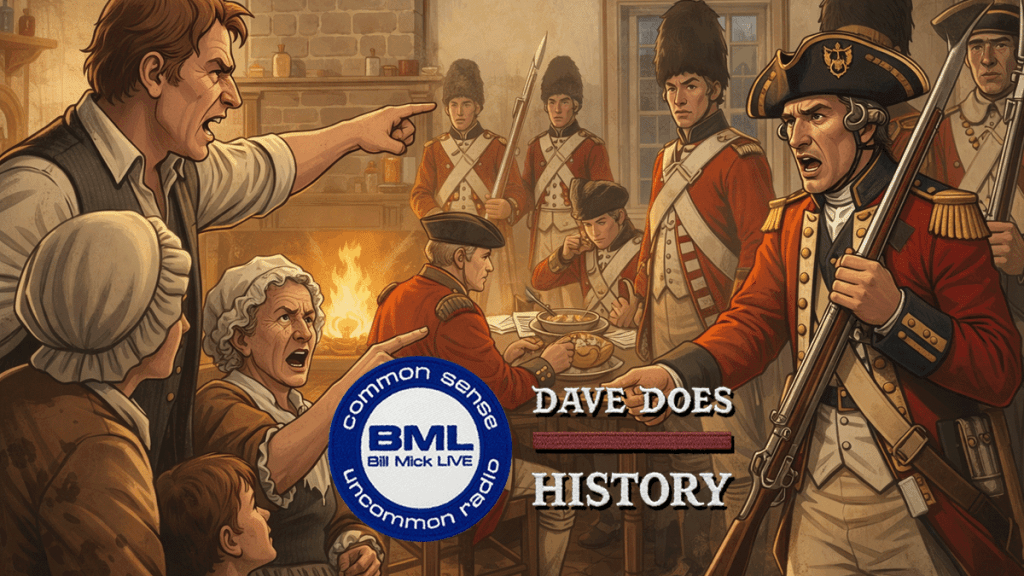
 DAVE DOES HISTORY
Leave a comment