
The air was wet and sharp over the Seine at first light. A cart rattled across the stones, an old rumble that belonged to cabbages and coal, not to a queen. She sat upright, hands bound, hair cut close, her profile thinner than any portrait had ever allowed. She was thirty seven, a widow, a mother without her children, and a number in a ledger. The guards called her the Widow Capet. The clerk had written her down as Prisoner 280 of the Conciergerie. That bleak new name fit the season. It stripped off the gold leaf and left a woman alone with a crowd. The city that once adored her had come to watch her die.
It is a hard thing to admit that a execution like this was years in the making. The blade falls in a breath, but the path to it is long and patient. Here, that path began when a fourteen year old Austrian archduchess crossed a border to marry a French prince and found herself in a palace that was a stage. Versailles loved youth and shimmer, but it loved gossip more. The new dauphine had a foreign name and a foreign mother and an alliance that many Frenchmen still considered an insult to their history. They called her the Austrian woman, an epithet that rolled off the tongue with a bite. In a time when bread riots could start with a rumor, her wardrobe and gardens became political. The little hamlet at Trianon looked like make believe to a people who no longer had the patience for make believe. Her image hardened into a mask. The pamphlets gave her a nickname, Madame Deficit, and the mask stuck.
A scandal sealed the caricature. The Diamond Necklace Affair was a sordid little opera staged by impostors and fools. The queen did not order the necklace. She did not meet a cardinal in a garden. None of that mattered. What mattered was the appetite of a public looking for a villain and a press eager to play chef. A tale that confirmed the myth was worth more in Paris than the truth. Once the myth was in circulation, it did not need her help to travel. It rode from coffeehouse to club until it could sit comfortably in the National Assembly’s balcony. By the time the storm clouds gathered over the Bastille, it was not the bracelet on a royal wrist that angered the crowd. It was the story they had already decided was real.
Then politics stopped knocking and kicked in the door. The king, a man more pious than decisive, faltered. The queen, once mocked as a doll, became the steel in the royal spine. She searched for allies among constitutional monarchists who believed the Revolution could be squared with a stronger executive. Names like Barnave and the Lameth brothers entered her cipher books, and secret talks pressed toward a compromise that might hold back republicanism with statutes and promises. None of it sat well with her instincts. She smiled and nodded for a time, then wrote to her brother, the emperor, that the only answer was force. She wanted an armed congress of powers that would deal from strength and put the monarchy back in its chair. The whispering and her caution with the Feuillants froze their softer policy and left them stranded. When war with Austria came in April 1792, her intrigues looked like betrayal, and the anger that had been growing in the streets took its chance. On August 10, 1792, the Tuileries fell, and with it the old world of Bourbon habit.
What followed was a long humiliation dressed as a legal process. The family was sequestered in the Temple tower. The summer wore on and grew darker. On September 3, 1792, the Princess de Lamballe, who had stayed loyal to the queen when loyalty came with a price, refused to renounce the monarchy. She was torn from prison, butchered by a mob, and her head was carried on a pike outside the queen’s windows. There are some details that do not get better with time. This is one of them. In January 1793, Louis XVI went to the scaffold. The kernel of the Revolution had been planted. By August, the widow was moved across the river to a prison that had a reputation even before terror spread as policy. It was called the Antechamber to Death. There she waited for the Tribunal. The date would be October 14. Two days later would be the end.
Her ordeal inside the Conciergerie deserves to be told slowly. The transfer came in the early hours of August 1, 1793. Even queens answer to the habits of jailers, which start before dawn. The new cell was damp and watched night and day by two gendarmes. Straw gave no comfort. Walls held their cold even in August. She was a number and a body under observation. There was a rescue attempt, the Carnation Plot, that fizzled and only tightened the screws. The stark truth is this: the more she was diminished, the more her image began to change in the minds of those who had loved the crown. Suffering has a way of stealing back a little dignity from people who thought they would never need it. Royalist writers would later draw parallels to the martyrs of the early church. Even if those parallels were exaggerated, the point stands. Those days were grim. They marked her down for seventy six.
The path to the courtroom was lined with paper. Indictments make brave noises when the verdict is already chosen. High treason stood at the top of the page, anchored to her coded letters, her Austrian blood, and the simple fact that France was now at war with a house that had once called her daughter. The list added the ruin of the treasury, a useful political charge in a hungry city, and then, at the bottom, the ugliest thing a court can say about a mother. Her young son had been primed to repeat a lie. We do not have to repeat it here to feel the filth of it. The Committee of Public Safety had decided that guilt would be a matter of theater, and theater needs props. This accusation was the prop that would stain the floorboards.
On October 14, 1793, they brought her before the Revolutionary Tribunal. Her lawyers were brave in a losing cause and had almost no time to prepare. The hearing dragged over twenty hours. Forty witnesses paraded across the stage. Most had little to offer beyond rumor and pamphlet gossip dressed up as testimony. It did not matter, because the point of the exercise was not to establish facts. The point was to let Paris watch the pageant of a dethroned queen while the government pointed and called it justice. Still, there was a moment when the mask slipped. When the charge about her son was read out, she stayed silent at first, then turned not to the judges but to the people in the gallery and said that Nature itself refused to respond to such a charge brought against a mother. For a heartbeat, the room forgot its lines. There is an old story that a juror carried news of that moment to Robespierre, who smashed his plate on hearing that sympathy had entered the room and muttered that Hébert was an imbecile. Even a terror merchant knows the danger when pity crosses the aisle.
The verdict was delivered in the early hours of October 16. Guilty of depleting the treasury, guilty of conspiring against the internal and external security of the state, guilty of high treason. There was no pause between verdict and sentence. Death by guillotine. The clock was already moving toward noon.
We return now to the woman in white. If there is any mercy in these last hours, it lies in the letter she wrote to her sister in law, Madame Élisabeth. She put down a few pages that found a way to be calm without being cold. She asked for forgiveness, offered it in return, and placed her children in God’s hands. She said she had lived only for them and for her sister. A jailer took the sheet. It did not reach its destination. Many historical papers carry dust and stamps and signatures. A letter like this carries a weight that needs no seal.
The humiliations had a ritual flavor. The scissors cut her hair. The ropes bit her wrists. She was placed not in a carriage but in an open cart, so the city could read her face the way it had once read libels. For an hour she rode past people who had once cheered wedding bells. She sat very straight and stared ahead. Her husband had been granted a closed coach for his last ride. She was given the full measure of public theater. The Revolution had a lesson to teach. It wanted to show the world that thrones rot and that silk frays when history pulls the thread. To be honest, there are days when the world needs that lesson. There are other days when the crowd starts to like the taste of it too much.
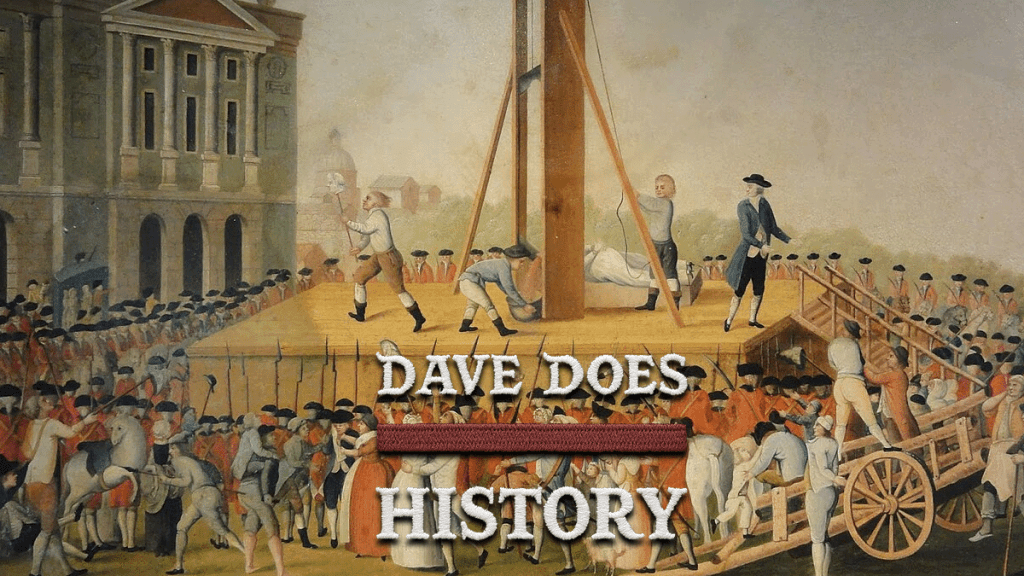
At the Place de la Révolution, the scaffold rose above a square that had already seen too much. She climbed the steps without wobble. Then the small human moment that has survived every retelling. She stepped on the executioner’s foot and apologized. Pardon me, sir. I did not do it on purpose. It was the last sentence she would speak. The blade fell at fifteen minutes past noon. The body went into an unmarked grave at the Madeleine cemetery. The crowd swallowed, then looked for its next course. That is how mobs eat. There is always another plate.
If the story ended there, it would be simpler. It did not end there. After the Terror burned itself down, the past returned in ceremonial dress. In 1815, during the Bourbon Restoration, the remains of Louis XVI and Marie Antoinette were exhumed and given Christian burial in the Basilica of Saint Denis, where kings sleep under marble phrases that speak of order and the hand of God. The Revolution had declared that crowns were trinkets and that the people could rule themselves without ghosts. The Restoration replied with incense and Latin. France has always argued with itself in stone and song.
I have not forgotten the Princess de Lamballe. The thing that happened to her is part of this story because hatred does not know how to draw neat boundaries. A woman who would not swear against her queen was dragged into the street and butchered. Her head became a message, carried like a trophy. It passed beneath the queen’s prison windows. There are many fine theories about liberty and virtue and the general will. They should all be tested against that image before anyone calls them pure.
A fair history should look both ways. The people who hated Marie Antoinette had reasons. Bread was expensive. Taxes were heavy. The court wasted money and time. Even a generous reading of her character will struggle to find prudence. She could be vain and stubborn at exactly the wrong moments. She pushed her husband toward hard lines when compromise might have saved him. She wrote one thing to Barnave and another thing to her brother. She could not resist the urge to rescue the old order with foreign strength. These are not trivial faults. They helped bring the monarchy down. When a dynasty loses its moral authority, no parade can hold the walls up.
A fair history should also say this. The Tribunal was theater. The outcome was rehearsed. A mother was forced to listen to a lie tossed at her like a rotten fruit. She answered like a mother. The room fell quiet because people are not entirely made of slogans. Even in a time that prized virtue as a public show, private decency could still pierce the skin. That moment did not save her. It did reveal something the Terror tried to deny, that human nature does not bend as easily as committees imagine.
What about the famous misquote, the one about cake. It does not appear in the trial record. It does not appear in her letters. It predated her life and was recycled because it fit the costume the pamphleteers wanted her to wear. That is how reputations die. Not with a dossier, but with a line that flatters the teller. The truth is less dramatic and more stubborn. The truth is that she was no monster and no saint. She was a woman raised in a system that believed it could domesticate power with ceremony. When the ceremony fell apart, the system had nothing left to sell but fear.
There are some facts that put a sharper frame on the portrait. The monarchy’s fall was essentially complete on August 10, 1792, when the Tuileries were stormed and the Swiss Guards died at their posts. The rest of the story, from the Temple to the Conciergerie to the scaffold, moved within a narrower hallway. The date of her trial is clear. October 14, 1793. The date of her death is clear. October 16, 1793. When we talk about the Revolution, we like to stretch it across years and manifestos. This part took two days from charge to blade, and that speed tells you a lot about what the Terror thought justice was.
It also tells you something about the crowd. Citizens who are encouraged to boo at noon will not always learn to govern by evening. A Republic is a fragile thing. It needs patience and habit and law. That is the paradox of those years. The very movement that had to teach France how to be a citizenry kept throwing the hard lessons away each time a spectacle was more satisfying. It took time, and often blood, to learn that indulgence in public cruelty is not the same thing as public virtue.
There is a softer lens. People change their minds when they watch someone suffer with poise. The prison stripped her of advantage and left her with only posture and words. In those last weeks, posture and words counted. The letter to Élisabeth counted. The apology on the scaffold counted. They are small things, but small things sometimes survive when the big structures collapse. It is why royalists later could call her a martyr without sounding ridiculous to themselves. They saw a woman hold on to dignity when almost everything else had been taken away.
If you prefer harder proof, consider the paper trail around her intrigues. There is no question she courted Barnave while warning Leopold that she did not trust Barnave’s route. There is no question that once war began, her secret messages to Vienna went from political maneuver to something like treason in the eyes of the law. If you want to pass a modern verdict, you can. I prefer to let the record describe the mess and let the verdict rest. It is possible for a person to be both brave and foolish in the same hour. That is not a contradiction. That is a human biography.
We should speak plain about the boy. On July 3, 1793, officials came at night and tore the young Louis Charles from her arms. They handed him to a cobbler who would reeducate him. The choice of a tradesman was not an accident. It was a symbol designed to please a new order and humiliate the old. The mother’s grief has no politics. The guards did not care. The Committee did not care. The boy would be used, and then he would be discarded. If there is a single moment in this saga that can still make your stomach burn, it is that night.
Now look again at the square. The crowd pushes close. The blade shines like a fresh coin. A priest murmurs. A drummer taps. The executioner resets his stance. She makes her small apology. The machine does its work. A shout rises, then fades. When people say the Revolution consumed its children, this is one thing they mean. It also consumed its trophies and moved on. Robespierre himself would mount the same platform within a year, proof that guillotines are devoutly egalitarian. The square that had been named for Revolution would one day be named for Concord. Names are cheap. Stones remember.
There is a last lesson I would draw and it cuts against the easy moralizing. If you want to defend monarchy, you can point to her final composure and call it grace. If you want to defend the Revolution, you can point to years of waste and incompetence and call the verdict historical necessity. Both will be partly right and mostly incomplete. The better lesson is that politics is not a fairy tale with villains and princesses. It is a sequence of choices under pressure. She made choices born of her station, her upbringing, and the limits of her world. Those choices collided with a country that had run out of patience. The result is what you read in the ledger of October 16.
I will leave you with two voices from the aftermath. Edmund Burke, whose prose could warm the coldest marble, wrote that with her fall the age of chivalry was gone. He would have favored incense and a dirge. Thomas Jefferson, who kept his eye on cause and effect, said that had there been no queen there would have been no revolution. He would have favored a ledger and a line drawn under it. Between those sentences lies the whole argument of modern politics, the tug of sorrow and accountability. France tried both answers. Neither one fully satisfied.
When the Basilica of Saint Denis opened its carved doors to receive her remains in 1815, a circle closed that many had thought broken for good. The bones of kings and queens do not change the price of wheat. They do not raise wages or mend constitutions. They do offer a nation a way to talk to its past. If your taste for ceremony is thin, you will shrug. If you think a civilization needs a memory that is more than slogans, you will see some sense in it. The people who dug those graves and said those prayers believed that a country does not have to agree about the meaning of a life in order to bury it with words. That is a decent belief. It is one we could use more often.
In the end, Marie Antoinette is an argument that keeps renewing itself. Was she a shallow spender who became a reckless intriguer and paid for it. Yes. Was she a woman who met degradation with control and died with steadiness. Also yes. Both truths can sit in the same paragraph. That is why she remains interesting. The Revolution tried to reduce her to a lesson, then to a warning, then to a ghost. She refuses to shrink that small. Each time we take up her story, we find a different light on the same face. The crowd saw a villain. Royalists saw a martyr. Many of us, after the heat drains out of the slogans, see a person. A complicated one. That is enough.



 DAVE DOES HISTORY
Leave a comment