
George Westinghouse was born on October 6, 1846, in Central Bridge, New York, into a family of inventors and mechanics. His father, George Westinghouse Sr., ran a small machine shop that produced agricultural equipment, and his mother, Emeline Vedder Westinghouse, came from a line of hardworking New Yorkers who valued diligence, thrift, and purpose. The boy grew up surrounded by the smell of iron and oil, the rhythm of tools, and the hum of his father’s enterprise. By the time he was ten, he could take apart and reassemble nearly any device in the shop. His mechanical instinct was not learned but innate, an early sign that his mind ran on gears and pistons rather than imagination or fancy. Yet he possessed imagination too, the kind that drives an engineer to see what could be built rather than what merely exists.
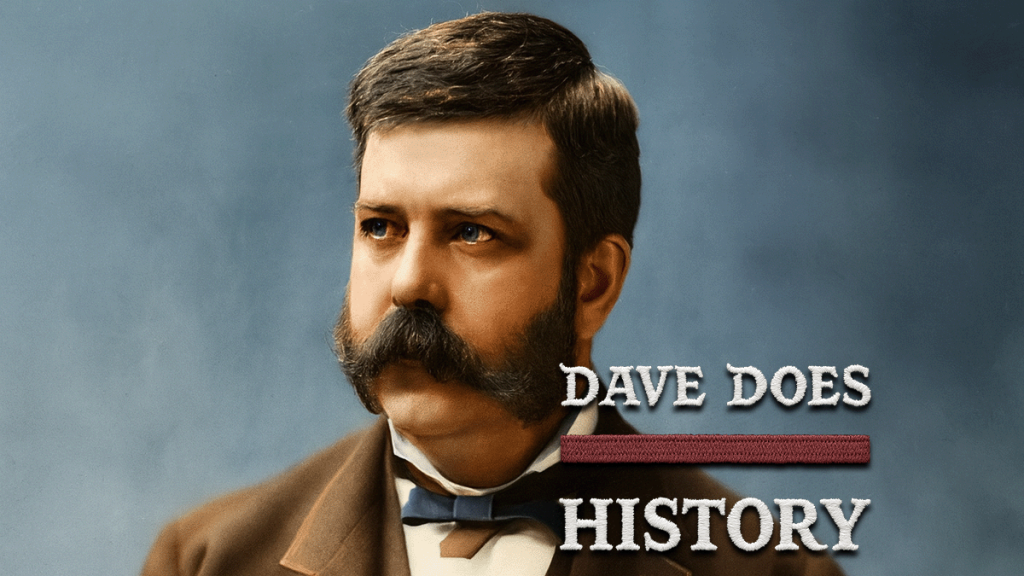
He was restless in youth, impatient with routine, and determined to find his own path. At fourteen, with the Civil War already raging, he tried to enlist in the Union Army but was turned away for his age. Two years later he succeeded, joining the 12th Regiment of the New York National Guard. He later transferred to the 16th Regiment of the New York Cavalry and finally to the Union Navy, serving as an Acting Third Assistant Engineer on the USS Muscoota and the USS Stars and Stripes. Those experiences aboard ship during the great national crisis shaped him as profoundly as his father’s workshop had done. He saw firsthand the importance of machinery maintained under pressure and the difference that a dependable mechanical system could mean for men’s lives. It left a mark that never faded.
After the war ended, he briefly attended Union College, but academia held little appeal. He preferred engines to lectures, and after only a few months he left school to begin inventing. At nineteen, he received his first patent, for a rotary steam engine. The engine itself did not change the world, but it revealed his creative bent. He also devised a car replacer, a device for lifting derailed railroad cars back onto the tracks, and a reversible frog, a rail junction piece that made switching lines more efficient. These early patents were modest but practical. They were the work of a man who solved real problems rather than theoretical puzzles.
In 1867, he married Marguerite Erskine Walker of Schenectady, who remained his lifelong companion and anchor for the next forty-seven years. Two years later, in 1868, he moved to Pittsburgh, a rough, smoky city that suited his temperament. The steel there was better and cheaper than anywhere else in the country, and the place bristled with opportunity. In those iron valleys, amid soot and sweat, Westinghouse found the stage that would make his name known to every railroad man and power engineer in America.
Railroads at the time were dangerous, thrilling, and indispensable. Trains were getting longer and heavier, but braking them safely was still done by hand. Brakemen, perched on the tops of speeding cars, twisted wheels and pulled levers, often in snow, rain, or pitch darkness. It was deadly work, and the number of lives lost each year to runaway trains or collisions was staggering. Westinghouse saw this and knew it could be done better. In 1869 he patented his revolutionary compressed-air braking system, which used the power of air rather than muscle to apply brakes on every car simultaneously. The idea was simple, but the result was revolutionary. For the first time, the engineer in the locomotive could control the entire train. He demonstrated the invention publicly in Pittsburgh, and within months the railroads were clamoring for it. That same year, he organized the Westinghouse Air Brake Company, known as WABCO, to manufacture his device.
He didn’t stop there. He improved the design into the automatic air brake, which kept the brake line under constant pressure. If a hose burst or a coupling failed, the loss of pressure automatically applied the brakes. A failure now meant safety instead of catastrophe. By 1893, Congress made air brakes mandatory on all American trains through the Railroad Safety Appliance Act, a legislative nod to Westinghouse’s genius and persistence. His company expanded quickly, establishing plants in France, England, and Germany. By 1905, more than two million rail cars and nearly ninety thousand locomotives were equipped with Westinghouse air brakes, and the name itself had become synonymous with safety and progress.
In 1881, never content to rest on a single triumph, Westinghouse founded the Union Switch and Signal Company to improve railroad communication and control. He bought patents, merged ideas, and developed electrical and compressed-air signaling systems to replace oil lamps and hand-thrown switches. The result was a complete, standardized system that could prevent accidents and manage traffic far more efficiently. Railroads around the world adopted his methods, and the age of scientific railroading began.
By then he was turning his inventive eye toward another frontier: energy. In 1884, drilling on his Pittsburgh estate, Solitude, Westinghouse struck a natural gas vein. Instead of venting it wastefully into the air, he saw potential. Gas, if harnessed safely, could light homes and drive engines. But the challenge was containment and delivery. Gas lines under high pressure were dangerous, and there was no reliable way to regulate flow. Westinghouse designed and patented a series of valves and regulators to manage pressure, and within two years he held more than thirty patents related to natural gas distribution. He used an old charter to found a new enterprise, the Philadelphia Company, which became one of the first modern gas utilities. By 1887 it served more than twelve thousand homes and hundreds of industries. He even devised a reduction valve that delivered high-pressure gas safely at low pressure to homes, making gaslight and heat practical for the first time in urban America.
Westinghouse’s curiosity and courage drew him next into the realm that would define his immortality. By the mid-1880s, electricity was transforming city life, but the question of how best to deliver it divided the industry. Thomas Edison had established his system of direct current, or DC, which worked well in localized areas but lost power rapidly over distance. Alternating current, or AC, used in parts of Europe, could travel much farther and be converted to different voltages through transformers. Westinghouse, ever pragmatic, recognized that AC could do what DC could not. In 1885 he imported experimental transformers from Europe and hired brilliant engineers like William Stanley to perfect them. Within a year, Stanley had built a working AC system in Great Barrington, Massachusetts, proving the principle that power could be transmitted efficiently across miles.
In 1886, Westinghouse founded the Westinghouse Electric Company, later renamed the Westinghouse Electric and Manufacturing Company. He then bought the patents of Nikola Tesla, whose polyphase AC motor and induction system were years ahead of their time. Tesla joined the company, bringing with him a visionary grasp of electrical theory and a flair for invention that matched Westinghouse’s own. Together they built the future of electricity.
Edison, however, would not surrender his empire without a fight. What followed became known as the War of the Currents, a brutal contest waged in laboratories, newspapers, and public opinion. Edison’s allies denounced AC as deadly, staging gruesome demonstrations in which stray animals were electrocuted to show its danger. Edison even suggested that a Westinghouse generator be used for New York’s first electric chair, an act of cynical marketing intended to link AC with death itself. Westinghouse refused to stoop to such tactics. He pressed on, improving transformers and generators, and building systems that proved reliable and safe. His confidence in the science never wavered.
The turning point came in 1893, when Westinghouse Electric won the contract to light the World’s Columbian Exposition in Chicago. His bid, at $399,000, undercut General Electric’s DC proposal by more than $150,000. The fair’s success was dazzling. More than 100,000 incandescent lamps illuminated the White City, all powered by Westinghouse’s alternating current system. Visitors marveled at the light, which seemed to spill from heaven itself, pure, steady, and brilliant. The victory humiliated Edison’s backers and vindicated Westinghouse’s vision. Two years later he secured an even greater triumph: the contract to harness the power of Niagara Falls. Using ten 5,000-horsepower AC generators designed from Tesla’s patents, Westinghouse engineers converted the thunder of falling water into electricity that flowed twenty miles to Buffalo, New York. It was the first long-distance transmission of large-scale electric power in history. When the plant came online in 1895, it was as though the natural world itself had been subdued to human reason. By 1896, even General Electric abandoned DC and signed a patent-sharing agreement with Westinghouse, conceding the field entirely.
Westinghouse’s empire stretched from railroads to power plants, from natural gas lines to telegraph systems. He founded sixty-one companies in all, each born from a patent, a principle, or an inspired experiment. His enterprises spread across Europe, with factories in England, France, Germany, and Russia. By 1910, the combined capital of his nine largest firms equaled more than twenty million pounds sterling, an astonishing sum in its day. Yet the man himself remained modest, preferring to work quietly in his laboratories or stroll through his Wilmerding factory town greeting employees by name.
He treated his workers as human beings rather than cogs in a machine. In 1881, he instituted a five-and-a-half-day work week, giving employees Saturday afternoons off, a radical notion in an era of grueling six-day schedules. His factories were bright, clean, and well-ventilated, equipped with medical offices and lunch facilities. At Wilmerding, Pennsylvania, he built a model community for the workers of the Air Brake Company, complete with electricity, running water, and gas service. He believed that good wages, decent homes, and mutual respect would yield loyalty and productivity. His record proved him right. In forty years of leadership, only one significant strike occurred in any of his companies. Labor leader Samuel Gompers once remarked that if all employers treated their people as Westinghouse did, unions would be unnecessary.
His engineers admired him as well. Unlike Edison, who insisted that all patents belong to his company alone, Westinghouse allowed inventors to keep their names on their patents while granting the firm usage rights. He believed recognition inspired better work than coercion. That spirit of respect and collaboration gave his firms a reputation for fairness that endured long after his death. The ethos of the engineer-citizen, building progress for all, found in him its truest advocate.
Even at the height of his electrical empire, Westinghouse continued to experiment. He acquired the rights to Charles Parsons’s steam turbine in 1895 and began adapting it for both stationary and marine power. His engineers developed turbines capable of generating hundreds of kilowatts, later scaling them to megawatt capacities. The same principles led him to design geared turbines for ships, solving the problem of transmitting high-speed rotation to slow-moving propellers. His systems were installed on vessels and in power stations around the world.
He dabbled in mining, forming the Duquesne Mining and Reduction Company in Arizona in 1889 in an attempt to find new methods of copper extraction. Though that venture failed, it reflected his willingness to explore any field where mechanics and efficiency met. Late in life, he designed a pneumatic shock absorber for automobiles, one of his last patents, granted posthumously in 1916. His inventive energy never cooled. By the end of his life he had received more than 360 patents, an astonishing record for any single individual.
Despite these triumphs, fortune is a fickle ally. The financial panic of 1907 shook the foundations of his empire. Creditors, nervous about debt and expansion, demanded reductions in spending and research. Westinghouse, who had ruled his companies as benevolent autocrat for twenty-five years, found himself at odds with new directors who valued caution over innovation. In 1910 they forced his resignation as president, a humiliating blow to a man whose name still graced every factory wall. By 1911 he had severed all official ties with his companies. His health declined thereafter, worn down by exhaustion and disappointment.
He and Marguerite withdrew to their homes at Solitude in Pittsburgh and Erskine Park in Lenox, Massachusetts. There they entertained friends such as Lord Kelvin and Nikola Tesla, the two men who best understood what Westinghouse had achieved. He loved long walks through the gardens, quiet evenings with his wife, and mechanical tinkering even as illness overtook him. On March 12, 1914, he died in New York City at age sixty-seven. Marguerite followed him three months later. Both were buried in Arlington National Cemetery, where the engineer who had made the world safer and brighter rests among soldiers of the republic he served as a boy.
Tributes poured in from across the world. In Pittsburgh, more than fifty thousand employees contributed to a memorial fund. The result, unveiled in 1930 in Schenley Park, was a magnificent monument sculpted by Daniel Chester French, the artist of the Lincoln Memorial. Its centerpiece, “The Spirit of American Youth,” symbolized invention, vigor, and the endless pursuit of knowledge. Two years later, the George Westinghouse Memorial Bridge opened across Turtle Creek Valley, a structure as bold and useful as the man himself. His former estate became Westinghouse Park, a public space for the city that had built its prosperity on his genius. His birthplace and boyhood home in Central Bridge, New York, were later preserved as national landmarks.
Recognition continued long after his death. In 1906 he had received the John Fritz Medal for engineering excellence, and in 1911 the American Institute of Electrical Engineers awarded him the Edison Medal for his development of the alternating current system. Foreign governments honored him as well, with the Order of Leopold from Belgium, the Legion of Honor from France, the Order of the Royal Crown of Italy, and Germany’s Grashoff Medal. He was elected president of the American Society of Mechanical Engineers in 1910, just before his retirement. Nikola Tesla, speaking years later, called him “the only man on this globe who could take my alternating current system and win the battle against prejudice and money power,” and described him as “one of the world’s true noblemen.” Few tributes could match that from a peer so proud and jealous of his own work.
Westinghouse’s companies outlived him, evolving into some of the largest industrial enterprises on earth. Westinghouse Electric grew into a power of its own, shaping everything from household appliances to nuclear energy. The Westinghouse name became synonymous with reliability and progress, its products found in every home, ship, and city grid. His approach to industrial organization—encouraging innovation, rewarding invention, and insisting on safety—set a model that others copied but rarely equaled.
He began life as a mechanic’s son in a small New York village and died as one of the world’s greatest inventors. He was not flamboyant like Edison, nor a mystic like Tesla. He was practical, methodical, and deeply human. His mind was mechanical in the best sense: efficient, precise, and always in motion. He built things that worked and systems that endured. In the story of American industry, his name belongs beside the greatest, yet his spirit differs from theirs in one essential way. Westinghouse believed that progress must serve people, not merely profit. When he spoke of his air brake, he said, “If some day they say of me that with the air brake I contributed something to civilization, something to the safety of human life, it will be sufficient.” That humility, rare among titans, is the measure of the man.
In the end, George Westinghouse changed the way the world moves, breathes, and shines. He made railroads safe, cities bright, and industry humane. His inventions were not just devices but promises—that science could improve life, that work could be dignified, that progress could have a conscience. A century after his death, the lights he lit still burn, and the air he tamed still hisses in the brake lines of trains crossing the land he helped to build. The hum of his alternating current is the pulse of the modern age, and wherever that current flows, it carries with it the legacy of the man who dared to make it so.


 DAVE DOES HISTORY
Leave a comment