
At 1:07 in the morning on October 1, 1910, downtown Los Angeles shuddered like a drumhead struck by an unseen mallet. The blast that shattered the Times building did not merely ring windows, it ruptured a city’s sense of safety. Flames ran like quicksilver through the plant as ink turned to accelerant and gas mains hissed into a roaring chorus. Men stumbled through smoke, others leapt into the night, and the press that had pounded out the day’s truth went silent under a tide of heat and rubble. By sunrise the casualty count told a hard story, 21 dead, more than a hundred injured, families broken, a newsroom turned to a funeral pyre. The country stared west and saw not an accident, but a crime with a capital C. The headlines did not exaggerate. This was the “crime of the century.”
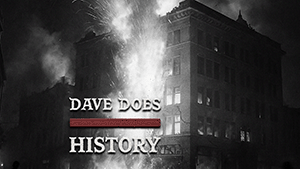
From the first hour, it was obvious this was no lonely spark. The Los Angeles Times had waged a very public war against organized labor. The International Association of Bridge and Structural Iron Workers had been fighting back across the nation with illegal explosives and midnight sabotage. The explosion in Ink Alley was not a random fury, it was a message written in fire. And the message carried names that would soon dominate the news, General Harrison Gray Otis, the aging press baron who preached “open shop,” and a cadre of iron workers who felt driven to force by a system designed to break them. One dynamiter’s suitcase turned a simmering conflict into a national reckoning.
What followed had all the drama of a serialized novel and all the consequences of a civil war in miniature, a manhunt led by William J. Burns, “America’s Sherlock Holmes,” defense led by Clarence Darrow, a confession that detonated the labor movement’s credibility, and a political earthquake in Los Angeles. Here is the hard thesis, uncloaked by sentiment. The 1910 bombing was more than a monstrous crime. It was a flashpoint in America’s class war that exposed deep fissures, reshaped Los Angeles politics for decades, and left scars on labor and capital that legislation would spend years trying to bind.
Los Angeles in 1910 did not drift into conflict, it strutted toward it with banners unfurled. The city was the showcase of the “open shop,” an experiment in employer unity that promised freedom from union power. The loudest trumpet belonged to General Harrison Gray Otis, the Times publisher who made his editorial page a parade ground. He was not merely a newspaperman. He was a general who believed he was at war, and his headquarters on First and Broadway was a granite sermon in stone. The building had a nickname, “The Fortress.” It looked and acted the part, bristling not with weapons, but with the confidence of a man who believed his city would be built on the bones of union campaigns. Otis did not bother with polite euphemisms, he preached a creed of “True Industrial Freedom,” and the business community nodded along.
Behind the publisher stood the Merchants and Manufacturers’ Association. In print it looked like a chamber of commerce. In practice it was a political machine with a single mission, keep Los Angeles union free. It worked within the law when it could and bent the law’s edges when it had to. The M and M did not rely on theory. It raised money, picked city council fights, and backed ordinances that made picketing a criminal act. If you were a wage earner trying to bargain collectively in that town, you were swimming upstream against an engineered current.
The Iron Workers did not arrive as saboteurs. They arrived as organizers who had watched the National Erectors’ Association beat them in city after city since 1906. By 1910 they were tired of losing and desperate to hold a western line that ran through San Francisco’s union strongholds and then, they hoped, south to Los Angeles. The Iron Workers started with a legal strike. On June 1, 1910, fifteen hundred men downed tools. The M and M answered with a war chest and a city council ordinance that strangled picket lines. Four hundred seventy two arrests made the point. The message to workers was simple and cold, organize if you dare, then come to court.
By then, something darker had already taken root. At the national level, Iron Worker officials had decided words and walkouts were not enough. A clandestine wing, sometimes called the “wrecking crew,” had been planting bombs under open shop projects for years. Ortie McManigal knew the routes and the timers. J. B. McNamara knew the stakes. Herbert Hockin pulled strings on the executive board. The tally of explosions crept past a hundred as if it were a ledger of grudges paid in powder. In this climate, a city like Los Angeles was not just a battlefield, it was a dare.
By late September, the decision to strike at the Times had been made. J. J. McNamara, the union’s hard edged secretary treasurer, sent his younger brother, J. B., to carry out the job that would pierce Otis where it hurt most, the presses and the pride. The plan favored simplicity. Get the charge close to the building’s flank, set a clock, walk away, and let the city wake to a pile of stones and a sermon about the risks of defying the working man. There was no mystery about the target’s symbolism. The Times plant was Otis’s citadel, a six story statement that the open shop could pay for granite, ink, and influence. Bring that down, and the powerful might listen. Or they might howl. Either outcome would give the union a headline.
On the evening of September 30, J. B. walked down the alley that ran behind the plant, the narrow service way the staff called Ink Alley. Barrels sat like fat candles. At about a quarter to six he set down a suitcase that held sixteen sticks of eighty percent dynamite wired to a cheap alarm clock. He gave the mechanism enough time to clear out, then melted back into the Los Angeles night, confident the sun would rise on rubble. Inside, about a hundred employees worked the late shift. They did what newspaper crews do, turned coffee into copy and ink into impact. There is an innocence in routine. They felt it. They did not hear the suitcase ticking.
What happened at 1:07 was not a surgical demolition. It was an imperfect bomb in a perfect place. The charge itself did less than the aftermath. Flames licked the ink barrels and then leapt to the building’s veins as natural gas lines split and fed the blaze. Fire climbed stairs faster than fear could carry some men down them. In the chaos, people did what people always do, they looked for friends, they chose a stairwell, they chose a window, they chose to jump, or they chose to risk the heat. Many never made it out. By breakfast the death toll stood at twenty, then twenty one, with more than a hundred injured. These were names on time cards, not villains in a drama. They died where they worked.
It is tempting to invent noble last words for the scene. That is not history. What we have are the grim outlines. The press room became a trap. The elevator shaft became a chimney. Outside, families clustered behind fire lines while a red wall pushed back anyone who tried to enter. The Times itself would later print a special edition proclaiming the outrage. Even the men who had just lost their desks were hustled to an auxiliary plant to set type. That instinct says something about Otis and his shop. They lived to put a headline on the thing that had just torn their house apart.
The McNamara team had not limited themselves to one device. They had planted additional bombs at the home of General Otis and at the residence of Felix Zeehandelaar, the M and M’s secretary. At Zeehandelaar’s, a ticking parcel was found and disarmed. That “infernal machine” would matter later when detectives needed something more than ashes to study. At Otis’s house, a suitcase bomb detonated after police moved it, shattering a chunk of earth and nerves, but taking no lives. Investigators speculated that the clockwork had been wound too tight, that the timing was off by an unlucky sliver. The Los Angeles elite did not need to be told they were targets. They could see the crater.
By noon, the question had hardened. Was this a gas explosion as labor men claimed. Or was it terrorism by dynamite. The city did not agree. The country did not agree. But the ruins sat there, and the ruins do not lie.
The official line from union halls insisted the Times had killed itself with a faulty gas line. That explanation had convenience going for it. It did not have evidence. City leaders hired a detective who had a gift for turning scraps into stories and stories into indictments. William J. Burns was already on the trail of the Iron Workers on behalf of the National Erectors’ Association. He walked into Los Angeles with files, informants, and the patience of a fox. When the city cut him a check, it did not just buy a man. It bought a network that reached from California to the Midwest.
The unexploded device from Zeehandelaar’s home paid unexpected dividends. The dynamite sticks carried markings. The timing mechanism had telltale sourcing. Burns and his team followed the paper trail to Giant Powder Works near San Francisco. From there he chased rumors north to an anarchist colony and then east toward Indianapolis where union officers gathered and money changed hands. Each step tightened a net around two names that would soon be household, Ortie McManigal, veteran courier of explosives, and the McNamara brothers, J. J. the official, J. B. the action arm.
The arrests in April 1911 read like a detective magazine written by an ambitious prosecutor. Burns grabbed McManigal and J. B. McNamara in Detroit. Faced with a stack of facts and convinced the game was up, McManigal confessed. His statement did not meander. It traced routes, named hotels, identified packages, and placed the McNamara brothers in the heart of a campaign that stretched over years. Meanwhile, in Indianapolis, Burns and local police snatched J. J. McNamara during a union meeting and hustled him onto a train for California. No lawyer, no leisurely appeals, just a ride to face a Los Angeles judge. Supporters called it kidnapping. The word fit how it felt. It did not change where J. J. ended up, a cell.
By the time the suspects arrived in Los Angeles, the phrase “crime of the century” had settled on the case like a layer of ash. The city was divided, a chorus of outrage on one street, a chorus of suspicion on the next. The public argument did not wait for evidence. It rarely does.
You cannot understand the next act unless you understand the American Federation of Labor in 1911. Samuel Gompers believed the McNamaras were being framed by Otis and the open shop coalition. He had seen this movie before, labor leaders accused, public fears stirred, and a courtroom used as a scaffold for a message. The AFL’s opening move was classic movement politics. Rally the faithful, flood the defense with funds, and declare the men innocent until a jury says otherwise. They even declared a “McNamara Day” on Labor Day. It worked in the streets and on the stump. It did not change the files on the prosecutor’s desk.
Clarence Darrow did not need an introduction. He was labor’s folk hero, a lawyer who knew how to turn a jury box into a confessional booth for the nation’s conscience. Gompers persuaded him to take the case. Darrow suspected the truth might not be kind to his clients, but he agreed out of loyalty to a cause and a class. He walked into a storm, a hostile press, a determined prosecution, and a team of private detectives who could place his clients near powder and timers. He did what defense lawyers do. He searched for daylight.
Publicly, the defense stuck with the gas leak story. Privately, Darrow read affidavits and saw the shape of a case that would be hard to beat. He started to play two boards at once. On one board, he prepared for trial with motions and press statements. On the other, he opened a back channel through investigative journalist Lincoln Steffens and began to talk about a plea that might save lives and reputations. The idea was simple to describe and difficult to swallow. The brothers would plead guilty to avoid the gallows. In return, Times management would ease off its open shop crusade. No one admitted they were bartering policy for prison time, yet that was the spirit of it.
Then came the scandal that yanked the rug. On November 28, Darrow’s chief investigator was arrested for trying to bribe a juror. Eyewitnesses claimed Darrow himself handed over cash. That allegation lit up the city. The defense could not lecture anyone about fairness while explaining envelopes of money. Whether or not Darrow’s hand was in the till, the optics were fatal. The plea was no longer a strategy, it was a lifeline. The man who had built his reputation on juries would not trust one this time. He could read the board. He could count.
On December 1, 1911, the McNamara brothers stood in open court and did the one thing their defenders could not forgive. They told the truth. J. B. admitted he planted the bomb at the Times. He told the judge he had not meant to kill anyone, then said words that are almost cruel in their inadequacy, “I sincerely regret that these unfortunate men lost their lives.” J. J. pleaded guilty to ordering the bombing of the Llewellyn Iron Works on Christmas Day of the same year. The courtroom did not gasp. It exhaled. The confession was a stone thrown into the labor movement’s pond. The ripples ran far.
Sentencing came fast. J. B. drew life in San Quentin. Cancer would claim him there in 1941. J. J. received fifteen years. He walked out in nine and drifted back to organizing. It did not end well. He was fired for embezzlement and died, like his brother, in 1941. Those dates matter less than the immediate political fallout. Samuel Gompers was stunned and publicly wounded. He had asked working men and women to write checks to a cause he believed was just. Now he had to tell them the men were guilty. Job Harriman, the socialist candidate for mayor and a member of the defense team, saw his vote share collapse days later. Los Angeles voters do not enjoy feeling played. They voted accordingly.
There is a temptation to romanticize Darrow here. Resist it. The great man was indicted on two counts of jury tampering. He beat one case and hung the jury on the other. That is a technical victory, not a cleansing rain. His legend survived, then prospered, but for years his name carried an asterisk among the people who watched him up close during the McNamara affair. The cause he loved had been scorched by its own fire.
Guilty pleas in Los Angeles did not end the matter. They aimed the federal government squarely at the Iron Workers’ national machinery. In 1912, in Indianapolis, fifty four union officials faced charges tied to conspiracy and the illegal transport of explosives. Thirty eight were convicted, including Frank M. Ryan, the union’s president. That is not a small number. That is a purge. The convictions decapitated the organization’s leadership and told every local in the country that Washington was now in the game and willing to swing. The union would never again be what it had been.
Los Angeles labor did not bounce back. Membership plummeted and stayed low for a long time. Employers took the McNamara confession and wore it like armor. Every union initiative could be dismissed with a single question, do you want more bombs. In a city that wanted to woo investors and sell sunshine, the answer was obvious. The moral is blunt. One suitcase of dynamite set back working people in Los Angeles for decades.
Politics absorbed the shock in other ways. Reformers used the crime to argue that the nation needed to understand not only isolated outrages, but the industrial system that bred them. Jane Addams and others petitioned President Taft for a new kind of inquiry. He created the U. S. Commission on Industrial Relations, a body that listened to workers, bosses, and experts and produced volumes that would later inform the New Deal’s labor framework. That is not a straight line from explosion to statute. It is a crooked road of hearings, testimonies, and hard lessons. Still, you can trace it. It begins in Ink Alley. It ends years later with laws that finally gave American workers something better than a picket sign and a prayer.
And what of memory. The Times rebuilt and kept printing. The city paved, built, and moved on. Monuments exist, yet the event has faded in the public mind. A marker to “Our martyred men” stands in Hollywood Forever. The original Fortress site is part of a park, which is a polite way of saying people walk their dogs where printers once hauled reams and linotype men once sweated through deadline nights. History does not ask our permission before it turns battlefields into quiet corners of town. It keeps the scars under the grass.
If you care about labor history, this story punishes easy narratives. It is not the tale of noble workers crushed by villainous bosses. Nor is it a morality play where capital wears a halo. It is something darker and more human. A ruthless publisher helped build a city that made organizing nearly impossible. A desperate union leadership chose violence that killed innocent men at their desks. A brilliant lawyer played tactics so rough he nearly ruined himself. A detective with a flair for the theatrical caught his quarry because the evidence was there to be caught. None of it is heroic. All of it is American.
The lessons are not dainty. Weapons meant for machines do not spare bystanders. Movements that tolerate terror burn their own seed corn. Cities that mistake “open shop” for a plan to raise working families will find their growth is built on friction that can flash in an instant. And newspapers that declare war should remember that wars bring casualties you do not choose. Los Angeles learned those things in one violent hour. The rest of the country read about it over coffee the next morning and saw something of itself in the smoke.
We like to say time heals, and sometimes it does. Yet on every October 1, if you stand near First and Broadway and listen hard, you can almost hear presses that are not there and voices that never got to finish their shift. You can feel, faintly, the punch of that blast and the sudden silence after it. That is the kind of memory a city carries whether it remembers it or not. That is the kind of story a nation should not forget. The men who died were not symbols. They were fathers, brothers, and friends who walked into work and never came home. A suitcase and a clock took everything from them. The truth takes the romance out of history. Good. Let it. The story stands on its own.




 DAVE DOES HISTORY
Leave a comment