
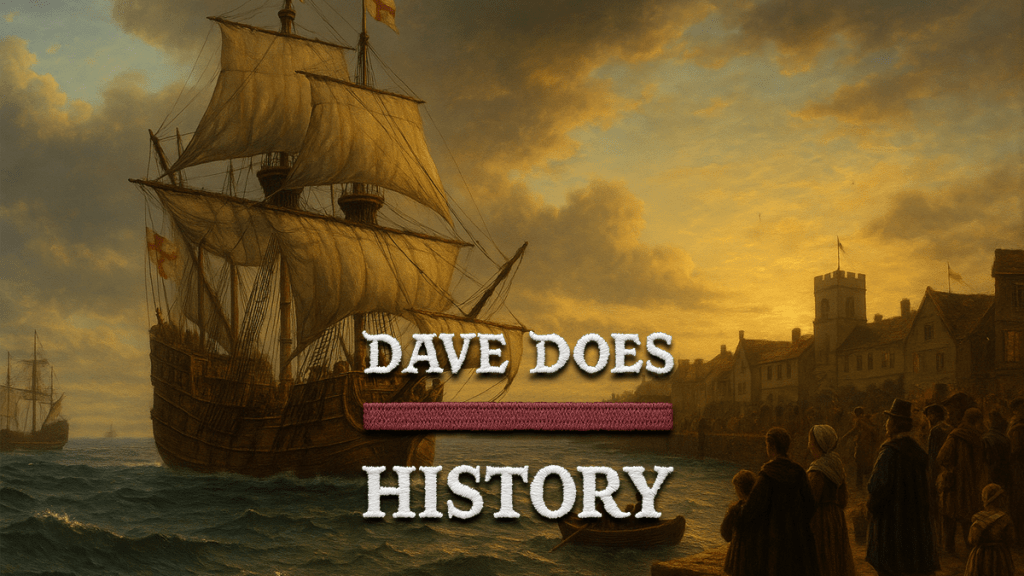
On the evening of September twenty six, fifteen eighty, Plymouth Sound wore a gray shawl of mist and late sun. A single ship crept in from the Channel, her canvas patched like a mendicant’s coat, her hull scarred by barnacle and storm. Fishermen paused over their nets. Children scrambled onto bollards and barrels to see. The town had watched ships come and go for generations, and yet this one drew a hush that was not the usual harbor curiosity. She announced herself without trumpets. She announced herself by surviving. The name on her stern was Golden Hind, and rumor ran ahead of her like a tide. There had been talk for years. Talk of a venture that sailed quietly out in the winter of seventy seven. Talk of losses in the Straits. Talk that Spain cursed a single English captain by name. Now the talk became a sight, the sort of sight that settles into a people’s memory and never fully leaves. John Stow would later put it in dry ink, rich and neat, that she was richly fraught with gold, silver, pearls, and precious stones. Plymouth did not need a chronicler to tell them what they could smell. Tar and salt on the wind, spice buried in the cargo, the weary sweetness of men who had run out of soap. Less than sixty men stood where more than a hundred had once labored. They did not march. They did not preen. They simply looked homeward with the particular gaze of sailors who have bent the world to their captain’s will and paid for the privilege in coin that can never be counted.
It is easy to skip to the treasure. It is tempting to leap from the sight of that battered hull to the clatter of chests, to the pearls that rolled like marbles on the planks, to the small mountain of coins that would be weighed and tallied under careful eyes. Plymouth, however, did not meet a ledger. It met a story. The story had begun three winters before, when five ships slid out under a sky so clear that superstitious men muttered at the omen. Francis Drake held a commission that said exploration in tidy script and private war between the lines. The Queen needed plausible distance. The Crown did not issue a printed invitation to seize Spanish wealth. Yet wealth was the whisper in every cabin as they beat down the Channel. Investors had taken their risks. The Crown had taken a larger one. Drake had taken the largest risk of all, because only the captain’s name would live or die with the result.
That result was nearly smothered in the cradle. The Atlantic pummeled the little fleet. One ship deserted. Another turned back. Supplies vanished with the faithless hulls. The survivors, crabbed by weather and suspicion, pointed their bows at the southern tip of the world. The Straits of Magellan were supposed to be a passage. They were a warning. Winds that changed direction with mockery. Water that boiled in standing waves. Shores that offered no comfort but the sickly shelter of bays where the dead were buried. Men quarrelled. Authority was tested. Drake dealt with mutiny in the only coin that kept wooden worlds together. Thomas Doughty, a gentleman who fancied himself a partner, met a rough justice ashore in Patagonia. There are kinder words for such decisions when they are written in comfortable rooms. There are no kinder words on a wind-swept spit of ground where the captain must choose between doubt and order. Drake chose order. The fleet, now pared not only by storm but by law, pushed into the Pacific.
The Pacific was supposed to be calm. The name itself is a promise made by a man who had not spent a season in her temper. For Drake it became a hunting ground and a classroom. The Spanish had built an empire on the expectation that their ocean belonged to them. Drake taught them otherwise one town at a time. Along the coasts of Chile and Peru, the Golden Hind appeared like a bad dream. Bells tolled too late. Guns fired from walls that had grown complacent. Drake took what he could carry, and sometimes he left gifts. He understood that reputation travels faster than cannon smoke. Mercy sharpened fear more than cruelty did. In the ledger of a captain who intends to return home, a few careful gestures are worth a cargo hold. Then came the prize that gave the voyage its glittering headline, the Nuestra Señora de la Concepción, the Cacafuego as sailors called her with salty affection. Silver stacked like paving stones, jewels bound in velvet, fine plate that had been meant for tables in Mexico City and Madrid. The capture was not only plunder. It was proof. If a single English ship could peel treasure from the spine of the Spanish empire, then Spain was not a god. Spain was a target.
The lesson learned, Drake looked at the map and saw two doors. One door led back through the Straits, where Spanish vengeance could wait with patience and numbers. The other door went west into a maze that even the Spanish did not fully know. He chose the maze. The Golden Hind turned her nose to the setting sun. She climbed north to colder water, made landfall on a coast where the fog came in on cat feet and left the hills smelling of wet sage. The men bartered with people who could not yet imagine England on a map. Drake performed the rites of claiming in a valley the English would later argue about. Was it this bay or that one. Historians love a fence line dispute. Sailors care about anchorages and fresh water. Drake found both enough to get by, then pushed off again.
The Pacific crossing that followed was a quilt of small victories and narrow escapes. At the Moluccas he found spice and politics, both strong. He made friends as a man makes friends when he is far from home and cannot afford enemies. He did not always succeed. The reefs were cruel. The Golden Hind bumped hard on a coral bed and stuck long enough for men to taste failure in their mouths. The tide lifted her. The planks held. They sailed on, slower, more careful, a little less immortal. Across the Indian Ocean the ship sagged like an old horse that still has pride. Rounding the Cape of Good Hope, they sketched a long curve that every sailor knows by heart and every landman imagines as a single daring moment. Nothing is a single moment at sea. It is rope, watch, nail, prayer, and the stubbornness to keep all four in service. The South Atlantic treated them better than the South Pacific had. The weather softened, then frowned, then eased again. The compass pointed toward home.
Home did not rush to meet them. Drake had no wish to announce his arrival in a way that would let Spain count the chests before the Queen did. The men knew the game. Silence was a sail as valuable as the mainsail. England had to decide what face to wear. Pirate was one mask. Patriot was another. Drake had worn both depending on who was looking. In that late September light, the mask that mattered was the one Plymouth chose. The town saw sons and cousins, and it saw money that would move quickly from dock to shop to farm. It saw the sea declare that rules were changing. A single ship can do that when it carries a story large enough.
What followed has been told in different versions by men who loved to measure and count. There are tidy notes that say the treasure was landed across the Tamar at Antony Passage or at Saltash in the quiet hours, guarded and careful. There are proud local tales that point to Trematon Castle and declare that its old stones first felt the weight of Peru. The safest truth is that Crown agents made certain nothing got lost, and that wagons moved sooner than rumors did. The Queen would take her share. Investors would take theirs. The crew, those who had lived to see Devon again, would pocket a fortune by the standard of men who slept in hammocks on damp wood. There is a story that Drake sent word ashore before he allowed any official aboard, like a chess player who does not touch a piece until he counts the board twice. If it is not exact, it feels right. He had not circled the world to be outfoxed in his own harbor.
Spain’s reaction was entirely predictable and entirely real. The Spanish ambassador demanded punishment and restitution. King Philip did not rise from his chair, but the room grew colder. Letters flew. Numbers were rehearsed as if a careful tally could make a biting dog sit. Elizabeth read the indignation and looked past it. The money was too sweet. The bragging rights were too useful. The message to her own nobles and merchants was too clear to waste. She stalled. She smiled. She called Drake to Deptford in the spring and put a sword on his shoulder in front of the Golden Hind. The ceremony was a neat trick. The stage dressing said exploration. The balance sheet said privateering. Europe heard both and understood that England would not apologize for a successful theft when that theft came packaged as discovery.
Back in Plymouth, the human scene was smaller and better. Families counted faces on the quay. Some counted to a number that matched the one they carried in their hearts. Others stopped a digit short and learned to live with the absence. The survivors shuffled home to beds that did not move. After months of hard tack and salted meat, they ate food that crunched. They told stories in low voices at first, then in louder ones after the ale loosened memory. The tales traveled to London where men with tidy desks and sharp quills made them print worthy. Richard Hakluyt published and polished. Francis Fletcher’s notes grew into The World Encompassed. Lines were edited. Edges were sanded. The English public met a Drake who stood a little taller with every edition.
The ship herself took on a second life. Set up at Deptford, she became a monument before that word felt modern. Sailors who had bled on her planks must have smiled to see the gentry file past for a taste of salt at safe distance. Time eats wood with a patience that beats any navy. The Golden Hind decayed by inches. Someone rescued a few timbers and made a chair that would sit in halls as a relic of boldness. It is the fate of great ships to end as furniture or firewood. Their true shape lives in stories and in the way younger captains judge their own nerve.
What did it all mean. When that tired hull settled into Plymouth Sound on a September evening, a nation that did not yet fully know itself met a metaphor it could understand. England would go out. England would take risks. England would make enemies. England would count a little more on skill and luck than on lineage. The Spanish monopoly on the distant world had been cracked by a man from Tavistock who knew how to read a sky and handle a crew. It is not heroic to say that he was ruthless. It is honest. Doughty’s death is a stain that no sermon can clean. Men died far from home, of disease that came on slow and cruel, of accidents that were no one’s fault, and of fights that never made a line of poetry. Their names were read aloud in kitchens and then spoken less each year. Every glittering return rests on bones that do not glitter.
Yet it is also honest to say that genius belongs in the ledger. Drake chose the west when the normal mind would have chosen the east. He ran a ship that was never truly ready for what it accomplished and made that unready ship perform at a level that still makes professionals nod. He managed discipline without breaking spirit. He made allies when it suited him and carefully avoided enemies he could not beat. He understood that a reputation is a weapon if you sharpen it with acts and wipe it clean with words. He recognized the Queen’s need to pretend and helped her pretend well. He knew that history likes deeds that leave a visible line across a map.
The economic shock was as important as the naval lesson. The cargo placed English coin in English hands at a moment when the Crown needed leverage. Money built ships. Money paid gunners. Money colored policy. When Spain counted its silver fleets, it had to imagine an English hull slipping like a fox into the henhouse. That fear matters. It shaped patrol routes. It funded fortifications. It entered the Spanish mind and made room there for the possibility that the Channel might one day be hostile. Eight years later the Armada would ride north to test that possibility and find that English seamanship and weather make a stubborn pair.
For Plymouth the arrival became a local myth, and local myths are the mortar of national walls. Children learned the name Golden Hind the way they learned the names of saints. Traders repeated the tale to strangers and saw their wares sell a little faster. The town carried itself with the slight tilt of a place that has hosted a moment. Even the quiet corners caught the echo. A cooper rolling a barrel could remember a day when every eye in the harbor looked one way together. An old man could point across the water and say that was where the ship lay to, that was where the shouts came from when the anchor bit.
There is a reminder tucked inside the poetry of it, the reminder that great returns do not arrive as pageants. They seep in like tidewater. They smell of sweat and worry. The captain who had crossed two oceans did not present himself as a marble statue. He wore the sea in his beard and the weight of decisions in the set of his jaw. He was not yet a legend on that September evening. He was a man gauging how his country would handle what he had brought home. He must have known that he had given England a gift and a problem. The gift was pride. The problem was Spain. Elizabeth would choose to starch the pride and meet the problem later. It was the right choice for a people who were tired of being told where they could sail.
So the ship came in and the town exhaled. The oars splashed. The anchor dropped with a sound that men who work harbors can hear in their bones. A boy climbed a pile of rope for a better view. A woman held her shawl tight at the throat against the evening air and tried to pick out the figure she wanted to see. Bells that had tolled for marriages and funerals took their turn with celebration. The Golden Hind settled her weight. The captain perhaps allowed himself a small smile. He had not only found a way around the world. He had found a way to make the world pay for the privilege of being circled.
The tale kept growing after the hull was emptied and the last chest was carted away. Printers sharpened their blocks. Poets tried lines that would sound properly salty without offending courtly ears. Schoolmasters put dates in the margins of their lesson books. The voyage became a hinge that allows a door to swing open smoothly in the telling. We know better than that. Hinges squeal. Doors stick. Yet the door opened. New ventures followed. New captains tried their luck with results that did not always shine as bright. The loud success of one voyage can drown out the quiet failures of others. That is not a complaint. It is a record.
If you want a fair closing, you return to the water. The tide keeps its own counsel. The Sound that held the Golden Hind holds ferries and trawlers and weekend sailors now. The surface forgets. The people do not. That evening in fifteen eighty was a promise and a challenge. A promise that an island people could enlarge their island without moving a single stone. A challenge that such enlargement would come with bills to pay in blood and coin and conscience. Drake brought home proof that the world could be made smaller by nerve and skill. He also brought home proof that the world does not give up its riches politely. Both truths stepped ashore at Plymouth with him. Both have shadowed English history ever since.
The simplest image is the best one to keep. A battered ship, a watchful town, a nation at the edge of a new habit. That habit would make heroes and villains, fortunes and widows. It would load the future with stories that sing and stories that sting. On September twenty six, fifteen eighty, the beginning and the bill came through the same harbor mouth and tied up to the same mooring. The Golden Hind did not just complete a circle on a map. She closed one age and pried open another. That is why people still say the date aloud. That is why the mist off Plymouth still smells faintly, to a generous imagination, of spice.



 DAVE DOES HISTORY
Leave a comment