
In the autumn of 1943, the war had stretched into its fourth brutal year, and Canada was no longer just the supplier of food and men for Britain. The war had arrived on Canadian shores in ways the public could scarcely have imagined in 1939. U-boats had prowled the Gulf of St. Lawrence, sending freighters and tankers to the bottom within sight of fishermen and lighthouse keepers. Merchant sailors, many of them barely more than boys, had gone into the freezing water, and the Royal Canadian Navy, once little more than a coastal patrol force, was now fighting daily battles to hold the lifeline across the Atlantic. For most Canadians the war was something to be read about in the papers, or heard in dispatches on the radio. But in a quiet corner of Ontario, far from the sea, a different kind of battle was being waged behind the barbed wire of a converted boys’ school.
The place was called Camp 30, and it sat outside the town of Bowmanville, east of Toronto. It was not the kind of place one associated with hardship. The buildings had been classrooms, dormitories, and gymnasiums for privileged boys before the war. Now the Canadians had fenced it in, added guard towers, and filled it with some of the most dangerous men in the world—German U-boat commanders. These were not nameless soldiers swept up in the tide of battle. They were celebrated figures in Germany, men personally decorated by Hitler, the kind of officers whose faces appeared in propaganda reels and whose exploits filled Nazi newspapers. In their homeland they had been lionized as heroes who brought Britain to the brink of starvation. In Canada they were prisoners, but not just any prisoners. They were valuable, and they knew it.
The Canadians understood the stakes. These men were not to be treated as ordinary PoWs who might spend the war years whiling away time with soccer games and letter writing. If anyone was likely to attempt escape, it was them. And in that dangerous fall of 1943, escape was exactly what they planned. Tunnels would be dug under the lawns where schoolboys had once played football. Coded messages would be sent out hidden in Red Cross parcels. Forged papers would be prepared, maps smuggled, civilian clothes stitched in secret. And, most audacious of all, a German submarine would be dispatched across the Atlantic to pick them up on a lonely point of land in New Brunswick. It was the stuff of a spy novel, except it was real, and it nearly worked.
Operation Kiebitz, as the Germans called it, was meant to be a coup, both for morale and for the war effort. Imagine the headlines if four of Germany’s most decorated submarine officers managed to slip out of Canadian captivity and return to the fight. Imagine the propaganda value if photographs of Otto Kretschmer, the legendary “Tonnage King,” showed him back in uniform, commanding a new U-boat after escaping from the enemy’s own backyard. To the men of the Kriegsmarine it was more than a plan. It was a matter of pride.
But wars are not won by pride alone. On the Canadian side, there were men just as determined, and in many ways more clever. The RCMP and Canadian Military Intelligence had been reading the prisoners’ secret messages all along. They knew about the tunnels. They knew about the rendezvous at Pointe Maisonnette in Chaleur Bay. They even knew the name of the submarine that would be waiting: U-536 under Kapitänleutnant Rolf Schauenburg. Instead of shutting it down, the Canadians decided to play along, to let the Germans dig, to let them plan, to let them think they had fooled their captors. Then, at the crucial moment, they would spring their own trap, one designed not only to recapture prisoners but to seize a German U-boat in Canadian waters. They called it Operation Pointe Maisonnette, and it was as daring as anything the Germans had dreamed up.
This is the story of two escapes that never happened, one in Poland and one in Canada. It is the story of two kings—the Tunnel King, Wallace Floody of the RCAF, and the Tonnage King, Otto Kretschmer of the Kriegsmarine. It is a tale of tunnels, of false documents, of desperate plans hatched under the noses of guards. It is also a tale of counter-intelligence, patience, and a Royal Canadian Navy that waited silently in the dark for a submarine to appear. In the end, it is not just a story about who dug faster or who planned better, but about the strange and sometimes ironic ways war plays out, with victories measured not just in tons of shipping sunk or prisoners freed, but in who managed to outthink the other.
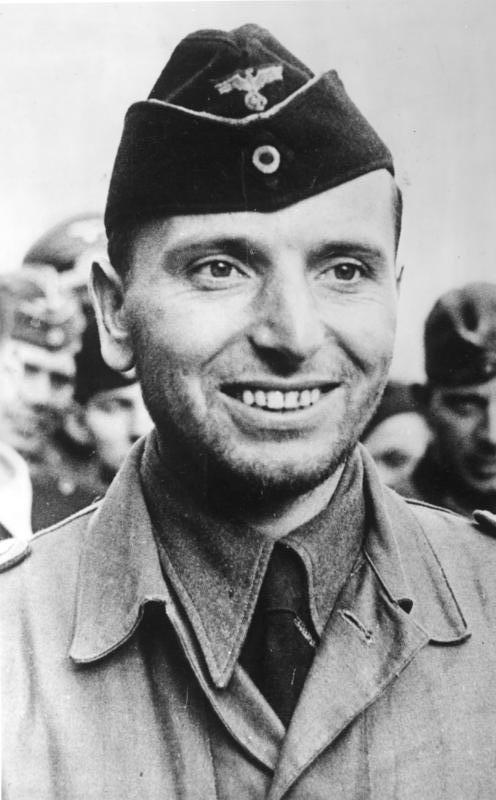
Otto Kretschmer did not look the part of a sea wolf. At twenty-nine, with the face of a student and the manner of a man more at home with books than torpedoes, he could easily have been mistaken for a university lecturer. Yet in the short, furious years between 1939 and 1941, no single submarine commander caused more havoc to Allied shipping. To sailors in the convoys that crossed the Atlantic, his name became a curse. To the German press, he was the “Tonnage King,” the U-boat ace who seemed to turn every torpedo into a kill.
Kretschmer had joined the navy in 1934, one of many young men drawn to the prestige of the Kriegsmarine. By 1936 he was in the U-boat service, learning the art of submarine warfare just as Hitler prepared to defy the limits of Versailles and rebuild Germany’s fleet. He quickly distinguished himself as cool under pressure and precise in command. When the war began in 1939 he already had two years’ experience in command of a boat, a valuable head start in the deadly game that was about to unfold beneath the waves. His motto became “one torpedo, one ship,” a sharp rebuke to official doctrine, which demanded firing in salvos to guarantee a sinking. Kretschmer rejected waste. Every shot had to count.
And count they did. In his eighteen months of command, U-99 prowled the Atlantic and sent over forty ships to the bottom, more than 270,000 tons of Allied shipping. He became a master of the night attack, surfacing in darkness to slice through convoys at speed, choosing targets like a butcher picking cuts of meat. The escorts scrambled in confusion while Kretschmer’s crew loaded and fired with deadly efficiency. Allied sailors cursed him, but to his men he was a hero. He demanded discipline, but he never wasted lives. He was decorated personally by Hitler with the Knight’s Cross with Swords and Oak Leaves, and his exploits filled German newsreels. On shore leave the crew was feted with champagne, and the young commander was toasted in Berlin as the scourge of Britain.
But hubris is a dangerous companion at sea. On March 16, 1941, Kretschmer’s luck finally ran out. That night U-99 had one of its greatest triumphs, sinking five ships in barely an hour. Out of torpedoes and lit up by the burning wrecks, the boat became an easy mark for the escorts. HMS Walker pounced, dropping depth charges with lethal precision. The shock drove U-99 down below its limits, then forced it back to the surface with smashed fuel tanks and broken steering. Realizing the game was up, Kretschmer sent a final message to Germany—“Depth charges, captured, Heil Hitler, Kretschmer”—and ordered his crew to abandon ship. Only three men were lost as U-99 slipped under, scuttled by its captain. Forty were pulled from the sea by the British.
The Royal Navy interrogators expected arrogance. What they found instead was a man less fanatically Nazi than they had assumed, and a crew that spoke of him with unqualified loyalty. They had lived through battles and depth charge attacks that should have broken lesser men, yet their respect for their commander was absolute. For Britain, the capture of Kretschmer was a prize. Not only had the Allies removed one of Germany’s most dangerous submarine captains from the Atlantic, but they had also struck a blow to German morale. Propaganda had made Kretschmer into a legend. Now the legend was behind barbed wire.
At first he was held in Britain, but in the summer of 1942 he was shipped across the Atlantic to Canada, far from any hope of escape or rescue. He arrived at Camp 30 in Bowmanville, Ontario, a place chosen precisely because it seemed escape-proof. Its walls held not only him but other captured officers, men who had commanded boats lost in the Atlantic struggle. Hans Ey, Horst Elfe, and Hans Joachim Knebel-Döberitz joined him there, each with his own story of triumph and defeat. To the Canadians, they were dangerous not because they carried weapons, but because they carried reputations. A successful escape would be a propaganda disaster, a headline the Germans would trumpet to prove that even in captivity their heroes could not be held.
Kretschmer knew this as well as anyone. In his mind, captivity was temporary. He had outwitted convoys and escorts, danced on the edge of destruction, and survived. The war was far from over. There was still a place for him in the fight. Behind the barbed wire of Camp 30, the Tonnage King began to plot.
Camp 30 did not look like a place where history would be made. At first glance it seemed more like an old college campus than a prison. The lawns were neatly kept, the brick buildings orderly, the gates manned but not oppressive. Inside, conditions were far better than in most prisoner-of-war camps. The men had an indoor swimming pool, athletic fields, even decent food. They were paid by Germany through the Red Cross and could write letters home. Compared to the barbed-wire compounds of Europe, where Allied fliers faced guard dogs, searchlights, and freezing barracks, Bowmanville felt almost civilized. That was by design. The Canadians believed that keeping officers reasonably comfortable would reduce the risk of unrest. What it did instead was give them time to think.
The Germans confined at Camp 30 were not ordinary soldiers. They were men with combat records, men accustomed to command. They had been courted by propaganda and treated as heroes. Otto Kretschmer, Hans Ey, Horst Elfe, and Hans Joachim Knebel-Döberitz were officers who had each played their part in the Battle of the Atlantic. Ey had commanded U-433 until it was sunk in 1941. Elfe had taken U-93 to sea before losing it the next year. Knebel-Döberitz was more than just a former officer; he had been adjutant to Admiral Karl Dönitz, the very man running Germany’s U-boat fleet. The Canadians thought they had bottled lightning by placing them together. In reality they had gathered four men with the will, the ingenuity, and the connections to hatch something extraordinary.
It began, as many such plots do, with conversation and boredom. There was talk of tunneling, of trying to slip away, of somehow making the impossible possible. At first the idea was almost laughable. Ontario was a long way from the Atlantic. Even if they made it out of the camp, the distance to salt water was measured in hundreds of miles. But the more Kretschmer studied the problem, the more determined he became. In an old atlas smuggled into camp, he traced the Canadian shoreline until he found what seemed like the perfect spot. On Chaleur Bay in New Brunswick a finger of land called Pointe Maisonnette jutted into the sea. It was remote, lightly populated, and could be reached by rail if one was careful. In Kretschmer’s mind, it was the ideal rendezvous.
Communication with Germany was the first obstacle. The guards read the prisoners’ letters, but there were ways around that. Through the spouse of Knebel-Döberitz, who served as secretary to Admiral Dönitz, messages could be slipped through the Red Cross mail. Written in code and wrapped in the language of family news, they passed beneath Canadian eyes and across the ocean. In those letters Kretschmer laid out his plan: four officers would tunnel out of Bowmanville, travel across Quebec and New Brunswick, and meet a waiting submarine. It was bold, dangerous, and audacious enough to tempt Dönitz himself. The Admiral approved. A boat was assigned. U-536 under Kapitänleutnant Rolf Schauenburg would make the crossing, patrol quietly off the coast, and surface nightly to take the men aboard. The plan was named Operation Kiebitz.
Inside the camp, work began. If the Germans were going to dig, they would dig in earnest. Not one tunnel but three were started, both to confuse the guards and to ensure that if one was discovered, another might survive. More than 150 prisoners took turns at the work. They dug day and night, using powdered milk cans as shovels, ripping wood from bunks to shore up the walls, and laying down a makeshift railway of boards and carts to haul the dirt. Every foot of tunnel meant tons of earth to hide, and they stuffed it into attics, spread it in gardens, and even crammed it above dormitory ceilings. At times the weight threatened to bring the buildings down, but still the work continued.
Escape required more than tunnels. Teams of prisoners forged identity papers, sewed civilian clothes, and created dummies to fool roll calls. Cans of food were hollowed out to hide Canadian currency and maps of the east coast. The work had a strange energy, part desperation and part excitement. They were convinced that freedom lay only meters of soil away, that once they reached open ground the road to the sea would somehow unfold before them. Kretschmer believed it as much as anyone. The Tonnage King had been captured once, but he would not stay captured.
By late summer of 1943 the operation neared its climax. The tunnels stretched out under the camp’s perimeter, far enough to promise a clean exit. Word came back through the coded mail that U-536 would be waiting at Pointe Maisonnette, surfacing every night for two weeks beginning September 23. Four men, perhaps the most celebrated prisoners in Canada, were about to try the impossible.
What none of them knew was that the Canadians were listening the entire time. The letters they believed secure had been intercepted and decoded by the RCMP and military intelligence. A suspicious parcel opened by Charles Little, Canada’s director of intelligence, had contained not just money and maps but a clear indication of the rendezvous point. The Canadians knew the game from the start. But they played along, watching the tunnels grow, monitoring the work, and waiting for the right moment.
In the minds of the Germans, Operation Kiebitz was an act of defiance, a chance to show the world that their heroes could not be contained. In the minds of the Canadians, it was an opportunity to set a trap that might net them the greatest prize of all: a captured U-boat in their own waters.
The Canadians had no intention of letting four of Hitler’s star submariners slip across the country and back into the war. But the brilliance of their response lay in restraint. They did not storm the tunnels. They did not confront Kretschmer with his coded letters. Instead, they let him dig. They let him believe he was winning. In truth, the Mounties and the officers of Canadian Military Intelligence were following every step, watching with quiet satisfaction as the Germans worked themselves deeper into the trap.
Charles Little, head of Canadian Military Intelligence, later described the moment the full plan came into view. A parcel had arrived for one of the prisoners, seemingly innocent. When opened, it revealed a detailed map of eastern Canada and notes that left little doubt about a rescue operation on the shores of New Brunswick. The evidence was too precise to dismiss. Little took the findings to Admiral Percy Nelles, Chief of the Naval Staff, and laid out a daring proposal. If Canada played this carefully, they could catch a German submarine red-handed. It would be the kind of intelligence coup that could rival any victory at sea.
So the decision was made to let the Germans run with it. The RCMP screened every letter, copying and decoding before allowing it to continue. The tunnels were watched, even measured with listening devices, but no move was made to stop them. Guards saw the suspicious movements, the piles of soil vanishing, even the improvised rail system the prisoners had built underground, but they turned a blind eye. The Germans thought they were being clever, when in fact they were being permitted to dig their own graves.
At Navy headquarters the counterplot took shape under the code name Operation Pointe Maisonnette. The plan was bold. When U-536 arrived on the Canadian coast to pick up Kretschmer and his fellow officers, the Royal Canadian Navy would be waiting. A flotilla of warships was assembled under the command of Lieutenant-Commander Desmond Piers, a veteran of convoy battles who had earned a reputation for aggression. His task was not only to block the submarine but, if possible, to seize it. Capturing a U-boat intact had been a dream of the Allies for years, offering the chance to probe the latest technology, ciphers, and codes. If Canada pulled it off, the headlines would be read in London and Washington with amazement.
The task force included destroyers, corvettes, and minesweepers. HMCS Rimouski was outfitted with a brand-new “diffuse lighting” system, an experimental camouflage that bathed the ship in lights meant to mimic the glow of the horizon, rendering it nearly invisible at night. It was cutting-edge science, risky and unproven, but the Canadians were willing to try anything that might give them an edge. Other ships formed the dragnet, ready to sweep Chaleur Bay and close the trap the moment the U-boat surfaced.
For days the naval force drilled in silence, waiting for word that the prisoners had escaped. The tension was electric. Sailors knew they were part of something unusual. This was not just convoy duty or coastal patrol. This was a chance to strike a blow directly against the enemy’s pride. If Kretschmer boarded U-536 and if Piers’ flotilla forced it to surrender, the triumph would echo far beyond Canada. It would show the Germans that nowhere was safe, not even the quiet waters off New Brunswick.
Meanwhile, the Mounties shadowed every move inside Camp 30. They monitored the tunnelers, watched the forgers and seamstresses at work, and copied each coded letter that went out. At one point a ceiling collapsed under the weight of hidden soil, scattering dirt across a dormitory floor. Any guard with common sense would have realized what was happening. But the Canadians resisted the temptation to clamp down. They knew the more rope they gave, the tighter the Germans would hang themselves.
The entire affair had a surreal quality. On one side of the Atlantic, Allied airmen were scratching at the earth beneath Stalag Luft III, driven by duty and the hope of escape, their tunnels called Tom, Dick, and Harry. On the other side, in Ontario, their German counterparts were doing much the same, digging furiously at Bowmanville, convinced that freedom lay beneath their feet. The difference was that in Canada, the authorities knew everything.
By September the stage was set. Coded radio transmissions from Germany fixed the escape for September 23. For two weeks after that date, U-536 would surface nightly off Pointe Maisonnette, waiting for the four officers to arrive. Canadian warships slipped into position, lying in wait in the dark waters of Chaleur Bay. The Mounties prepared to shadow the fugitives as they emerged from the tunnel. The press knew nothing, the public knew nothing, and the Germans believed the plan was still secure. It was a masterclass in counter-intelligence, a trap so well-laid that even seasoned U-boat men had no inkling they were already defeated.
The Germans never made it to the rendezvous. Fate and physics intervened before they could crawl through the tunnels and vanish into the Canadian countryside. For all the ingenuity poured into the project, for all the hours of digging and forging and plotting, the plan fell apart in a moment of bad luck. One night the ceiling of a dormitory gave way, and with it tumbled the dirt that had been hidden there. The guards did not need to be told what it meant. Tons of soil had to be going somewhere, and that somewhere could only be underground. A few days later, another prisoner, trying to cover his flower boxes with earth, struck a soft patch and exposed the exit shaft of the third tunnel. The carefully maintained secret was now laid bare in the open. Camp 30 had been sitting on a honeycomb of escape routes, and the guards knew it.
Kretschmer and his three chosen officers were immediately placed under tighter watch. The dream of four celebrated commanders sprinting across Quebec toward a submarine in the Gulf of St. Lawrence was finished before it began. But not everyone gave up. One man managed a breakout that stunned even his fellow prisoners. Wolfgang Heyda, captain of U-434, was not on the list of four earmarked for the U-boat, but he refused to sit still. Using electrical wires strung across the camp, he fashioned a crude zip line and one night hurled himself over the wall. Against all odds, he made it out.
Heyda’s escape was the kind of story that should have belonged in a boy’s adventure magazine. He slipped through the countryside, evaded search parties, and boarded passenger trains as if he were just another traveler. He rode the Canadian National lines east, passing through towns and villages, each mile carrying him closer to the appointed spot on Chaleur Bay. It was a desperate, lonely odyssey, fueled by the belief that freedom and Germany lay only days away. By the time he reached Pointe Maisonnette, the appointed nights had come. Offshore, U-536 was surfacing in the dark, waiting for signals. Onshore, Heyda crept toward the water, expecting to see friendly sailors and a rubber dinghy.
What he found instead was the long arm of Canadian patience. The Mounties were there. Naval personnel were there. Instead of a submarine crew ready to whisk him away, he walked straight into custody. He had made it farther than anyone thought possible, and yet the outcome was inevitable. Heyda was captured without fanfare, another prisoner added to the rolls. His daring had been real, but his success had been an illusion.
Offshore, the Royal Canadian Navy was waiting for U-536. For two weeks Lieutenant-Commander Desmond Piers and his flotilla lay in the waters of Chaleur Bay, eyes straining in the darkness, sonar pinging in the deep. They knew the boat was out there. They knew its captain had orders to surface each night. The trap was ready. But Rolf Schauenburg was no fool. He sensed something was wrong. The signals from shore never came. Patrols seemed heavier than expected. The water did not feel as empty as it should. He smelled the ambush. Whether it was instinct or detection, he backed away, eluding the net. The great prize of a captured U-boat slipped through Canada’s fingers.
For Schauenburg, it was a narrow escape, but only temporary. U-536 retreated from Chaleur Bay and returned to open water. She lingered off Nova Scotia, then joined a wolf pack shadowing a convoy in the mid-Atlantic. On November 20, 1943, the end came. Northeast of the Azores, U-536 found herself trapped again, this time by British and Canadian escorts. HMCS Snowberry and HMCS Calgary, two corvettes of the Royal Canadian Navy, joined HMS Nene, a British frigate, in pounding the submarine with depth charges. Blasted and forced to the surface, she bobbed in the waves like a wounded animal. Schauenburg tried to fight, but gunfire tore through the conning tower. As his men scrambled out, tracer fire cut them down. The boat slipped under, screws in the air, nose up, doomed. Thirty-eight of her crew died. Seventeen survived, including Schauenburg himself, plucked from the water to spend the rest of the war as a prisoner.
The irony was rich. U-536 had crossed the Atlantic to rescue prisoners from Canada, had outwitted an ambush, and had lived to fight another day. Yet within weeks she was gone, her crew dead or captured, her mission a failure. Operation Kiebitz had ended in shambles, Operation Pointe Maisonnette had denied the Germans their prize, and the Battle of the Atlantic rolled on without its “Tonnage King” and without the submarine sent to free him.
Looking back, Operation Kiebitz has the air of farce about it, but at the time it was deadly serious. The Germans believed that by freeing their aces they could return valuable commanders to the fight and score a propaganda victory. They never realized that their messages were being read the entire time, their tunnels monitored, their hopes strung along by Canadians who were willing to let the play unfold. In some ways it was the mirror image of the Great Escape in Europe. In Poland, men like Wallace Floody dug for freedom, fully aware that the odds were against them but driven by duty to try. Their escape tied down German resources and, though it ended in tragedy, it achieved its aim. In Canada, Otto Kretschmer and his companions dug in the hope of returning to Germany’s war effort, but their escape never began. They were undone not by lack of will, but by the quiet competence of Canadian counter-intelligence.
For Kretschmer himself, the failure was bitter. The Tonnage King, once celebrated with champagne and medals, spent the rest of the war behind wire. He was not mistreated, and in later years he would even serve in the postwar German navy, but the aura of invincibility that had surrounded him in 1941 was gone. His attempt to outfox his captors in Canada had ended not with headlines of triumph in Berlin, but with the embarrassment of being outsmarted by a handful of Mounties and intelligence officers. For Hans Ey, Horst Elfe, and Knebel-Döberitz, the war ended in the same way: as prisoners in a camp they had once thought they could escape.
Wolfgang Heyda’s dash to Pointe Maisonnette deserves its own place in the story. However misguided, his solo journey across Canada was the closest the Germans came to pulling off their plan. That he made it as far as the rendezvous only to be arrested on the beach shows how carefully the Canadians had laid their snare. His story might have been told as a swashbuckling adventure had it ended differently. Instead, it is remembered as a footnote to a failed escape, remarkable more for his courage than for any strategic consequence.
For the Canadians, the operation was a quiet triumph. They had demonstrated that their intelligence services were capable of sophisticated work, cracking codes and running double games with the best of them. They had shown patience, resisting the urge to shut the tunnels down too soon, and they had marshaled their navy for a chance to capture a submarine in home waters. That they did not succeed in bagging U-536 does not diminish the achievement. The mere fact that a U-boat had been lured to the Canadian coast and forced to flee spoke volumes about the reach of Canadian arms. When U-536 went down a few weeks later in the mid-Atlantic, hounded to destruction by corvettes and frigates, it felt like a kind of belated justice.
The episode also underscores the strange symmetry of war. On one side of the ocean, Allied prisoners dug three tunnels named Tom, Dick, and Harry, convinced that escape was their duty. On the other side, German prisoners dug their own trio of tunnels under the lawns of an Ontario school, convinced that their duty was to return to Hitler’s navy. Both groups worked with ingenuity, both risked discovery and death, both dreamed of slipping the wire. The difference lay in the outcome. Floody’s tunnels were used, and though the price was terrible, the Great Escape forced the Germans to divert men and resources. Kretschmer’s tunnels collapsed before the first man could crawl out. His escape attempt ended not with a breakout, but with the humiliation of capture.
Operation Kiebitz remains little known outside specialist histories of the Battle of the St. Lawrence, but it deserves a place in Canada’s wartime story. It showed that the country was no longer merely a junior partner in the war, but capable of running complex intelligence operations of its own. It gave the public, once the story leaked out after the war, a sense of pride that Canadian sailors and soldiers had not only guarded some of Germany’s most dangerous officers, but had outwitted them at their own game. And it reminds us that war is fought not only with guns and ships, but with patience, deception, and the ability to think several moves ahead.
In the end, the Tonnage King stayed behind barbed wire until the fighting was over. The submarine that came to fetch him lies at the bottom of the Atlantic. And the Canadians who waited in the dark off Pointe Maisonnette, denied their chance at glory, could at least take comfort in knowing that they had turned a German dream of triumph into one more Allied success. The Great Escape has its place in popular memory, retold in books and films. Operation Kiebitz remains a quieter tale, but no less fascinating. It is a reminder that even in the backwater corners of a global war, stories of cunning and courage played out, stories that deserve to be remembered.



 DAVE DOES HISTORY
Leave a comment