
The Nuestra Señora de Atocha is one of those names that echoes across the centuries, a ship that has transcended her own time to become legend. She was a galleon of the Spanish empire, built to carry the wealth of the New World across the Atlantic, but also to stand as a floating fortress in case enemies dared to strike. When she sank in the hurricane of 1622 off the Florida Keys, she carried with her not only men and cannon but a fortune so immense it could have propped up an empire. For centuries, she remained hidden beneath sand and coral, her name whispered in stories of cursed treasure and forgotten wealth.
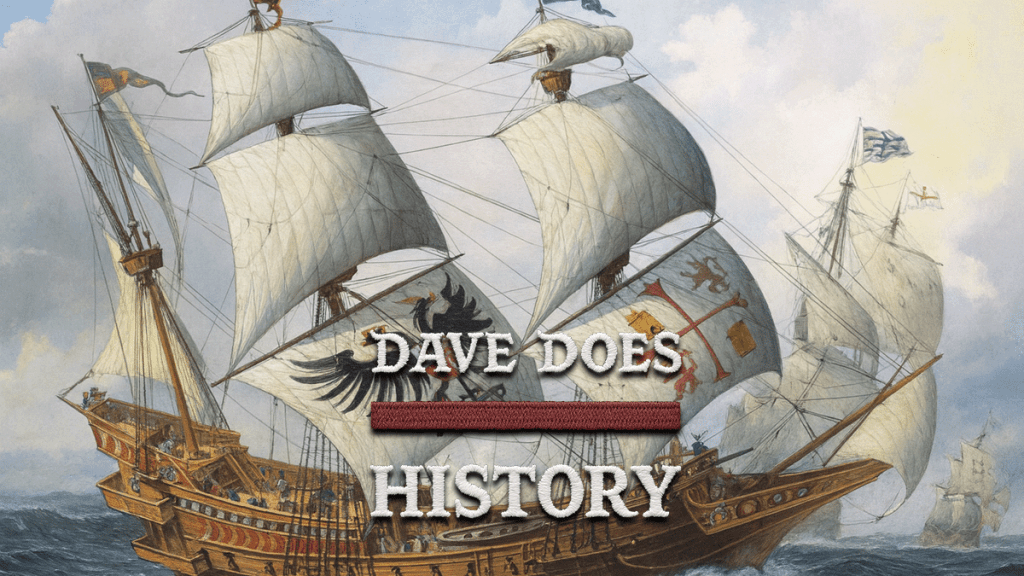
The Atocha was not just any ship in the convoy. She was the almirante, the rear guard, trailing behind the others to watch for attack. She bore a name that tied her to devotion, taken from the Basilica of Nuestra Señora de Atocha in Madrid, but her purpose was utterly practical: to guard, to carry, to deliver. She carried more than twenty tons of silver, along with gold, emeralds, pearls, tobacco, indigo, and treasures meant for the king and queen of Spain.
When she struck the reef and went down, nearly everyone aboard died. Only five souls clung to her mizzenmast through the storm and lived to tell the tale. Spain searched desperately but never found her. She was lost for over 350 years, her story drifting between myth and memory, until a modern treasure hunter named Mel Fisher refused to give up. When his team found her in 1985, the Atocha once again became front-page news, her riches dazzling the world.
Her tale is one of empire, disaster, obsession, and ultimate triumph.
The Nuestra Señora de Atocha was never meant to be famous. She was not built as an admiral’s flagship or as a ship designed to stand the test of centuries. She was a workhorse of empire, pressed into service because Spain needed every available galleon to ferry wealth across the Atlantic. Her story begins in Havana in 1620, where shipyards turned out vessels as quickly as resources and labor would allow.
Spain’s lifeline was the treasure fleet system, the annual convoys that carried the riches of the Americas to Seville. Silver mined from the mountains of Potosí and Zacatecas, emeralds cut from Colombia’s Muzo mines, pearls harvested in Venezuela, gold from Mexico and Peru — all of it flowed toward Spain’s ports. This was not luxury trade. It was survival. Philip IV’s government depended entirely on the shipments to pay soldiers, mercenaries, and creditors. The Thirty Years’ War raged across Europe, draining the treasury. By the early 1620s, Spain was still the most powerful monarchy in Europe, but its strength rested on fragile foundations. If the fleets failed, Spain would stagger.
The Atocha was one of those ships. She measured 112 feet long and 34 feet wide, with a draft of 14 feet. Her displacement was about 550 tons. She was built in the galleon style of the early seventeenth century, with a high sterncastle and forecastle, giving her a distinctive profile but also making her awkward in heavy seas. She carried a square-rigged foremast and mainmast, a lateen-rigged mizzenmast, and a spritsail on her bowsprit. In theory she could maneuver and defend herself, though no galleon of that period was ever easy to handle in stormy waters.
She was armed with 20 bronze cannons, enough to dissuade most pirates or privateers. As the almirante of the fleet, she sailed in the rear guard, tasked with watching for pursuers. The fleet depended on her to hold back threats long enough for the other galleons to escape. Yet for all her firepower, she was flawed. Her hull was constructed from mahogany, not the traditional oak. Mahogany was strong, but not as durable, and it reflected a compromise between speed of construction and long-term resilience. On her maiden voyage to Spain, her mainmast had cracked and had to be replaced. Still, she was considered seaworthy enough to rejoin the fleet.
The year 1622 placed enormous pressure on Spain’s shipping system. Philip IV owed staggering sums. Soldiers had to be paid. The empire itself was mortgaged. When the Atocha prepared to sail with the Tierra Firme flota in that year, she carried not just cargo but the financial hopes of a nation.
Her treasure was immense. According to the manifests, she carried 24 tons of silver bullion, over 1,000 ingots stamped and tallied. She carried 180,000 silver coins packed into hundreds of chests. There were 125 gold bars and discs. Alongside the precious metals, she carried 350 chests of indigo and 525 bales of tobacco, vital commodities for European markets. She bore 582 copper ingots and 1,200 pounds of worked silverware. Colombian emeralds glinted in her stores, pearls from Venezuela gleamed, and gold from the mines of Peru and Bolivia added to the load. The cargo was worth hundreds of millions in today’s terms, and that figure does not account for the contraband.
Every treasure ship carried more than its official records suggested. Passengers smuggled jewelry, merchants hid unregistered coins, officers tucked away private fortunes in hidden compartments. Tax collectors in Seville could be cheated, but the sea could not. By conservative estimates, the Atocha’s actual cargo may have approached half a billion dollars in modern value.
The Atocha was delayed before sailing. In Veracruz, officials took weeks to record the silver shipments. In Havana, the immense cargo required two months just to tally. The fleet was supposed to leave in July, but by the time the Atocha was ready, it was September. That was no small delay. By sailing so late, the fleet was venturing directly into the heart of hurricane season in the Caribbean.
On September 4, 1622, the fleet of 28 ships finally set out from Havana, heavy with treasure, late on its schedule, and vulnerable. The Atocha trailed at the rear, bristling with cannon, her holds filled to bursting with wealth. No one aboard could have known that within forty-eight hours, the ship would be gone, her men drowned, and her riches scattered across the reef line of the Florida Keys.
The morning of September 5, 1622, dawned with uneasy skies. The fleet of twenty-eight ships had left Havana just the day before, their decks sagging under the weight of treasure, cargo, and human lives. The humid air was heavy, the wind freshening from the northeast. For seasoned sailors, it was a warning sign. September was the heart of hurricane season in the Caribbean, and the waters of the Florida Straits were a dangerous place for a fleet that was already six weeks behind schedule.
By midday, the warning had become reality. The breeze stiffened into a gale, filling sails with a force that strained the rigging. The galleons heeled sharply, their high sterncastles catching the wind like barn doors. The sea, calm at dawn, now rose in long rolling swells, each one higher than the last. The captains had little choice but to shorten sail, reefing canvas and trying to hold their line of course. The Atocha, lumbering and heavy at the rear of the fleet, struggled more than most.
By late afternoon the storm was a monster. The gale had turned into a full hurricane, and the sky was a churning mass of gray and black. Lightning forked across the heavens, thunder rolled like cannon fire, and sheets of rain lashed the decks. The winds shrieked through the rigging. Masts groaned and timbers shuddered with every crashing wave.
The fleet scattered. Some ships tried desperately to tack into deeper water, but the storm gave them no chance. The northeast winds drove the convoy relentlessly toward the reef line of the Florida Keys. Sailors hacked away at rigging to keep masts from snapping. Passengers prayed in terror, clutching rosaries and calling on saints. Horses and cattle, carried as cargo in the lower holds, panicked and trampled one another in the dark. The galleons, already poorly balanced with their heavy loads, pitched and rolled as water poured over their decks.
The Atocha fought to hold on. Her crew dropped anchors in the hope that they would dig into the seabed and keep her from being hurled forward. For a brief time, the anchors seemed to bite. But hurricanes shift suddenly, and this one was merciless. Sometime after midnight, the wind veered violently to the south. Now the fleet was no longer being pushed sideways along the straits. It was being driven straight north, directly onto the reefs.
At dawn on September 6, the nightmare reached its climax. Seas rose into walls of water, towering over the ships and crashing down on their decks. The Atocha, her sails shredded, her anchors dragging uselessly, was lifted by one monstrous wave and thrown forward. Her bow smashed against a coral reef with a thunderous crack. The impact split open her hull. A gaping hole yawned at the waterline, and the sea rushed in with unstoppable force.
Sailors scrambled in panic. Some tried to cut away what remained of the rigging, hoping to free the ship from the reef. Others tried to man the pumps, but it was useless. The mainmast, already weakened from her earlier voyage, snapped with a sickening sound, crashing down onto the deck and sweeping men into the sea. The cargo in the holds shifted violently as the ship heeled, breaking through bulkheads and crushing anyone in its path.
The Atocha sank quickly. Within minutes, water filled her lower decks. Passengers and crew, trapped below, drowned in darkness. Above, the storm raged without mercy. Only the mizzenmast, the small mast at the stern, remained visible above the waves as the ship slipped beneath the surface, coming to rest in fifty-five feet of water.
Of the 265 souls aboard, only five survived. Three sailors and two enslaved men managed to cling to the mizzenmast stump through the night. They were battered by waves, soaked by rain, and chilled by wind, but by sheer luck and stubbornness they endured until they were rescued the next day. The rest were lost. Among the dead was Bartolomé García de Nodal, the Spanish navigator who had once explored the Straits of Magellan. His knowledge and experience were no protection against the fury of the storm.
Across the fleet, the destruction was staggering. Eight ships were lost entirely, their wrecks strewn from the Marquesas Keys to the Dry Tortugas. Approximately 550 people drowned. The survivors who staggered ashore or were picked up by rescue ships told tales of horror: waves higher than towers, ships vanishing into foam, men screaming as they were swept into the sea. The hurricane had no favorites. Rich and poor, soldier and slave, officer and passenger, all were at its mercy.
The Atocha lay silent on the seabed, her treasure sealed away in her holds, her hatches battened tight from the voyage. The survivors reported that her mizzenmast stump was still visible above the waves the following day, but within days it was gone, broken off by the storm or carried away by the sea. The ship that had once been the pride of the fleet was now nothing more than timbers and treasure buried in sand and coral.
For Spain, the loss was catastrophic. The Atocha had carried the lion’s share of the fleet’s wealth, and now it was gone. For the families of those aboard, the loss was personal and final. Letters would be sent, estates settled, and prayers offered for souls lost at sea. But the Atocha herself was gone, and the treasure that had once been destined for Seville now lay in darkness, beyond the reach of seventeenth-century salvage.
The hurricane of September 1622 had done more than sink ships. It had sunk the fortunes of Spain itself.
News of the disaster reached Havana within days, and the reaction was one of panic and despair. The fleet was the financial artery of the Spanish crown, and the loss of the Atocha struck at the very heart of Spain’s economy. Officials knew immediately what was at stake. Without her treasure, the king’s debts would deepen, his armies might go unpaid, and his power in Europe could falter. The urgency was overwhelming.
The governor of Havana quickly ordered salvage ships to the site. Experienced divers and sailors were dispatched to search the reefs for survivors, cargo, or anything that could be recovered. They quickly located wreckage from several of the fleet’s ships, including the Santa Margarita, which had gone down in shallower water. From her, they were able to recover some treasure, raising ingots and coins that had spilled from her holds. It was a small victory in the midst of disaster.
The Atocha, however, was another matter. She had sunk in fifty-five feet of water, far deeper than most divers of the seventeenth century could reach. Her hatches had been battened down securely before the hurricane, which meant her treasure was locked inside the hull. The Spanish divers who attempted to reach her could see parts of the wreck, but the cargo was out of reach.
Salvage methods of the time were primitive and brutal. The Spanish employed enslaved Africans as divers, forcing them to plunge beneath the surface with little more than lung capacity and desperation to aid them. Later, they attempted to use large brass diving bells, crude devices lowered into the water with glass viewing windows and a pocket of trapped air inside. Divers could crouch within the bell, stick their heads out, and grope along the seabed for treasure. The method was dangerous, exhausting, and often lethal. Many of the enslaved men pressed into service never resurfaced. Their deaths were recorded coldly in ledgers as expenses of the salvage operation.
Even with these grim measures, progress was slow. A few coins, some scattered cargo, bits of wreckage were brought up. But the Atocha herself remained stubbornly beyond reach. Then, on October 5, scarcely a month after the first storm, a second hurricane swept across the Florida Keys. Whatever traces of the Atocha’s mast had still been visible were torn away. The wreck was scattered even further, timbers flung across the reefs, treasure swallowed deeper into the sand. For the Spanish, it was a devastating blow.
Yet they did not give up easily. For years after, divers continued to search. Wreckage from the Santa Margarita continued to yield treasure, and nearly half of her registered cargo was eventually recovered. But the Atocha defied them. She was too deep, too well sealed, and too well hidden. Time and again divers came back empty-handed. As the years turned into decades, the costs mounted. Finally, after sixty years of failure, the crown abandoned the search. The Atocha was written off as lost forever.
The financial impact was immense. Philip IV had been counting on the treasure of the 1622 fleet to pay debts and finance his armies in the Thirty Years’ War. The sudden shortfall forced Spain to borrow heavily from bankers in Genoa and the Netherlands. Ships had to be sold off to raise funds. Taxes increased, straining the people at home and in the colonies. The loss of the Atocha and her fleet was not simply a maritime disaster. It was a strategic calamity that weakened Spain’s ability to compete with rising powers like the Dutch and the English.
In the popular imagination of the seventeenth century, the Atocha soon passed into legend. Sailors spoke of her as a cursed ship, her treasure guarded by the sea itself. For the Spanish crown, the legend was bitter comfort. The treasure that might have saved their finances remained on the seabed, locked away by storms and reefs, while Spain struggled on under a burden of debt.
The Atocha had become a ghost.
For more than three centuries, the Atocha lay hidden beneath the sea. Generations of sailors told tales of her treasure, but the Spanish had given up, and most considered her irretrievably lost. Then, in 1969, an American dreamer named Mel Fisher decided to find her.
Fisher was not a wealthy aristocrat or a government-backed explorer. He was a former chicken farmer, diving instructor, and entrepreneur from California who believed in the power of persistence. He moved his family to Florida, formed a company called Treasure Salvors, Inc., and raised funds from investors who shared his obsession. From the beginning, his motto was simple and stubborn: “Today’s the Day.” Every morning he repeated it to his crew, no matter how many times they had returned from the sea empty-handed.
Fisher was relentless, but he was also inventive. He pioneered methods of underwater archaeology and salvage that remain in use today. His “mailboxes” were large deflectors attached to the propellers of his boats. When angled downward, they blasted jets of water into the seabed, clearing away sand that had buried wreckage for centuries. He also employed proton magnetometers, sensitive instruments capable of detecting the faint magnetic signatures of buried metal objects. These tools allowed his team to follow trails of artifacts and cargo that had been scattered by the storms of 1622.
The search was grueling. For years Fisher and his crew found little more than ballast stones and broken pottery. Investors grew restless, and creditors circled. In 1970, they recovered fragments of the Santa Margarita, which raised hopes but did not deliver the main prize.
In 1973, three silver bars were lifted from the seabed. Each bore tally marks and serial numbers that matched exactly with the Atocha’s manifest. It was the first undeniable proof that Fisher’s long search was on the right track.
Two years later, in 1975, came another breakthrough. Fisher’s son Dirk located five bronze cannons lying on the ocean floor. The markings on the cannons identified them as belonging to the Atocha. Fisher’s team erupted in celebration. They were certain they were close to the motherlode.
But celebration quickly turned to grief. Only days after the cannons were raised, tragedy struck. Dirk Fisher, his wife Angel, and diver Rick Gage were aboard a salvage boat that capsized. All three were lost. For Mel Fisher, the blow was devastating. His son had been his partner in the quest, his daughter-in-law part of the family operation, and now both were gone, claimed by the same waters that held the treasure they sought.
Many would have quit. The investors questioned continuing. Friends urged him to stop. But Fisher clung to his motto. “Today’s the Day,” he repeated, even when grief weighed heavily on him. He vowed that Dirk’s dream would not die with him.
In the years that followed, Fisher’s team recovered more artifacts, mostly from the Santa Margarita. They pulled up coins, jewelry, and even gold bars, but the heart of the Atocha still eluded them. Then, on July 20, 1985, the long wait ended. Kane Fisher, captain of the salvage vessel Dauntless and Mel’s son, radioed back the words they had all dreamed of hearing: “Put away the charts. We have found the main pile.”
Beneath the sand lay a veritable reef of treasure: silver bars stacked as they had been in 1622, coins spilling out of chests, emeralds gleaming in the light, and gold glinting against the coral. It was the richest shipwreck recovery in history. The treasure was valued at over $450 million, and much of the Atocha’s registered cargo had finally been found.
Unlike earlier salvors, Fisher worked with archaeologists to ensure that the recovery was systematic. Duncan Mathewson, the expedition’s chief archaeologist, oversaw the cataloging and conservation of artifacts. Objects that had lain underwater for centuries were carefully stabilized to prevent disintegration when exposed to air. The treasure was not just gold and silver; it was a time capsule of the seventeenth century.
Even after the 1985 discovery, the search continued. Many experts believe the sterncastle of the Atocha, which would have contained the captain’s quarters and much of the most valuable cargo, remains undiscovered. Mel Fisher’s Treasures, the company he founded, continues to search the Florida Keys for the rest of the ship’s riches.
Mel Fisher had proven the skeptics wrong. His persistence, his motto, and his willingness to endure tragedy had brought the Atocha back from legend into history.
Finding the Atocha was only half the battle. The other half was fought not with propellers and magnetometers but in courtrooms. Almost as soon as Mel Fisher and his team began bringing up treasure in the early 1970s, the State of Florida laid claim to it. Florida officials argued that the wreck lay within state waters and therefore fell under their jurisdiction. Under the terms they imposed, Fisher’s company would be forced into a contract giving the state twenty-five percent of everything recovered.
For Fisher, who had staked his life and fortune on the search, this was intolerable. He had raised the money, done the work, and endured the risks. Now the state wanted a share of the prize. The dispute quickly escalated into a legal battle that stretched over a decade. Treasure Salvors, Inc., argued that the wreck lay in federal waters and that Florida had no right to seize any portion of it. Florida, in turn, dug in its heels, unwilling to let go of what could be the richest salvage in history.
The case wound its way through the courts. At times, Florida law enforcement even seized artifacts Fisher had recovered, sparking bitter confrontations between the state and the salvage crews. Investors worried that the treasure would be lost not to the sea but to legal technicalities. Fisher, true to form, refused to yield. Just as he had endured the sea’s indifference, he now endured the grinding pace of the courts.
Finally, on July 1, 1982, the United States Supreme Court issued its ruling. In an 8–1 decision, the Court sided with Treasure Salvors. The justices ruled that the wreck lay outside Florida’s jurisdiction and that Fisher’s company held full title to the treasure they had recovered. It was a landmark decision, establishing precedent in maritime law and affirming the rights of private salvors to claim historic wrecks found in federal waters.
The victory was more than legal. It was symbolic. After years of setbacks, tragedies, and disputes, Fisher had not only found the Atocha but secured the right to her riches. For Florida, it was a bitter defeat. For Fisher, it was vindication, the final confirmation that his stubborn motto, “Today’s the Day,” had been worth repeating all along.
The discovery of the Nuestra Señora de Atocha was more than the recovery of wealth. It was the recovery of history. When Mel Fisher and his crew uncovered her “motherlode” in 1985, they revealed not just silver bars and gold coins but a frozen moment in the story of the seventeenth century.
The sheer value was staggering. More than $450 million worth of treasure was eventually recovered, including forty tons of silver and thirty-two kilograms of Colombian emeralds. The Guinness Book of World Records recognized it as the most valuable shipwreck recovery ever, a record that stood until the discovery of the San José in 2015. Yet the real value went beyond numbers.
The coins, known as “cobs,” were hand-cut and irregular, struck in colonial mints in Mexico and Bolivia. Each bore the marks of forced labor, of indigenous miners and enslaved workers who extracted silver from the mountains of Potosí or Zacatecas. The gold bars and discs, stamped with foundry marks, spoke of the system that fueled Spain’s empire. Emeralds from the Muzo mines shimmered with the legacy of conquest in South America. Pearls from Venezuela added to the wealth, each one pried from the sea by divers who often worked until they drowned.
Other artifacts deepened the story. A seven-pound gold chain, a gold chalice, navigational instruments, bronze cannons, weapons, and even seeds and insects preserved in the wreck gave archaeologists a window into daily life aboard a Spanish galleon. These were not just treasures but time capsules, preserved by saltwater and sand for centuries.
Fisher ensured that the finds did not simply vanish into private collections. The Mel Fisher Maritime Heritage Museum in Key West displays many of the Atocha’s treasures, drawing nearly two hundred thousand visitors each year. Another museum in Sebastian, Florida, continues the story. Visitors can see the riches of empire and the traces of those who built and lost it. Some artifacts were sold to investors or collectors, allowing individuals to “own a piece of history,” but the bulk of the discovery remains preserved for study and public display.
The Atocha has become more than a legend of lost treasure. She is a case study in the fragility of empire, the fury of the sea, and the persistence of human determination. Spain lost her when it could least afford it, and the blow rippled across Europe. Centuries later, Mel Fisher found her, and in doing so, he showed that history can be lost to time but not always forever.
For those who visit the museum, hold a coin from the wreck, or even just hear her name, the Atocha represents a reminder. Great fortunes can vanish in a night. Empires can be humbled by a storm. And yet, with determination, legends can be pulled from the depths and returned to the world above.



 DAVE DOES HISTORY
Leave a comment