
If you want to understand the mess that was the Roman Republic in the final decades before it gave way to empire, you have to accept that it was a place where ambition and desperation constantly wrestled with tradition. Men who had been raised on the stories of Cincinnatus and Marius, men who were supposed to embody Roman virtue, had turned the state into a stage for their egos. The legions became poker chips in a high stakes game where the loser forfeited not only power but usually his head. Amid all the assassinations, alliances, betrayals, and fiery speeches, one of the most decisive moments of that whole stormy period took place not on the soil of Italy but on the waters off Sicily in 36 BCE. It was called the Battle of Naulochus, and while it rarely shows up in the top ten lists of Roman history, it might be one of the most important battles you have never heard of. Without it, Augustus might never have been Augustus at all.
Rome in the years after Caesar’s assassination was in chaos. The Ides of March had rid the Senate of their dictator, but the Senators who plunged their knives into him had no idea what to do next. The Roman people did not see themselves freed, they saw their beloved Caesar murdered in cold blood. Mark Antony tried to step into the vacuum with a theatrical funeral oration that whipped the crowd into a frenzy. Out of nowhere came Caesar’s teenage grand-nephew, Gaius Octavius, later called Octavian, who claimed to be Caesar’s heir. With Lepidus as the third man in this strange dance, the Second Triumvirate was born. They purged Rome of enemies, plastered proscriptions on the walls, and seized the property of the wealthy to pay their troops. They might have brought a kind of order to the city, but beyond the walls of Rome there were problems that swords in the Forum could not fix.
The most immediate was Sicily. That island, long the breadbasket of Rome, was in the grip of Sextus Pompeius, the son of Pompey the Great. Sextus was not the kind of man to sit quietly and accept the end of his family’s influence. His father had been one of the most powerful men in Roman history, and though he had been beaten and eventually killed in the civil wars against Caesar, Sextus had carved out a place for himself as master of the sea. He controlled a formidable fleet, and more importantly, he held the sea lanes that brought grain from Sicily to the hungry mouths of Rome. Without that grain, the mob in the city would riot. It was not just a matter of convenience. It was survival. Sextus understood this and used his fleet like a stranglehold.
Imagine Octavian at that point. Young, untested, still mocked by many as a boy playing at politics, he needed to prove himself as a leader, and fast. He had no choice but to deal with Sextus. And here is where fortune favored him, because standing beside him was Marcus Vipsanius Agrippa, the kind of man who never would have won the spotlight of history on his own, but whose genius made emperors possible. Agrippa had already proven himself as a soldier and administrator, but he was about to reveal something else. He was a naval strategist of the first order.
Rome was not, by tradition, a naval power. Carthage had ruled the waves during the Punic Wars, and even when Rome finally broke Carthage, it was not because of seafaring skill so much as brute determination and the famous corvus boarding bridge. The Romans were land soldiers who sometimes happened to be on ships. Sextus Pompeius, however, had been trained in naval warfare, and his fleet was fast, maneuverable, and commanded by men who knew how to fight at sea. Agrippa looked at this situation and realized that if Rome tried to beat Sextus with conventional naval tactics, they were doomed. So he decided not to fight conventionally.
At a place called Portus Julius, Agrippa built what might be called the first naval boot camp. He created a harbor where entire fleets could be trained in secret, drilled the crews endlessly, and introduced innovations that gave Rome the edge. His most famous invention was the harpax, a kind of harpoon fired from a catapult that embedded itself in an enemy ship and was then reeled in with winches. This was a brutal but brilliant adaptation of the old Roman boarding mentality. Instead of trying to outmaneuver Sextus’ sleek ships, Agrippa planned to hook them like fish, drag them close, and let Roman soldiers do what they did best, kill at close quarters.
The stage was set. In 36 BCE the Triumvirs had decided to move against Sextus. Octavian’s forces, with Agrippa commanding the fleet, closed in on Sicily. Sextus responded with his own ships, determined to hold his grip. On September 3 the two fleets met off the north coast of Sicily near Naulochus. It was one of those moments when the fate of the Roman world turned on the abilities of sailors and oarsmen rather than legionaries and centurions. Both sides had about 300 ships. Sextus had speed. Agrippa had innovation.
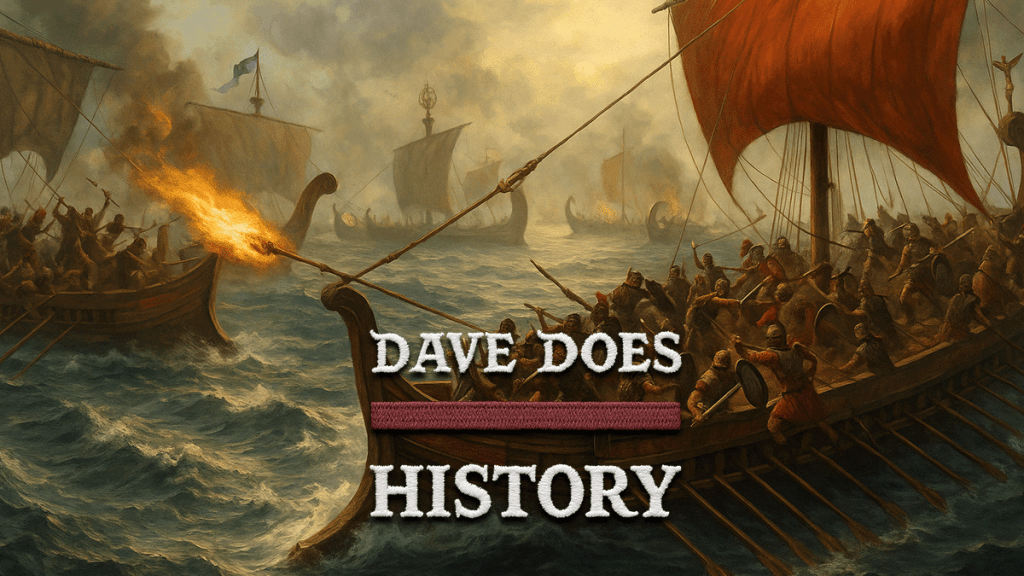
The battle raged. Imagine the scene, hundreds of triremes and quadriremes smashing through the waves, oars beating like the pounding of war drums. Agrippa’s harpax devices launched across the waters, embedding themselves in enemy hulls. Sextus’ ships tried to dart in and out, relying on their agility, but every time they closed in, the harpoons sang and the winches pulled. Once hooked, the enemy vessels were dragged alongside and swarmed by Roman marines. What should have been an elegant naval dance turned into a brutal melee, ship against ship, men locked in combat on slippery decks, the sea stained red with blood.
Agrippa’s plan worked almost too well. By the end of the fight, nearly the entire fleet of Sextus was destroyed or captured. Only a handful of ships managed to escape, and Sextus himself fled, abandoning the sea he had once ruled. His power broken, he would wander eastward, trying to find refuge, but eventually he was executed, a footnote in the bloody roll call of Rome’s losers.
Back in Rome, the news of the victory at Naulochus was like a lifeline. The grain supply from Sicily was secured, and Octavian could finally breathe. More than that, his image as a leader was transformed. He was no longer the boy fumbling in Caesar’s shadow. He was the man who had crushed Pompey’s son and restored the lifeline of Rome. Of course, the real credit belonged to Agrippa, but Octavian was never shy about taking credit when it suited him. He rewarded his friend, honored him, even married him into the family later, but he made sure that the people understood who had given them back their bread.
The victory had political ripples. Lepidus, the third member of the Triumvirate, thought he saw an opportunity to claim Sicily for himself once Sextus was beaten. Octavian outmaneuvered him politically, stripped him of power, and reduced him to irrelevance. The Triumvirate became, for all practical purposes, a partnership of two, Octavian and Antony. And we all know where that road led, to the confrontation with Cleopatra, to Actium, and to the birth of the Roman Empire under Augustus.
It is easy to forget Naulochus because Actium looms so large. After all, Actium had all the drama, Cleopatra’s presence, the love affair that shook the Roman world, the showdown between two giants. But if you look closely, Actium was only possible because of Naulochus. Without Sicily secured, without the grain supply restored, without Agrippa’s demonstration that Rome could dominate the sea when properly led, Octavian would never have reached that final stage. Naulochus was the hinge moment, the point where Octavian went from precarious pretender to real contender.
Think for a moment about what this says about Roman history. The Romans liked to tell themselves that they were men of the soil, soldiers of the land, conquering provinces with the march of legions. Yet their greatest moments of destiny often came at sea. From the Punic Wars, when they stole naval tactics from Carthage, to Naulochus, to Actium, the Mediterranean was not just a backdrop, it was the stage. The Romans might not have admitted it, but they became rulers of the sea as much as of the land.
For Agrippa, Naulochus cemented his reputation. He was not just Octavian’s friend, he was the indispensable man, the general who could deliver victories when they were needed most. His harpax was remembered, his tactical genius admired, and when Octavian finally became Augustus, it was Agrippa who stood beside him, trusted above almost all others. Agrippa never sought the spotlight in the way that Antony or Caesar did, but his legacy is etched into every victory Octavian ever claimed.
For Sextus, Naulochus was the end of the line. He might have been a contender. He had held Rome by the throat with his grip on the grain supply, and for a moment it seemed like he could have forced his way back into real power. But in the end he was another casualty of Rome’s endless cycle of ambition. His father had once been the most powerful man in the world. Sextus died a fugitive.
For Rome itself, Naulochus was proof that the Republic was living on borrowed time. Victories were no longer the achievements of the state, they were the stepping stones of individuals. When Octavian claimed the glory of Naulochus, it was not the Senate that benefited, it was his own future. The Republic’s institutions had become hollow shells, useful only as props in the theater of personal ambition. The people did not mind. They wanted bread, stability, and a leader who could give them victories. Octavian understood this, and Naulochus gave him the credibility to deliver on it.
So when you think of Augustus, the first emperor of Rome, the man who built the empire, think not just of Actium or his marble projects in the city. Think of the waters off Sicily, where a fleet armed with harpoons and driven by discipline tore apart the last hope of Pompey’s legacy. That was the real beginning of Augustus’ path to power. It was not glorious in the way the Romans liked to imagine their victories. It was brutal, bloody, and soaked with salt water. But it was decisive.
History is funny like that. We remember the dramatic moments, the battles with famous names, the ones that painters and poets make into legend. But often the turning points are quieter, tucked away in places like Naulochus, where men fought and died, and the future of an empire shifted with the tide. The Battle of Naulochus may not be the stuff of school textbooks, but it was the kind of battle that made emperors. And if Rome taught us anything, it is that emperors are the ones who write the history books.


 DAVE DOES HISTORY
Leave a comment