
The Powder Alarm of 1774 is one of those moments in American history that does not get the glory of Lexington and Concord, but in many ways it deserves it. It was the day New England almost went to war months before the Revolution officially began. It was loud, it was chaotic, and it was sparked by rumor. In the end, no one fired a shot, but the entire colony of Massachusetts got a crash course in how quickly they could turn into an army. If the Revolution was a fire, the Powder Alarm was the fire drill.

Let us start with the basics. In the eighteenth century, gunpowder was power. You could not defend yourself without it, and you certainly could not start a rebellion without it. A musket without powder is just a wooden stick with a steel club on the end. Whoever controlled the supply of powder controlled the ability to fight. Both the colonists and the British knew this.
By 1774, the relationship between Massachusetts and the Crown was already in a tailspin. After the Boston Tea Party, Parliament hit the colony with the Coercive Acts. These were called the Intolerable Acts by the colonists because, frankly, they were intolerable. Boston’s port was shut down. The colonial government was neutered. Royal officials could escape justice by being tried outside of Massachusetts. General Thomas Gage arrived as governor with orders to bring these unruly Yankees back into line. He had the troops. He had the authority. What he did not have was the trust of the people.
Gage knew that rebellion was in the air. He also knew that rebellion without gunpowder was nothing more than angry talk in taverns. So he made the decision to seize provincial powder stores and keep them under British control. His logic was straightforward. If the colonists could not shoot, they could not fight. On paper, it made sense. In practice, it was like tossing a torch into a dry hayloft.
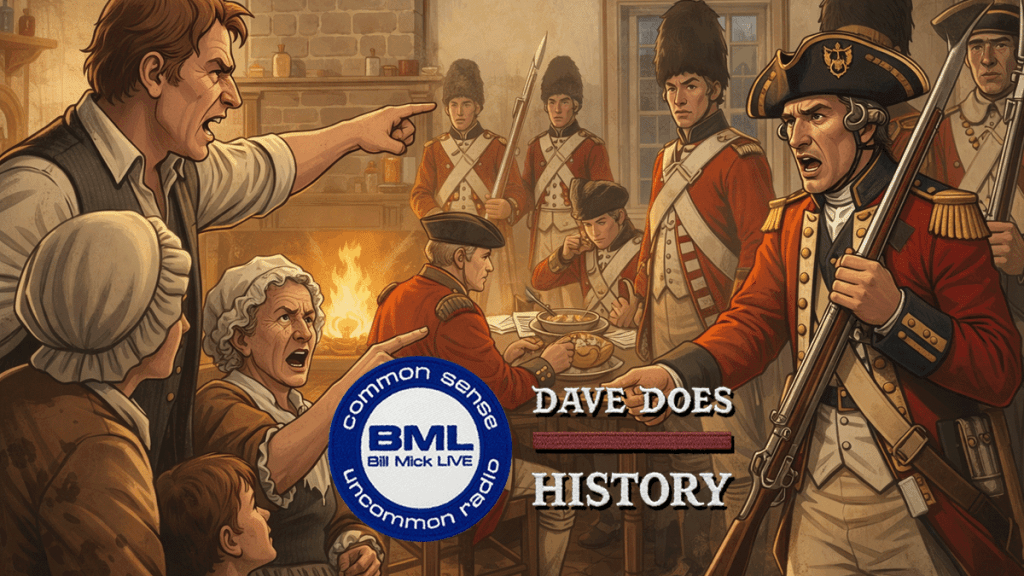
On the morning of September 1, 1774, Gage sent about 260 Redcoats up the Mystic River. Their target was the Powder House in what is now Somerville, Massachusetts. This building, which still stands today as the Old Powder House, held 250 half-barrels of provincial gunpowder. The troops marched quietly, secured the building, and carted off the powder to Castle William in Boston Harbor. The whole thing went smoothly. No shots fired. No resistance. Mission accomplished.
Except that is not how the countryside heard it.
News in eighteenth-century New England traveled in its own way. There were no telegraphs or cell phones, but there were plenty of fast horses, church bells, and people eager to spread a story. By the time the soldiers were back in Boston, rumors were already flying through taverns and town squares. The story grew more dramatic with every retelling. The British had not just taken powder, they had fired on civilians. People had been killed. Boston was under siege.
You can imagine how that landed on ears already suspicious of British intentions. Within hours, militia companies from across Massachusetts and even from neighboring colonies were on the move. Men dropped their tools, grabbed their muskets, and started marching. Reports at the time claimed anywhere from twenty thousand to sixty thousand colonists began converging on Boston. To put that in perspective, Boston itself only had about sixteen thousand residents at the time. It was as if the entire countryside was rising in fury, ready to descend on the city and drive the Redcoats into the sea.
This was no small demonstration. This was a mass mobilization unlike anything the colonies had ever seen. Farmers left their plows in the field. Blacksmiths walked away from their forges. Shopkeepers closed their doors. The call to arms was so loud that it shook the province from one end to the other. If there was any doubt about whether ordinary people were willing to fight, the Powder Alarm answered it.
General Gage, who had thought he was carrying out a quiet precautionary move, suddenly realized he was sitting on a powder keg in more ways than one. Had the militia pressed into Boston that day, there is no telling how bloody the outcome would have been. Gage had troops, but he did not have enough to face tens of thousands of enraged colonists at once.
And then, almost as quickly as it began, the crisis fizzled. The truth emerged. No one had been shot. No one had been killed. The British had simply taken powder and stored it elsewhere. Once that fact became clear, the militia companies slowed, stopped, and eventually turned back. They went home, muskets still loaded but unfired. Boston was spared a battle.
So if no blood was spilled, why does the Powder Alarm matter? Because it showed everyone what was possible. The colonists discovered that they could mobilize an army in a single day. They saw that riders could spread the word in hours, that bells could summon men from fields and workshops, and that thousands of armed farmers could be on the march before British officers had even finished their tea. The British, for their part, saw just how volatile the situation was. If twenty thousand armed men could appear out of nowhere over a rumor, what would happen the next time a real clash occurred?
The Powder Alarm hardened attitudes on both sides. For the colonists, it was proof that Britain was willing to disarm them by force. If they wanted liberty, they would have to be ready to defend it. County conventions began reorganizing the militia system. Patriots began moving arms and powder further inland, out of reach of Gage’s troops. Moderates who still hoped for compromise saw that the Crown was preparing to rule Massachusetts at the point of a bayonet.
For the British, it was a wake-up call. Gage had learned that even a bloodless powder seizure could bring the entire countryside to arms. He became more cautious, more aware that every move he made could provoke an explosion. Yet London continued to push for tighter control, and Gage remained trapped in Boston, isolated and increasingly surrounded by hostility.
The Powder Alarm also raises one of those fascinating historical what-ifs. What if shots had been fired that day? What if a jittery soldier had pulled a trigger, or a hotheaded farmer had decided to take aim? The first battle of the Revolution might not have been at Lexington and Concord in April 1775. It might have been in September 1774, at Boston itself. Would the colonies have been ready for war that early? Would France have eventually joined the fight? Would Washington have emerged as commander? We will never know. What we do know is that the Revolution came close to beginning months earlier than it did.
And here is the other thing. The Powder Alarm may not have ended in battle, but it was not forgotten. When Paul Revere rode out on April 18, 1775, he was not inventing something new. He was repeating something the colonies had already practiced. The alarm system had already been tested. The people had already proven they would rise. The British had already learned that the countryside could erupt with little warning. Lexington and Concord worked because the Powder Alarm had shown it could.
That is why the Powder Alarm of 1774 deserves its place in the story of the Revolution. It was the moment when rebellion turned from an idea into a rehearsal. It was the day ordinary people showed that they would not sit by while their powder, their means of defense, and their liberty were carted away. They may not have fired, but they were ready. And that readiness is what mattered.
So yes, we celebrate April 19, 1775, as the day the Revolution began in blood. But if you really want to understand how America got there, you need to look at September 1, 1774. That was the day Massachusetts proved it had the will and the means to rise. That was the day the alarm was sounded, even if it turned out to be false. And it was the day that proved the Revolution was not just possible, but inevitable.


 DAVE DOES HISTORY
Leave a comment