
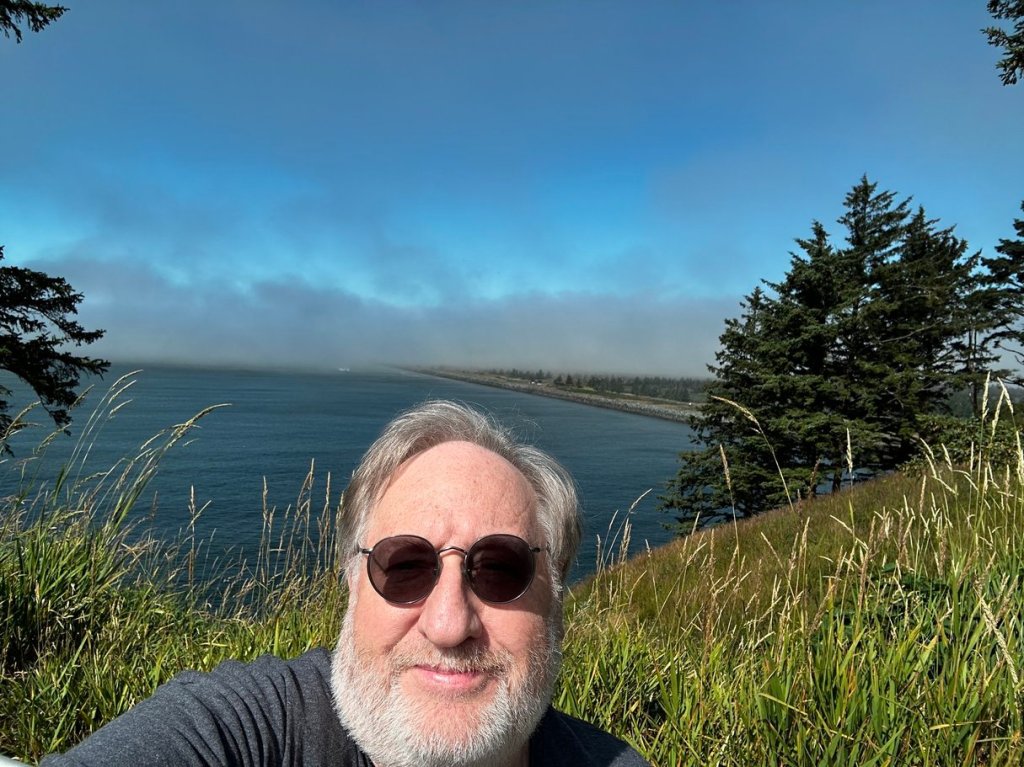
I stood at Cape Disappointment not long ago, the wind biting from the Pacific and the sea stretching out in that endless gray-blue horizon. Behind me sat the Lewis and Clark Interpretive Center, perched on the cliff like a sentinel, reminding every visitor that this was the final destination of a journey that began thousands of miles away. Standing there, I could not help but think of the men who trudged across rivers, mountains, and prairies to reach this point, and how one of them, Meriwether Lewis, carried both the weight of triumph and the seeds of tragedy.
Lewis was born in 1774 near Charlottesville, Virginia, into a family that carried the expectations of land and legacy. His father died when Lewis was young, and his mother moved the family to Georgia for a time. He didn’t receive much in the way of formal education until his teenage years, but the wilderness became his classroom. He learned to forage, hunt, and use herbal remedies. Nature shaped him as much as any tutor could, instilling in him the kind of rugged confidence Jefferson would later recognize as essential for what he had in mind.
His path led him into the Virginia militia during the Whiskey Rebellion, where he helped put down the early sparks of defiance against federal authority. From there he joined the regular army and served under William Clark, a connection that would later prove fateful. By the year 1800, Lewis had earned the rank of captain. When Thomas Jefferson became president in 1801, Lewis stepped into the role of personal secretary. That wasn’t a job of fetching papers and pouring coffee. Jefferson trusted him with matters of policy, science, and planning. The president was already dreaming of what lay beyond the Mississippi, and he needed a man he could rely on.
The Louisiana Purchase in 1803 cracked the door open to the greatest exploration in American history. Jefferson picked Lewis to lead the expedition, and Lewis in turn reached out to Clark to share command. Clark’s commission technically made him a subordinate, but the two ignored the paperwork. They were partners in every sense, each bringing strength the other lacked. Lewis, ever the curious observer, studied astronomy, medicine, and botany in Philadelphia before departing. He wanted to be more than just a leader. He wanted to be a recorder of the unknown.
The Corps of Discovery pushed off from St. Louis in 1804 and spent over two years crossing and re-crossing rivers, climbing the Rockies, surviving hunger, and building fragile alliances with tribes along the way. Lewis recorded animals, plants, and landscapes that most Americans couldn’t imagine. Clark charted maps that made the territory real on paper. Together they stitched the fabric of an empire not yet realized. In November 1805 they finally reached the Pacific. They spent the winter at Fort Clatsop, cold and damp, before heading back. By the time they returned, they had mapped thousands of miles and brought back knowledge that would fuel expansion for decades.
For his part in all this, Lewis was rewarded with money, land, and a prestigious appointment. Jefferson made him governor of Upper Louisiana in 1807. At first, it must have seemed like the perfect honor. Instead, it became the undoing of him. Lewis had little talent for bureaucracy. He fell into bitter disputes with Frederick Bates, the territorial secretary, and faced political battles he was ill-suited to fight. Washington was far away, letters moved slowly, and reimbursements for expenses never seemed to come. Lewis often dipped into his own pocket to pay for government needs. By the time those accounts were sorted after his death, he had already carried the shame of being seen as irresponsible.
The man who once marched confidently into the wilderness began to lose his footing. Reports from friends and colleagues describe him as melancholy, beset by debt, and weighed down by loneliness. In 1809 he set out for Washington, determined to clear his name. He traveled down the Natchez Trace, a dangerous stretch of road, planning to make his way to the capital by land rather than water. On October 11, at a place called Grinder’s Stand, he died of gunshot wounds. Some say he took his own life, that depression consumed him. Others argue murder. The truth has never been settled. The ambiguity became part of his legacy, casting a shadow that has never entirely lifted.

Despite the tragic end, America remembered him. His grave was marked with a monument in the nineteenth century and declared a national site in the twentieth. Plants, birds, and animals he catalogued bear his name. Counties and towns across the country keep his memory alive. Jefferson himself praised him as a man of “courage undaunted,” the kind of praise that sticks to the national memory even when the details grow fuzzy.
As I looked out over the breakers at Cape Disappointment, I wondered what Lewis felt when he first stood at the Pacific. Triumph? Relief? Dread of the journey back? He had seen more of this continent than nearly anyone of his time, and yet the very qualities that made him great in the wilderness could not save him in the political jungle. His story is a reminder that history isn’t just about bold discoveries and national victories. It is also about frail men, caught between their greatest moments and their darkest nights, standing at the edge of the ocean and wondering what waits beyond.




 DAVE DOES HISTORY
Leave a comment