
In the summer of 1942 the United States was just beginning to shift the tide of the Pacific War. American forces had gone ashore at Guadalcanal and the first land campaign of the war against Japan was underway. Thousands of miles away, another plan was put into motion. It was not meant to seize territory or hold ground. Instead, it was designed to distract, to unsettle, and to test the idea of using small bands of specially trained Marines to strike the enemy where he least expected it. The place chosen was Makin Atoll, a lonely outpost in the Gilbert Islands, far from the main stage of battle but valuable as a way to probe Japanese defenses and draw their attention away from the Solomons.
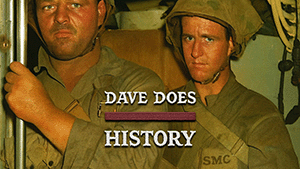
The men chosen for the task were Carlson’s Raiders, the 2nd Marine Raider Battalion, led by Lieutenant Colonel Evans Carlson. His command was carried to the island not on transports or destroyers but inside two submarines, USS Nautilus and USS Argonaut. Those boats had their torpedoes removed to make room for bunks, and into the stifling heat of the steel hulls were crammed more than two hundred Marines. It was a miserable passage, hot, humid, and suffocating, but the men endured it with the grim humor of those who knew that worse lay ahead. Carlson himself was a man of unusual ideas, fond of speaking about unity of spirit and fighting as one, and his men, nicknamed “Gung Ho” Raiders, carried that same attitude into the war.
The plan was simple on paper but anything but simple in execution. Under the cover of darkness, the Raiders would climb into rubber boats, power their way through the surf, land on two separate beaches, and then sweep the island. It did not go as intended. Motors failed. The seas were rougher than expected. In the noise and confusion, Carlson changed his plan and ordered everyone ashore on a single beach. Word of that change did not reach Lieutenant Oscar Peatross and his small squad, who went ashore alone at the original site. Instead of being cut off, they found themselves in the perfect position to hit the Japanese from the rear, knocking out radios and machine guns before slipping back into the shadows.
As dawn broke on August 17 the Raiders moved across the island. Japanese snipers hidden in palm trees and behind barricades made progress slow. Twice the defenders launched headlong charges with bayonets and rifles, but both were broken by Marine fire. Submarines offshore joined in with their deck guns, and by chance their shells found Japanese vessels in the lagoon, sinking them. At one point reinforcements tried to arrive by seaplane, but as they touched the water Raiders opened fire and destroyed them. The battle was sharp, confused, and savage. Snipers were tied into treetops, forcing Marines to shoot down entire fronds just to kill them. Natives on the island, sympathetic to the Raiders, helped in small ways. They cracked open coconuts for thirsty men, carried belts of ammunition, and even joined in the fight against snipers. Carlson’s force held its ground, but the cost in exhaustion and strain was high.
The real disaster came not during the fighting but during the attempt to leave. As darkness fell and men dragged their rubber boats into the surf, the tide and waves proved too much. Motors sputtered and drowned. Boats capsized, spilling weapons and gear into the ocean. A handful of boats fought through the waves and reached the submarines, but the majority were thrown back onto the beach. Carlson found himself with more than a hundred men, soaked, nearly unarmed, and at the end of their strength. For a moment, in despair, he even considered surrender, but the Marines refused. They would find another way out. Improvised rafts lashed together from canoes and rubber boats eventually carried many of them offshore where the submarines, waiting in the darkness, gathered them up.
Not all made it. Eighteen Raiders were killed in action. Seventeen were wounded. Two disappeared entirely. Nine men were captured after being left behind, carried to Kwajalein, and later executed. That tragedy haunted the memory of the raid. Japanese losses are still debated, with figures ranging from a few dozen to more than a hundred and sixty. What is certain is that the small garrison on Makin was destroyed, its fuel stores and radio equipment wrecked, and its defenses scattered. Yet none of the larger goals were accomplished. No prisoners were taken. No intelligence gathered. The Japanese were not distracted from Guadalcanal. In fact, the raid convinced them to strengthen their positions in the Central Pacific, which would make the later invasions at Tarawa and elsewhere far more bloody.
Still, Makin mattered. It was proof that American Marines could strike at the enemy on his own ground. It was proof that submarines could carry and support raiding parties. It was a morale lift at a time when the war in the Pacific still looked uncertain. From the raid came decorations for bravery, including the first Medal of Honor awarded to an enlisted Marine in the war, Clyde Thomason, who was killed on the island. In the years that followed, Hollywood turned the story into the film “Gung Ho,” a piece of wartime propaganda but one that captured the daring spirit of the operation. Decades later, the remains of Marines killed on Makin were recovered and given proper burial at Arlington and other cemeteries, closing a chapter that had remained open far too long.
The raid on Makin Island was messy, tragic, and incomplete. Yet it was also bold. It showed the willingness of the United States to carry the fight across the Pacific, no matter the obstacles. It taught lessons that would be applied, painfully and imperfectly, in the great island campaigns still to come. And for the men who went there, Marines and submariners alike, it became a story of hardship, courage, and sacrifice, a reminder that even small actions can echo far beyond their immediate results.


 DAVE DOES HISTORY
Leave a comment