
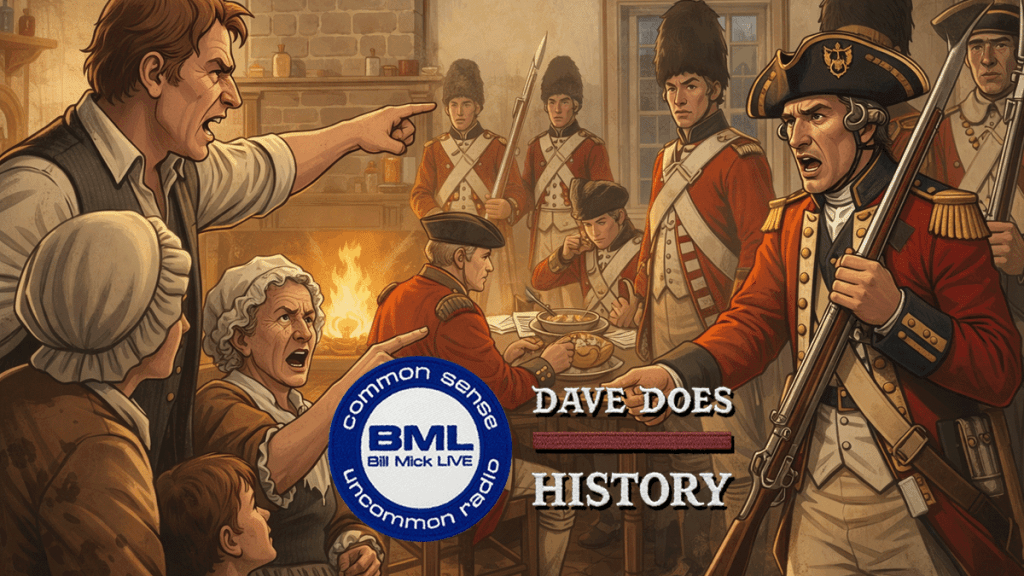
In this week’s Dave Does History on Bill Mick Live, the Liberty 250 series turns its attention to the Declaration of Independence as more than just a historic announcement. It is presented as a carefully constructed political masterpiece. Dave Bowman invites listeners to set aside the image of the parchment under glass in Washington and instead imagine the Declaration as a building, each stone and arch deliberately placed to support a new nation. The discussion traces the sources of its “construction materials”: civic virtue from Rome, natural rights from the Enlightenment, and the enduring safeguards of the British constitutional tradition.

Dave and Bill walk through the document’s four main sections, the preamble, the statement of purpose, the grievances, and the conclusion, showing how Jefferson designed the Declaration like a legal brief, a speech, and an architectural work all at once. Each part serves a structural role, from the soaring principles at the entrance to the long gallery of evidence against the king, culminating in the final chamber where independence is declared and pledged with sacred honor. Along the way, they note how Jefferson’s rhetorical style, rhythm, and logical progression work together to persuade both heart and mind.
The conversation also confronts the contradictions embedded in the document. Slavery remained, women were excluded from political life, and Indigenous peoples were treated as obstacles to expansion. Yet, Dave argues, these flaws did not nullify the ideals. Instead they set benchmarks for future generations to push toward. The Declaration became a blueprint for reform movements across centuries, from abolition and women’s suffrage to civil rights and even international struggles for independence.
In classic Dave Does History fashion, the episode ties the document’s structure to lessons from classical history, especially the Roman Republic’s model of civic virtue and resistance to tyranny. By blending ancient precedents with Enlightenment thought and colonial experience, Jefferson and his colleagues created a framework strong enough to weather war, political change, and centuries of debate. As the Liberty 250 series moves forward, listeners are promised a deeper walk through each section of this blueprint of liberty, exploring not only what it says but why it was crafted the way it was, and why it still matters today.



 DAVE DOES HISTORY
Leave a comment