
(Special Thanks to Bill Mick sitting in for me today while Cami and I are on our anniversary trip!)
In the summer of 1777, the American Revolution wasn’t just lines on a map or flags over forts. It was a struggle that reached into farmhouses and longhouses, through the dense forests of New York and into the hearts of people who’d once shared the same pews and planted the same fields. When the smoke cleared on August 6 near the Oneida village of Oriska, the ground itself seemed to bleed. They called it a ravine, but for many, it was a grave. And what happened there wasn’t just another battle between Redcoats and Rebels. It was, in every way that matters, a civil war.

General Nicholas Herkimer wasn’t a trained soldier. He was a respected local leader, a man of Dutch-German heritage who had found himself leading a force of frontier militia made up of farmers, blacksmiths, and boys too young to know better. The militia he called up in July 1777 wasn’t made for a campaign. They wore homespun clothes and brought their own muskets, often with little powder and less training. What they had was resolve. Herkimer’s men knew the threat wasn’t far. Barry St. Leger had marched from Canada with British regulars, Loyalist rangers, and hundreds of Native warriors, intending to seize the Mohawk Valley and split the colonies in two.
The key to that plan was Fort Stanwix, also known then as Fort Schuyler. Held by Patriot forces, the fort stood like a dam against St. Leger’s push eastward. On August 2, the siege began. Inside, Colonel Peter Gansevoort and his garrison held firm, knowing relief had been promised. Herkimer and his Tryon County militia were that relief.
They set out from Fort Dayton on August 4, trudging west through humid woods and muddy paths. The ranks included four militia regiments, mostly descendants of Palatine German settlers. They were joined by warriors from the Oneida Nation, the only members of the Iroquois Confederacy to side with the Patriots. Among them was Han Yerry, a respected leader in Oriska, and Joseph Louis Cook, a sharpshooter with an eye as sharp as his politics. Their loyalty to the Patriot cause would split the Confederacy in two.
On the night of August 5, Herkimer made camp just eight miles from Fort Stanwix. He sent messengers ahead to notify Gansevoort of his approach. The plan was simple: when the fort fired three cannon shots, Herkimer would advance. This coordination was essential. A diversion from the fort would pull British attention away from the approaching militia. But Herkimer didn’t hear the signal the next morning. His instinct was to wait. Patience wasn’t a quality shared by all his officers.
Tension snapped. Some accused Herkimer of cowardice, even hinted that his family ties to Loyalists meant his loyalty was suspect. The General, already straining under pressure, gave in. The column would march. The decision would lead hundreds of men into a death trap.
Six miles out, the trail dipped into a ravine. A thin stream cut through the valley floor. The path twisted and narrowed. On either side, dense forest offered perfect cover for an ambush. And it was there, in the tall shadows and thick underbrush, that Sir John Johnson’s Royal Yorkers and hundreds of Indigenous warriors waited. Mohawk, Seneca, Cayuga, and others loyal to the British lined the heights. Some had muskets. Others carried spears and tomahawks. Many of them were eager. Too eager.
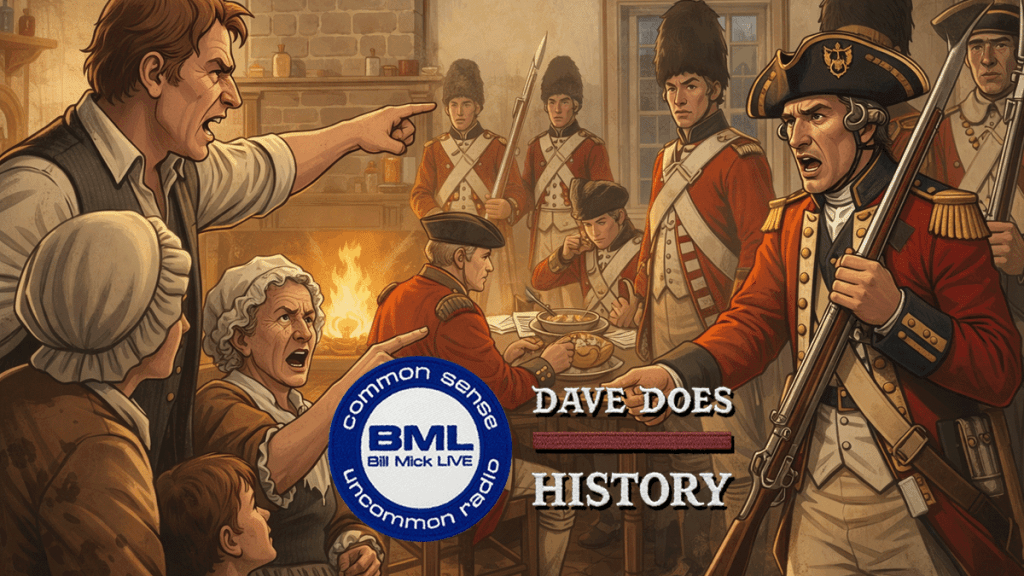
The plan had been to wait until the full column entered the trap. But the gunfire started early. The advanced guard was obliterated. Colonel Ebenezer Cox, at the front, was shot dead in the first volley. Chaos rippled backward. Horses screamed, men fell, and the militia began to scatter. Herkimer, riding near the front, turned to give orders and was struck in the leg. The ball shattered bone. His horse collapsed beneath him. He was carried to a beech tree where he sat, wounded and bloodied, calmly smoking his pipe and issuing orders as if he were sitting at a town meeting.
The fight devolved into madness. Muskets cracked, then gave way to hand-to-hand butchery. Tomahawks rose and fell. Neighbors recognized neighbors and sometimes hesitated before striking. Others didn’t. The 3rd Regiment, forming the rear guard, mostly broke and ran when Joseph Brant and his warriors slammed into their flank. Some were hunted down as they fled. Others tried to regroup, only to fall in smaller skirmishes throughout the woods.
At one point, Herkimer’s men, now few and bloodied, pulled themselves together on higher ground. During a break in the fighting caused by a thunderstorm, the General instructed his men to fight in pairs. One would fire while the other reloaded, keeping a musket always ready. The tactic worked. They were no longer running. They were standing.
Meanwhile, back at Fort Stanwix, the three messengers had finally reached Gansevoort. He ordered a sortie. Lieutenant Colonel Marinus Willett led 250 men out of the fort, not to reinforce Herkimer, but to strike the British camps. What they found was almost undefended. The raiding party looted tents, took British documents, scattered Indian women and children, and left chaos behind them. Warriors on the battlefield heard about the attack. Panic set in. Some shouted the Seneca retreat signal and ran. The battle began to unravel.
Johnson’s Loyalists tried one last trick. They turned their coats inside out to mimic Continental uniforms and approached the Patriots under the guise of reinforcements. It didn’t work. Militiamen recognized their former neighbors among the advancing group and opened fire. The ruse collapsed, and with it, any remaining cohesion in the British-led force.
As the Indigenous warriors withdrew to protect their homes and families at camp, the Loyalists followed suit. What was left on the battlefield was devastation. Herkimer’s men gathered their wounded and began the long limp back to Fort Dayton. Many would die along the way. Herkimer himself survived long enough to endure an amputation, which, botched and brutal, took his life on August 16.
In military terms, it could be argued the British had achieved their goal. They stopped the relief force. The Americans had to retreat. But that view overlooks the deeper effect. The Indigenous alliance had been shaken. British officers had relied on their Native allies to lead the fight, and those warriors had suffered. Many were angry. Some felt betrayed. They had not come to fight a conventional European-style battle. They had expected support from British regulars. Instead, they were thrown into the meat grinder alone.
The Oneida and Tuscarora, having sided with the Patriots, had now spilled blood against the other Iroquois nations. It would not be forgotten. The Confederacy, once a model of balance and diplomacy, cracked along ideological lines. The Mohawk village of Oriska would be burned in retaliation. Oneida warriors would raid Mohawk settlements. The longhouse was broken.
The psychological toll extended to the Loyalist side as well. Reports of the battle’s brutality spread quickly. Patriots claimed atrocities. Dr. Moses Younglove, captured during the fight, accused the British of encouraging torture and even cannibalism. While later historians cast doubt on those claims, the rumors served their purpose. They stiffened resistance, inflamed tempers, and hardened the Patriot cause.
The siege of Fort Stanwix, still unresolved after the battle, collapsed within weeks. When Benedict Arnold advanced with another relief column, his reputation still intact at the time, he employed psychological tactics to inflate the size of his force. St. Leger’s army, demoralized and abandoned by many of its Native warriors, panicked. The siege was lifted on August 22, and the expedition to control the Mohawk Valley crumbled.
In the years to come, the battlefield near Oriska would gain a reputation not as a strategic location but as a haunted one. Governor Blacksnake, who fought there, remembered the blood flowing like a stream. Later generations would call it a place of sadness. A monument was erected in 1884, and the site is preserved as Oriskany Battlefield State Historic Site today.
The name lived on, not just in memory but in steel. The aircraft carrier USS Oriskany carried it across oceans, serving in Korea and Vietnam. In time, she too was laid to rest, scuttled off the coast of Florida to serve as an artificial reef. Even in peace, Oriskany remained a place of ghosts.
The Battle of Oriskany doesn’t fit easily into the simple boxes of victory or defeat. It was a turning point, not on the map, but in the soul of a people. It marked the moment when civil war turned neighbor into enemy. When alliances shattered. When ancient confederacies fell apart. And yet, through the loss, it gave shape to something new. It helped preserve the defense of the Mohawk Valley. It kept St. Leger from linking up with Burgoyne. And it proved that ordinary people, standing in a muddy ravine with more heart than training, could make history.
What they left behind was not glory. It was grief. The kind that seeps into the land and lingers for centuries. The kind that reminds us what war really costs.


 DAVE DOES HISTORY
Leave a comment