
The Rock Who Stood Alone: The Life and Legacy of General George H. Thomas
A century to the day before I came into this world, a man stood firm on a ridge in northern Georgia while chaos swallowed the hills around him. It was September 20, 1863, on a slope known as Horseshoe Ridge. While much of the Union Army buckled under the Confederate assault at Chickamauga, one general refused to break. He held the line. His name was George Henry Thomas.
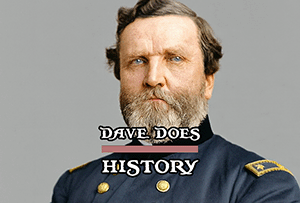
That moment has always stuck with me. Maybe it’s the eerie coincidence of dates. Maybe it’s the idea of holding ground when all seems lost. Or maybe, just maybe, it’s that Thomas represents a kind of grit that doesn’t come with glory. He didn’t seek the spotlight. He wasn’t flashy. But he was unmovable.
George Thomas was born on July 31, 1816 in Southampton County, Virginia, in a household of modest plantation wealth. He grew up under the long shadow of the South’s slave economy and, more personally, under the even darker shadow of the Nat Turner Rebellion. When Turner’s revolt exploded in 1831, the Thomases fled into the woods to escape the violence. George was just 15. He saw the anger. He saw the fear. And somewhere along the way, he started to think differently from the people around him.
He headed to West Point in 1836. His classmates included future giants of the Civil War, many of whom would fight for the Confederacy. He graduated 12th in his class and started his career not with grandeur but with dutiful, steady work. In Mexico, he served with distinction. At Buena Vista, General Zachary Taylor praised him openly. The praise didn’t go to his head.
After the war, Thomas returned to West Point as an instructor. He was calm in the saddle and earned the nickname “Slow Trot Thomas.” Not an insult, mind you. More of a nod to his deliberate nature. He wasn’t the kind to dash into glory. He was the kind who stayed when others ran.
When the country fractured in 1861, George Thomas faced a decision that split his world in two. Virginia seceded. His family expected him to follow. His old students, including J.E.B. Stuart, had already gone gray for the South. But Thomas stayed with the Union. He wrote to his sisters, trying to explain, but they never forgave him. He never saw most of his family again.
That loyalty came at a cost. Thomas was viewed with suspicion by some in the North and as a traitor by nearly everyone back home. But he stayed the course. Steady, as ever.
The Eastern generals got the headlines, but Thomas carved his reputation in the West. At the Battle of Mill Springs in early 1862, he delivered the Union’s first significant victory of the war. It was cold, foggy, and full of mud, but Thomas’s troops held and pushed the Confederates back. After that came Stones River and Perryville, where he showed the same calm resolve.
The Union Army was falling apart. Rosecrans had lost control of the field. The Confederate onslaught was overwhelming. But Thomas refused to yield. On Horseshoe Ridge, with scattered remnants of multiple units, he created a defensive line that held back wave after wave. He bought time. He prevented a rout. That day earned him a new name: “The Rock of Chickamauga.”
I can’t help but feel a personal tie to that moment. One hundred years before I was born, almost to the hour, Thomas was on that ridge. He didn’t have enough men. He didn’t have good options. But he stood. Sometimes history isn’t about grand speeches or famous photographs. Sometimes it’s about a man refusing to move when everything around him screams retreat.
Later in the war, when General John Bell Hood tried to reclaim Tennessee for the Confederacy, it was Thomas who stopped him cold. After the bloodbath at Franklin, Hood made his last stand at Nashville. Thomas took his time. Grant was furious with the delay, but Thomas was preparing. When the attack came, it was a hammer blow. Hood’s army shattered. It never recovered.
Sherman was cutting across Georgia, but Thomas had won the war in the West. Quietly. Effectively.
After the war, Thomas stayed in uniform. He led Reconstruction efforts in Tennessee and Kentucky, using his authority to protect freedmen and enforce civil rights. He wasn’t loud about it. He just did what he believed was right.
He turned down political opportunities. He refused to write memoirs. He even burned many of his personal papers. It wasn’t humility. It was something deeper. A man who lived by action, not by applause.
He died in San Francisco in 1870, at the age of 53, while writing a response to yet another slight from a rival officer. Even in death, he was trying to defend his record.
Thomas’s statue stands today in Washington, D.C., on Thomas Circle. Most people drive past without knowing who he was. He never got the fame of Grant or Sherman. He didn’t want it. He didn’t push for recognition. He stood when it mattered. He held when others folded.
And that, perhaps, is the most American thing of all.
George Thomas wasn’t perfect. He came from a world of contradictions. He owned slaves early in life, yet later worked to protect the newly freed. He was a Southern gentleman who chose the Union. A cautious planner who won decisive victories. A man of strength who died misunderstood.
But on that ridge at Chickamauga, exactly 100 years before I took my first breath, he did something timeless. He stood for the country, not for fame or legacy.
And that’s a story worth telling.
 DAVE DOES HISTORY
Leave a comment