
In the summer of 1958, as the heat of the Cold War shimmered off asphalt streets and atomic anxiety settled into living rooms like static, a quiet metal cylinder rose from Cape Canaveral. It made no splashy headlines. It gave no television interviews. But what it saw—and what it was built to see—helped redefine how the United States would fight the Cold War from above the clouds.
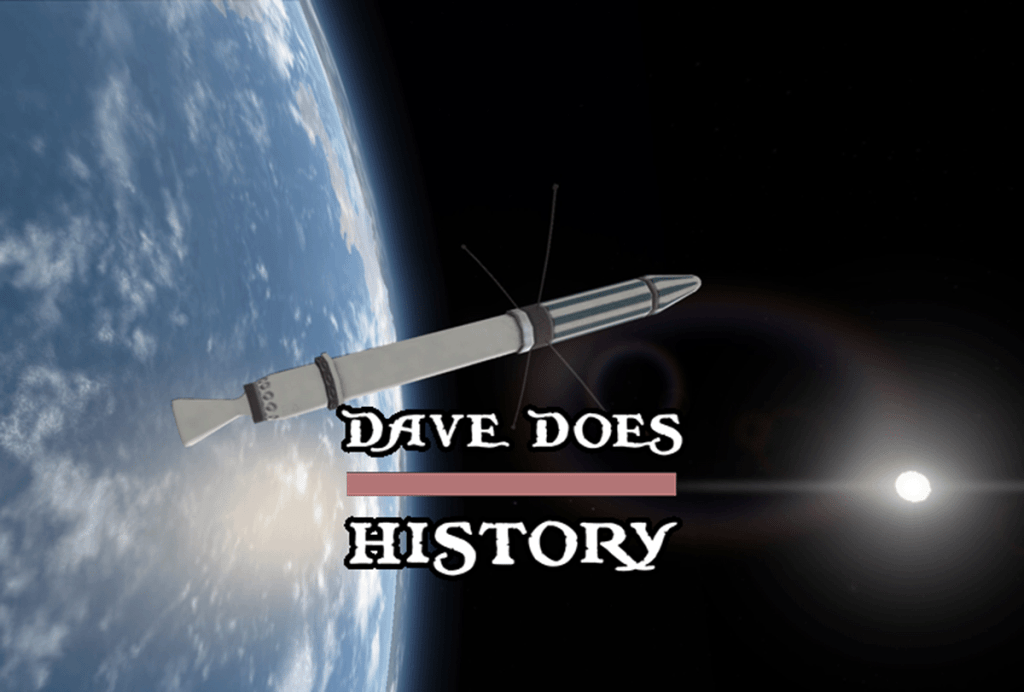
Explorer 4 wasn’t the first American satellite. That honor belonged to Explorer 1, the scientific marvel that discovered the Van Allen radiation belts just months earlier. Explorer 4’s mission was quieter and, in many ways, darker. It was built to find radiation not just from space, but from the Earth itself. More precisely, from atomic bombs.
The Explorer Program had been born in the shadow of Sputnik, a crash response to the Soviet Union’s shocking leap into orbit. The Army Ballistic Missile Agency, working hand-in-hand with the Jet Propulsion Laboratory, had scrambled to build something fast, light, and scientific. Explorer 1 had made it up. Explorer 2 didn’t. Explorer 3 succeeded. Explorer 4 was different. It was built with classified ambitions.
Though NASA was taking shape at the time, this was still a military show. Explorer 4 was funded in part by ARPA, the Advanced Research Projects Agency—what we now call DARPA. Their interest wasn’t cosmic curiosity. They wanted to know what happened when you set off a nuclear weapon in space. Would it destroy satellites? Could it build artificial radiation belts? Could America defend against a nuclear space war?
To find out, they needed eyes in the sky.
Explorer 4 was a slim cylinder, less than a meter long, weighing only 56 pounds. Its small frame was packed with powerful instruments, including Geiger–Müller tubes, plastic and caesium iodide scintillators, and photomultiplier tubes—all designed to track the movement and energy of electrons and protons flying through space. These weren’t just cosmic particles. Some might be manmade.
Unlike its predecessors, Explorer 4 launched into a higher inclination and altitude orbit. This allowed it to sweep through a greater volume of the Earth’s magnetic field, particularly the radiation belts, where nuclear effects might linger. It was powered by batteries. It was intended to listen, observe, and report. It didn’t need to last forever.
It didn’t.
On July 26, 1958, Explorer 4 rode a Juno I rocket off Launch Complex 5. Juno I was itself a modified Redstone missile, repurposed for scientific glory. It was a Frankenstein’s monster of stages, each stacked with solid-fuel motors. At the top sat Explorer 4, which was spun like a bullet to stabilize its path into orbit.
The satellite reached an elliptical orbit, ranging from 263 kilometers at perigee to over 2,200 kilometers at apogee. Its path cut through the Van Allen belts repeatedly. This was by design. Explorer 4 had a classified rendezvous to keep.
Just a month after launch, on August 27, the United States detonated the first of three high-altitude nuclear weapons in what was called Project Argus. These weren’t tests of explosive yield. They were scientific provocations. ARPA wanted to see if you could reshape the Earth’s magnetosphere with atomic fire. Explorer 4 was overhead to watch the show.
The public knew none of this. The mission was kept secret for half a year.
Trouble began early. Soon after orbital insertion, Explorer 4 began tumbling end-over-end every six seconds. This made data reception difficult and limited the quality of directional measurements. Still, the satellite performed well enough to collect valuable information on both natural and artificial radiation.
By early September, the low-power transmitter and plastic scintillator had failed. The high-power transmitter lasted until October 5. After that, Explorer 4 went silent. Its orbit decayed on October 23, 1959. The satellite died having orbited Earth 5,000 times and monitored the aftermath of space-borne atomic blasts. Not bad for a machine no larger than a fencepost.
Explorer 4 proved what ARPA and Dr. James Van Allen’s team had suspected. Radiation belts could be altered. Nuclear detonations at high altitude could produce new, artificial zones of charged particles. These might interfere with satellites, radios, and even human health in orbit. This was not science fiction. It was national security. It confirmed the theory that nuclear war in space would not just kill people—it would scar the planet’s magnetic shield.
The satellite was more than a radiation lab. It was a moment in time. It reflected the uneasy overlap between scientific progress and military ambition. Explorer 4 wasn’t the last satellite to serve two masters. But it was the first to prove that the Cold War had already reached into orbit.
Today, the name Explorer 4 rings quietly among its many siblings in the Explorer Program. Later missions would search for X-rays, magnetospheric patterns, cosmic rays, and black holes. Explorer 4, though, stared into the Earth’s own halo of radiation and asked a sobering question: what happens when man tries to rewrite the laws of nature with a bomb?
For a few short months in 1958, we had the answer. It came from a whispering metal cylinder, tumbling through the heavens, watching the sparks we lit in the sky.



 DAVE DOES HISTORY
Leave a comment