
It was supposed to be quick. That was the prevailing wisdom in the summer of 1861, anyway. A quick rebellion, a swift response, a little marching, maybe some parading, and then the boys would be home by harvest. That delusion shattered on July 21, in a Virginia field by a muddy stream named Bull Run. On that Sunday morning, just thirty miles from the Capitol, war showed its true face for the first time. It was not glorious. It was not romantic. It was confusion, carnage, fear, and the sound of a nation realizing it had blundered into something far worse than anyone had planned.
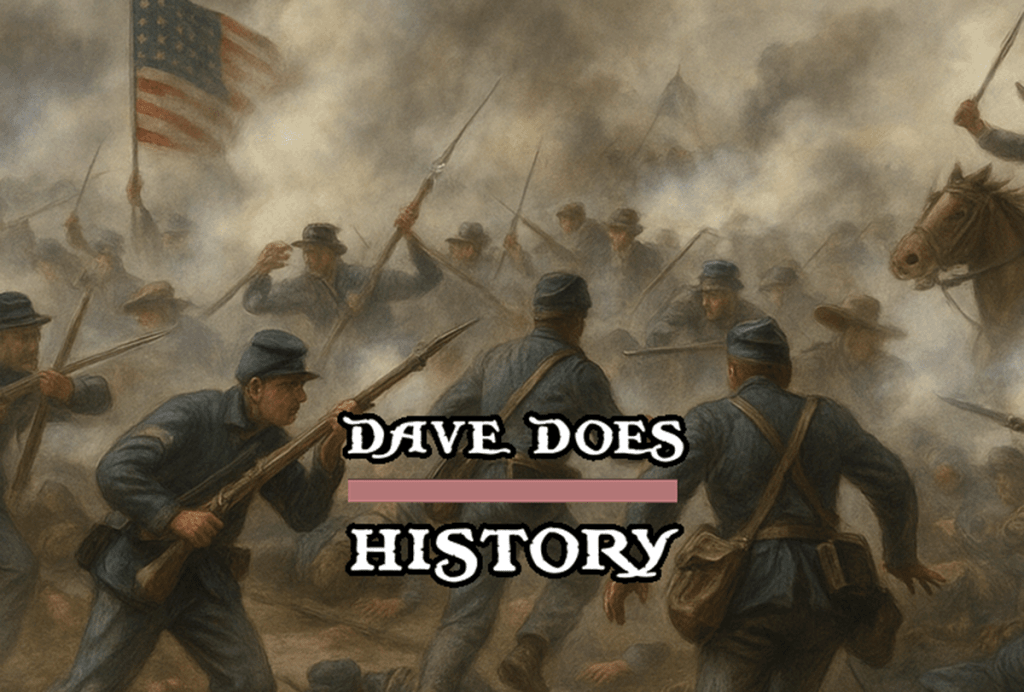
The pressure had been building for weeks. After Fort Sumter, after secession, after Lincoln’s call for volunteers, the North was restless. The press brayed for action. Congressmen wanted momentum. The public, utterly unprepared for modern war, cried “On to Richmond” like it was a picnic chant. General Winfield Scott, old and wise, had hoped to squeeze the Confederacy with economic blockades and slow methodical pressure. But politics drowned out patience. Irvin McDowell, a staff officer by nature, was handed the Union’s largest army and told to march.
Across the lines, the Confederates were preparing too. P.G.T. Beauregard, the same general who had fired on Fort Sumter, had his army dug in at Manassas Junction, guarding a key railroad intersection. Joseph Johnston held the Shenandoah Valley, watching the Federal commander Robert Patterson who had one job: keep Johnston pinned and away from Beauregard. He failed. Johnston slipped out with thousands of reinforcements, courtesy of the still-novel railroad system, and changed the odds just in time.
McDowell didn’t want to attack. He told Lincoln plainly that his men were too green, too poorly trained, too raw to be reliable in battle. Lincoln’s reply was cold and true: “You are green, it is true. But they are green also. You are all green alike.” McDowell advanced on July 16, his 35,000-man force lurching out of Washington like a great machine that had never been tested. Men broke ranks to pick berries. Units wandered off to find water. Orders got confused. Delays multiplied. Meanwhile, the Confederates quietly reinforced and waited.
Three days before the battle, a skirmish at Blackburn’s Ford gave a hint of what was coming. Union troops tested the Confederate line and got shoved back hard. Undeterred, McDowell tried again. His plan was actually sound: feint at the center, swing wide around the Confederate left, hit them from behind. In theory, it could have worked. But that theory depended on timing, on training, on officers who knew their craft. It depended on an army that didn’t exist yet.
On July 21, the Union army moved before dawn. Three divisions began the flanking march. Another created a diversion at the Stone Bridge. But everything ran late. Troops got lost. Units lagged behind. Confederate Colonel Nathan Evans figured out what was happening and shifted his men just in time to block the Union advance at Matthews Hill. They held long enough for more rebels to arrive—Bee, Bartow, and a hard-nosed Virginian named Thomas Jackson.
Jackson’s men held the line on Henry House Hill, firing from behind a concealed slope. As Confederate troops began to falter, Bee supposedly shouted, “There is Jackson standing like a stone wall! Rally behind the Virginians!” Whether he said it or not, the name stuck. Stonewall Jackson. It was the moment when legend began to take shape.
McDowell’s troops tried to push up the hill. Again and again they surged forward, only to be repulsed by Jackson’s brigade. Union artillery, brought up in the early afternoon, was taken by mistake when a Confederate unit was misidentified as friendly. That misfire sealed the deal. Confederates counterattacked. Johnston’s last brigades arrived from the rail line. Jackson ordered a bayonet charge. J.E.B. Stuart’s cavalry swept in from the flank. The Union line cracked, then collapsed.
The retreat wasn’t orderly. It was a panic. Civilians who had come to watch from Washington, bringing picnic baskets and parasols, fled alongside the troops. Wagons overturned. Supplies were abandoned. The road to Washington became a river of fear and humiliation.
The Confederates were too stunned and too disorganized to pursue. Their own lines were a mess, and their commanders were already quarreling over who deserved credit. But it didn’t matter. The North had been kicked in the teeth. Nearly 3,000 Union men were killed, wounded, or missing. Confederate casualties totaled about 2,000. Numbers didn’t tell the whole story. The real casualty was innocence. This wasn’t going to be a parade. It was going to be a war.
In the weeks that followed, command structures changed. McDowell was replaced by George McClellan. Johnston and Beauregard’s armies were merged. Patterson was disgraced. The press that had so recently cried “On to Richmond” now fell silent, sobered by the price of bravado.
The First Battle of Bull Run was not tactically brilliant, but it was historically profound. It introduced the nation to the cost of its own arrogance. It showed the South that its men could fight and its generals could hold the field. It gave the North its first taste of failure and set the stage for a war that would grind on for four brutal years.
No one cheered after that. No one packed lunches for the next fight. The country had seen war, and it would never look the same again.

 DAVE DOES HISTORY
Leave a comment