
It was July 4th, 1863, and the stars and stripes flew again over Vicksburg, Mississippi. But this wasn’t a celebration. There were no parades, no fireworks, no songs of freedom. In fact, for 81 years, Vicksburg would skip Independence Day altogether. That morning, under a blazing Southern sun, a grim procession of exhausted Confederate soldiers stacked their rifles, furled their flags, and surrendered their city to Union General Ulysses S. Grant. The Civil War had reached its great turning point.
The day before, in the fields of Pennsylvania, Robert E. Lee’s army was retreating from Gettysburg. Now, Vicksburg was in Union hands. The Confederate States were split down the middle. And President Abraham Lincoln, with the poetic solemnity of a man who had suffered the weight of this war in his very bones, declared that the Mississippi River “again goes unvexed to the sea.”
That quote, simple and soft-spoken, marked a hard-won reality. The Union had seized control of the entire Mississippi River, tearing the Confederacy in two. Arkansas, Texas, and western Louisiana were cut off, stranded behind a blue curtain of gunboats and siege lines. The Anaconda Plan, the North’s slow, crushing strategy to choke the life out of the rebellion, was finally doing what it had promised.
But Vicksburg’s fall wasn’t sudden. It was the brutal climax of one of the most brilliantly executed campaigns of the war. General Grant had already endured a winter of frustration, with failed assaults, swamps, and Confederate gun batteries mocking his every move. But in the spring of 1863, Grant gambled. He marched his men south on the west side of the river, crossed below the city at Bruinsburg, and then turned his back on his supply lines altogether. He plunged deep into Mississippi, beating Confederate forces at Port Gibson, Raymond, and Jackson. Then he wheeled back toward Vicksburg and cornered John C. Pemberton’s army just outside the fortress city.
In just three weeks, Grant’s army marched 180 miles, won five battles, and captured 6,000 prisoners. And then they closed the trap.
The siege that followed was pure misery. Vicksburg’s defenders, once numbering around 30,000, were slowly starved into shadows of themselves. With Union gunboats lobbing shells from the river and Grant’s artillery tightening the noose from the land, the people of Vicksburg dug caves into the hillsides just to stay alive. They called it Prairie Dog Village. Disease spread like wildfire. Soldiers and civilians alike ate rats, mules, and shoe leather.
Grant tried direct assaults in May, hoping to avoid a long siege. But the Confederate fortifications were strong, and the defenders were desperate. Attacks on May 19 and May 22 were beaten back with heavy losses. Union soldiers crawled into ravines and gullies, pinned down by musket and cannon fire. Some lay for hours under the sun, bleeding into the Mississippi soil, surrounded by the cries of the wounded and the stench of death. Grant called it off. From that point on, he would dig and starve the enemy into submission.
Inside the Confederate lines, things were falling apart. Pemberton, a Northerner by birth but loyal to the South, found himself trapped between conflicting orders and impossible circumstances. Confederate President Jefferson Davis demanded Vicksburg be held at all costs. General Joseph Johnston, operating east of the city, saw Vicksburg as lost and told Pemberton to abandon it. Pemberton hesitated, then committed the fatal mistake of withdrawing into the city. He sealed his army’s fate.
By early July, the situation inside Vicksburg was hopeless. With the garrison weak from hunger and disease, and no relief in sight, Pemberton sent out a white flag. Grant refused to meet unless the terms were surrender, plain and simple. He had no interest in haggling. But his old acquaintance, Confederate General John Bowen, helped open the door. Bowen had served alongside Grant before the war and now found himself acting as a go-between, desperately trying to preserve some dignity for the broken Confederate force.
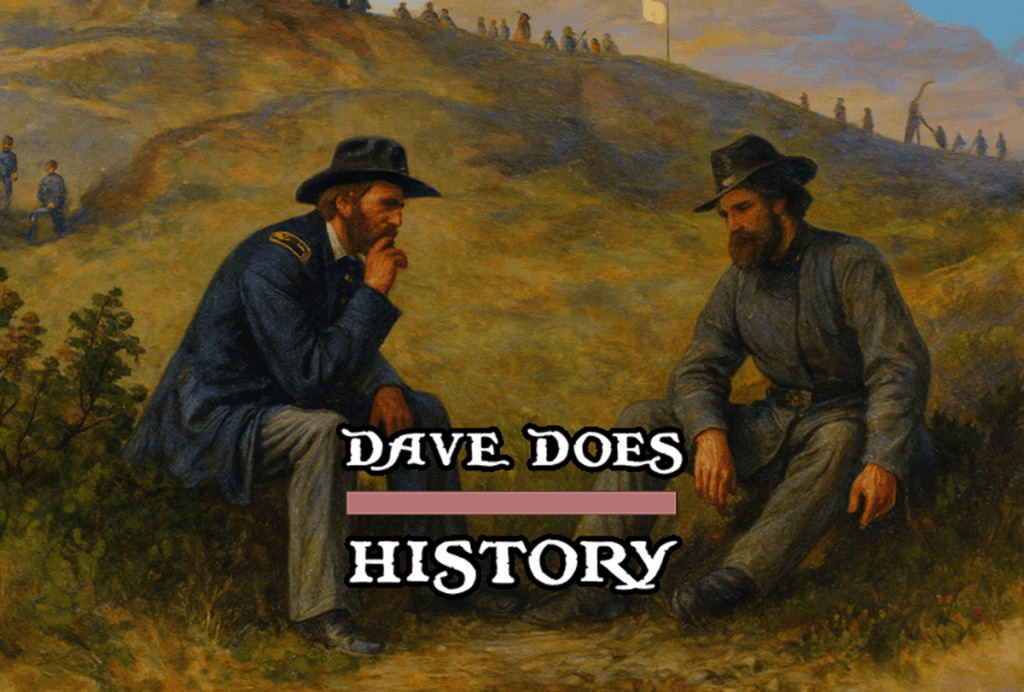
On July 3, under a sweltering Mississippi sky, Grant and Pemberton met face to face beneath a stunted oak tree between the lines. They shook hands, traded pleasantries about their shared time in the Mexican War, and then got down to business. Pemberton wanted honorable terms. Grant offered parole and leniency but would not allow the Confederates to march out with flags flying and drums beating. No “honors of war.” Just surrender.
The next morning, at precisely 10 a.m., it happened. Confederate soldiers emerged from their entrenchments, stacked their rifles, and handed over their battle flags. Just under 30,000 men laid down their arms. Grant’s army marched in. The American flag rose again over Vicksburg.
The news spread quickly. In Washington, Lincoln celebrated the double blow. Gettysburg had turned Lee back. Vicksburg had torn the Confederacy in half. The Mississippi, once a lifeline for Southern logistics and commerce, now flowed freely from Minnesota to the Gulf under Union control. For the first time in years, there was real hope that the Union would survive. That the war might end. That the dream of a reunited nation might live again.
The cost had been terrible. Thousands of soldiers lay buried around the bluffs and trenches of Vicksburg. The city itself had been shattered. And though the Confederates had been granted parole, many would return to fight again, prolonging the war’s agony. But something fundamental had shifted. The Confederacy was bleeding, broken, and retreating. The Union had momentum and victory in its hands.
Vicksburg’s story, unlike the high drama of Gettysburg, unfolded in silence. It wasn’t a grand clash of armies in open fields. It was a slow grind, a hunger, a tunnel in a hillside, a death from within. And yet it was just as decisive. Maybe even more so.
When Lincoln said the Father of Waters now went unvexed to the sea, he was speaking not just about a river but about the soul of a nation. The river would carry Union gunboats, yes, but also the idea that the country could still be made whole. That rebellion, even when fierce and proud, could be overcome by endurance and strategy. That freedom could still triumph.
And for those who walked out of Vicksburg that day, hollow-eyed and barefoot, and for those who never walked again, history offers one final whisper. A truth that reaches across the blood and the years: He who saves a single life, it is as if he has saved the whole world.



 DAVE DOES HISTORY
Leave a comment