
It was a warm June afternoon in 1980, and I was sixteen years old when I walked into a movie theater in Tacoma, WA, and saw my very first R-rated film. It wasn’t some gritty drama or raunchy sex comedy. It was The Blues Brothers. And in that moment, somewhere between the blast of “She Caught the Katy” and Jake’s gravity-defying backflip at the Triple Rock Baptist Church, something changed. I didn’t just watch that movie. I felt it. The music, the madness, the swaggering, black-suited absurdity. It was rock and roll, rhythm and blues, slapstick and salvation all rolled into a hundred-mile-an-hour police chase. And it’s never left me.
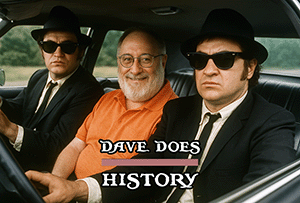
This was no ordinary comedy. This was a full-blown cultural detonation disguised as a musical road trip. On paper, it sounds insane. Two ex-cons, one fresh out of Joliet Prison, get the band back together to raise five thousand dollars to pay off a Catholic orphanage’s tax bill. Their plan? Put on a gig. Their obstacles? The Illinois State Police, a group of Nazis, a vengeful mystery woman with military-grade firepower, and a ticking tax deadline. And somehow, none of that feels like too much. It feels exactly right. Because The Blues Brothers isn’t just a movie. It’s a mission from God.
The characters of Jake and Elwood Blues were born in the chaotic creative stew of Saturday Night Live in the late 1970s. Dan Aykroyd and John Belushi weren’t just actors playing bluesmen. They were the Blues Brothers. The act started as a gimmick. A lark. But it turned into something real. Aykroyd, raised in Ottawa, had a deep love of blues music, inspired by clubs like Le Hibou and bands like Downchild Blues Band. Belushi was the convert, finding his blues epiphany while filming Animal House in Eugene, Oregon, when he caught Curtis Salgado in a smoky local bar. The two found a sound and a purpose, and with the help of real musicians like Steve Cropper, Donald “Duck” Dunn, Matt “Guitar” Murphy, and “Blue” Lou Marini, they built something authentic.
Before the film, there was the album. Briefcase Full of Blues was no novelty record. It went platinum. These guys weren’t mocking the music. They were reviving it. Breathing life into a genre that was being drowned by disco and forgotten by mainstream America. Then came the script. Or rather, a 324-page tome written by Aykroyd that was so massive and strange, he had it bound in the yellow pages and titled it “The Return of the Blues Brothers.” Director John Landis whittled it down into something resembling a movie script, but even then, The Blues Brothers was destined to be unlike anything Hollywood had ever made.
The production was just as wild as the film itself. The budget ballooned from a hopeful twelve million to an eye-watering twenty-seven and a half. Why? Because John Belushi was a tornado in sunglasses. He’d disappear from set, sometimes crashing at random homes in Chicago, earning the nickname “America’s Guest.” Cocaine wasn’t just a problem. It was practically a line item in the budget. Cast and crew had access to a private bar on set. Carrie Fisher, who was engaged to Aykroyd at the time, tried to keep Belushi from spinning off the rails. But by all accounts, it was like trying to keep a freight train from derailing with a paper clip.
And yet, through all the madness, magic happened. The cast was stacked with soul royalty. James Brown. Ray Charles. Aretha Franklin. Cab Calloway. John Lee Hooker. These weren’t cameos. These were declarations. A love letter to rhythm and blues. The studio tried to fight it, wanting disco stars and younger acts. But Aykroyd and Belushi insisted. The film was going to honor the music that inspired it. And it did.
Then came the car chases. My God, the car chases. Over 100 cars wrecked. Police cruisers stacked like cordwood. A Nazi Pinto dropped from a helicopter. The mall chase through the Dixie Square Shopping Center remains one of the most gloriously destructive scenes in cinema history. They weren’t using miniatures. They weren’t using CGI. They were actually trashing a real, abandoned mall. And when the locals thought the mall was being revitalized, Universal got slapped with a lawsuit for not returning it to its original condition.
And let’s not forget the deleted scenes. The original cut of the movie was nearly three hours long, intended to be a roadshow-style film with an intermission. But studio pressure and ugly racism got in the way. A theater owner in Westwood, California, refused to show the film because he didn’t want Black audiences. Universal panicked, and John Landis was forced to cut it down. The longer preview version was thought lost until the FBI of all people recovered a stolen print listed on eBay. That extended version, salvaged by federal agents like some cinematic Ark of the Covenant, finally found its way to Blu-ray.
When The Blues Brothers opened, it wasn’t an immediate smash. It got a lukewarm reception domestically and was labeled a box office disappointment by the suits. But overseas, it exploded. Europe got it. Australia got it. Eventually, we all got it. The film is now a beloved cult classic, selected by the Library of Congress in 2020 for preservation as a work of cultural and historical significance.
So why does it endure? Because it’s honest. It’s chaos and sincerity, soul and slapstick, rebellion and reverence. It’s a movie that can joke about Nazis getting dumped in the lagoon and then turn around and give you goosebumps with Aretha Franklin’s “Think.” It’s both a love letter and a punch in the face. It’s completely ridiculous and utterly heartfelt.
In 2010, L’Osservatore Romano, the Vatican’s official newspaper, declared The Blues Brothers a “Catholic classic.” The paper praised the film’s themes of redemption, faith, and charity, and specifically noted how Jake and Elwood’s “mission from God” to save their childhood orphanage resonated with Catholic values.
They highlighted the presence of the orphanage, the strict but loving nun “The Penguin,” the idea of doing penance through absurd acts, and the boys’ unwavering devotion to their goal despite chaos and consequences. While this endorsement didn’t come directly from the Pope himself, it was widely interpreted as a kind of cultural blessing from the Holy See. For a film packed with car chases, bar fights, and bluesy irreverence, that’s one heck of a miracle.
For me, it was the start of something. It opened a door to music I didn’t know I loved. It made me laugh harder than anything else I’d seen. And it showed me that sometimes, being on a mission from God means plowing through a mall, dodging flamethrowers, and standing on stage with a full band playing “Sweet Home Chicago” like your life depends on it.
The Blues Brothers are still on a mission. And they always will be.



 DAVE DOES HISTORY
Leave a comment