
Before the colonies ever turned their attention toward revolution, before a single musket was fired at Lexington or Concord, two of Britain’s American provinces nearly came to blows with each other. The conflict was not about tea or taxes, but about maps, egos, and one particularly hard-headed frontiersman named Thomas Cresap. His name would come to define a little-known but bloody land dispute that began in the 1730s and simmered until King George II himself had to step in and draw the line. Literally.

The trouble started with a mistake. When the British Crown issued the charter for Pennsylvania in 1681, it described the colony’s southern boundary with all the precision of a barroom storyteller. It was to begin twelve miles north of New Castle, and from there follow the fortieth degree of latitude westward. This sounded reasonable until surveyors realized the fortieth parallel ran north of Philadelphia. That would have placed the thriving Quaker city, quite awkwardly, in Maryland. Understandably, Pennsylvania was not having that. Neither was Maryland, whose powerful Calvert family had every intention of pressing their claim.
The disputed zone sat west of the Susquehanna River, a land rich in timber, fertile soil, and wide open for settlement. In 1724, the Crown issued a royal proclamation telling both colonies to settle the dispute peacefully. They ignored it. Pennsylvania promptly created Lancaster County, with its southern edge pushing well into what Maryland believed was its rightful territory. Maryland decided to respond not with more paperwork, but with a man. Enter Thomas Cresap.
Thomas Cresap was born in Yorkshire in 1694 and came to America as a teenager. He made his name along the frontier as a surveyor, trader, and land speculator, but above all, he had a talent for staking claims and defending them with sheer force of will. When Maryland tapped him as their land agent, Cresap moved swiftly into the disputed territory and opened Blue Rock Ferry, just south of Wright’s Ferry, a Pennsylvania settlement. He began granting land titles under Maryland authority, collecting rents, and acting like the undisputed lord of the lower Susquehanna.
He did not just plant a flag. He went to war.
Tensions turned violent in 1730 when Cresap was attacked on his own ferry boat. According to his account, two Pennsylvanians turned their guns on him mid-crossing. He ended up clinging to the side of the boat, bruised, battered, and nearly drowned, until he reached shore. The attackers, it turned out, were after one of Cresap’s employees, but the incident lit a fuse. Over the next few years, both sides armed themselves. Settlers who had been granted land by Pennsylvania were forced off their farms by Cresap’s men. Barns were burned. Horses were shot. Pewter and rum were looted. Even women were threatened at gunpoint when their husbands could not be found.
The Pennsylvania Dutch, who had settled the region in good faith, began renouncing their ties to Cresap and fleeing the area. One farmer testified that he was forced off land he had cultivated for years. Others reported theft, eviction, and intimidation. Cresap and his relatives, the Lowes, ran what amounted to a gang operation, rewarding allies with land and punishing dissent with fire and steel.
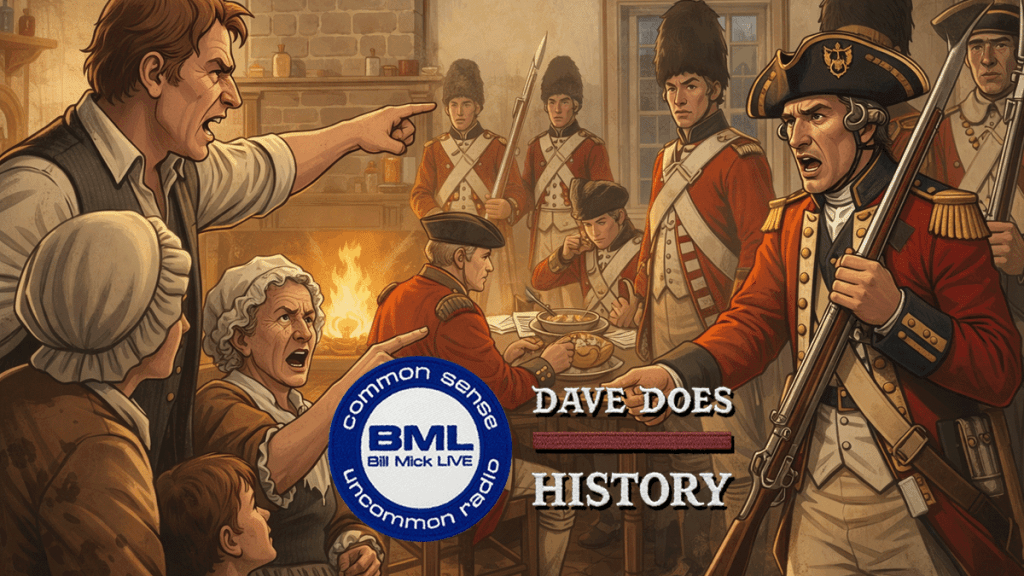
By 1736, the situation had reached a boiling point. Maryland militia began marching into what is now York County, Pennsylvania. Hundreds of men crossed the line, citing Lord Baltimore’s authority. Pennsylvania responded with militia of their own. The sheriff of Lancaster County tried to arrest Cresap, but he refused to surrender. When deputies approached his door, Cresap shot through it, hitting one of them. His wife, rather than express concern, shouted that she wished the bullet had struck the man’s heart.
It was, finally, too much. On November 25, 1736, Sheriff Samuel Smith brought a posse of twenty-four armed men to take Cresap down. When he still refused to come out, they torched his cabin. Cresap made a dash for the river, tried to launch a boat, and very nearly escaped again. He even knocked a blacksmith cold with one punch when the man tried to shackle him. When he was finally chained and carted off to Philadelphia, he looked around and said, “This is one of the prettiest towns in Maryland.”
With Cresap behind bars, Maryland went over Pennsylvania’s head and straight to the king. The Calverts petitioned King George II, asking for royal intervention. The king responded in August 1737 by ordering both colonies to cease hostilities. The fighting slowed, but did not stop. It took another nine months before a formal peace was signed in London on May 25, 1738. That agreement established a temporary border fifteen miles south of Philadelphia. Each colony was allowed to govern and grant land titles on its own side until a final boundary could be surveyed.
That line, as history would have it, became the basis for the Mason-Dixon Line. In 1767, Charles Mason and Jeremiah Dixon, two English surveyors hired by the Penns and the Calverts, completed the task that had started with Cresap’s defiance. Their line, etched across the landscape, came to represent not just the border between Maryland and Pennsylvania, but eventually the divide between North and South.
As for Cresap, he did not return to Blue Rock Ferry. He moved west and founded Oldtown, Maryland. There, his fortified cabin became a landmark for travelers and a haven for settlers during the French and Indian War. George Washington, just a teenager at the time, visited Cresap while surveying for Lord Fairfax and watched a war dance performed by passing Indians. Cresap’s life after the war was just as colorful. He helped open a trail to the Ohio Valley, fought alongside Braddock’s men, and died at the age of ninety-six.
The story of Cresap’s War is not just about a bad border or a bad temper. It is about the chaos of early America, when the law came second to ambition, and maps were not lines on paper, but invitations to stake claims with blood and fire. It is about a man who refused to yield, and a king who had to step in before his colonies tore each other apart. It is also a reminder that sometimes, the most important lines in history are the ones drawn to stop the fighting.



 DAVE DOES HISTORY
Leave a comment