
In the early 1760s, Britain was a country deeply embroiled in political upheaval. King George III had recently ascended the throne, and the country was recovering from the tumult of the Seven Years’ War. As Britain’s new monarch, George was eager to restore stability, but his government, particularly under Prime Minister Earl of Bute, was unpopular. The country was divided, with tensions brewing both domestically and abroad. Amidst this backdrop, one man would stand out—John Wilkes, a radical journalist whose influence would extend far beyond the confines of Britain, even impacting the revolutionary fervor in the American colonies.
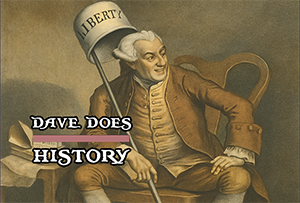
Wilkes, a man of ambition and controversy, found his voice not in Parliament, where he was initially a member, but in the pages of his publication, The North Briton. Launched in 1762, the paper quickly gained notoriety for its scathing critiques of the government. Wilkes used it as a tool to challenge the policies of the ruling elite, particularly the Scottish Prime Minister, Earl of Bute. While Wilkes’ motives were rooted in a genuine desire for liberty, his methods were, at times, reckless and disruptive, deeply challenging the existing political order.
The most famous and consequential issue of The North Briton was No. 45, published on April 23, 1763. In this issue, Wilkes viciously attacked the King’s speech to the House of Lords, which praised the Treaty of Paris that ended the Seven Years’ War. Wilkes criticized the peace settlement, calling it dishonorable and accusing the ministers of forcing the king to make unjust and false declarations. To Wilkes, the peace terms were a national disgrace, and he made no attempt to temper his outrage. He boldly declared that the King’s speech was not the speech of the monarch, but rather the work of his ministers.
This bold attack on the royal speech, particularly in an era when the monarchy was highly revered, was viewed as nothing short of treasonous. The government, unable to let such a direct challenge to its authority go unanswered, quickly moved to arrest Wilkes. They issued a general warrant—an arrest order that did not name specific individuals—which was a grave mistake. The legality of such a warrant was questionable, and Wilkes took full advantage of this. He successfully challenged his arrest, and in a landmark ruling, the courts ruled that his parliamentary privilege protected him from such a sweeping arrest. For Wilkes and his supporters, this was a victory for personal liberty and the freedom of the press.
However, while Wilkes had won a legal battle, the war between him and the British government was far from over. The government, unwilling to let Wilkes’ challenge to royal authority go unanswered, pursued him relentlessly. In 1764, the House of Commons declared Wilkes guilty of seditious libel and expelled him from Parliament. His personal ambition and defiant attitude, coupled with his populist appeal, made him a figure of great controversy, but also of considerable influence. Wilkes’ support grew, particularly among the working class in London, who admired his willingness to stand up to the government on their behalf.
While his actions were seen as heroic by many, particularly in terms of defending freedom of speech, it is important to note that his methods were not without consequence. From a conservative perspective, Wilkes’ unrelenting radicalism contributed to the erosion of respect for the monarchy, a cornerstone of British governance. The stability provided by the royal institution was undermined by figures like Wilkes, whose defiance set a dangerous precedent for those who would seek to destabilize the established order. Although Wilkes fought for liberty, his disregard for the authority of the monarchy and the law opened the door for further radical challenges to the British system of government.
Wilkes’ influence extended beyond Britain, resonating deeply with American colonists who were beginning to feel the weight of British laws like the Stamp Act and Townshend Acts. The colonists saw in Wilkes’ fight against the British government a reflection of their own struggles with what they viewed as arbitrary rule. His rallying cry of “Wilkes and Liberty!” became a slogan adopted by American colonists who believed that, like Wilkes, they were being denied their rights by an overreaching British government. To many, Wilkes’ legal battles were a mirror image of their own growing frustrations with British rule, and his plight became symbolic of the broader quest for freedom and self-determination.
While Wilkes may have viewed himself as a defender of liberty, conservatives in both Britain and the American colonies might have recognized the inherent dangers in his brand of radicalism. His methods, though championing the cause of freedom, often undermined the very institutions that held British society together. A more balanced view of liberty, one that acknowledged the importance of order and stability, was crucial to ensuring that the freedoms Wilkes sought would not lead to chaos and the erosion of governance. While Wilkes’ victory over the government marked a victory for personal liberty, it also served as a reminder that unchecked radicalism can weaken the authority necessary to maintain the rule of law.
In 1768, after a period of self-imposed exile in France, Wilkes returned to Britain, emboldened by his growing popularity and the political changes that had taken place during his absence. Despite the government’s attempts to silence him, Wilkes was elected to the London City Council and eventually became Lord Mayor of London. His return marked a shift in his political career. While he continued to support liberal causes, including religious toleration and prison reform, his more radical inclinations faded. By the time of his death in 1797, Wilkes had become a figure of history, remembered not just for his role in shaping the political landscape of Britain, but also for his influence on the American Revolution.
The legacy of John Wilkes is a complex one. While he is rightly seen as a champion of personal liberties and freedom of speech, his methods were far from ideal. His radicalism, though rooted in a desire for justice, often undermined the very principles he sought to protect. From a conservative viewpoint, Wilkes’ actions serve as a reminder that liberty must be balanced with order and respect for authority. His influence on the American colonies, however, cannot be overstated. The principles he fought for in Britain were echoed across the Atlantic, where they helped to fuel the fires of revolution and the eventual birth of a new nation built on the ideals of liberty, but with a clearer understanding of the need for stable governance and respect for the rule of law.
Wilkes’ story, with all its triumphs and missteps, remains an important chapter in the history of liberty. His struggles—though at times disruptive—reminded the world that personal freedom must be defended, but also that the state’s ability to govern effectively should never be undermined. As America moved toward independence, Wilkes and his battles were seen not just as a British issue, but as part of a larger struggle for the rights of the individual against the overreach of government. In this sense, his legacy is deeply intertwined with the principles that would come to define the American Revolution. But it is also a legacy that teaches a vital lesson: liberty must always be tempered by a respect for the structures that maintain order, stability, and a properly functioning society.



 DAVE DOES HISTORY
Leave a comment