
It ended not with the trumpet of victory, nor the roar of guns, but in a quiet parlor, where silence and sorrow sat heavier than the smoke of battle ever did. The war that had shattered a nation came to its gentle close on April 9, 1865, in the village of Appomattox Court House, Virginia — not with vengeance, but with dignity.
By then, the men in gray — those lean, half-starved remnants of the once-proud Army of Northern Virginia — had marched to the very edge of defeat and honor. And across from them, the men in blue waited not with cheers, but with a hushed awe, knowing that history itself was about to turn a page.
Listen to the article (appx 11:21)
By the spring of 1865, the Confederacy was already collapsing in all but name. The cities of Petersburg and Richmond, its last great bastions, were crumbling under the unrelenting siege led by General Ulysses S. Grant. Robert E. Lee, commander of the Army of Northern Virginia, had long understood that his situation was becoming untenable. The rail lines were cut. Supplies were vanishing. The men were hungry, marching on shoes tied together with bits of cloth or none at all.
The Siege of Petersburg had dragged on for more than nine months, an ordeal of trench warfare that prefigured the horrors of future wars. For Lee’s men, it had been a season of dirt, smoke, and dwindling hope. They knew the end was coming, though none could say precisely how. Many Confederate soldiers began to desert, not because they lacked courage, but because they saw no future.
On April 1, 1865, Union cavalry under General Philip Sheridan turned Lee’s flank at the Battle of Five Forks, breaking the defensive line protecting the South Side Railroad — the last vital supply route into Petersburg. The following day, Grant launched a massive assault on Petersburg’s weakened lines, finally breaking through. Lee informed Confederate President Jefferson Davis that Richmond must be evacuated.
In the dark hours of April 3, Lee’s men pulled out of Petersburg. Richmond burned behind them as Confederate troops set fire to supplies and warehouses. Civilians, caught in the panic, fled or huddled in despair. Lincoln himself walked the ruined streets of the fallen capital just days later, greeted by newly freed slaves who fell to their knees before him.
Lee turned his hopes westward, seeking to unite with General Johnston’s army in North Carolina. He believed — or perhaps needed to believe — that a consolidated force might turn the tide, or at least win better terms in negotiation. But Grant pursued him without pause. Sheridan’s cavalry pressed from the rear and raced ahead to block escape routes. On April 6, at Sayler’s Creek, Lee lost nearly a quarter of his army. The scene was so dire that he reportedly exclaimed, “My God! Has the army dissolved?”
By April 8, Union cavalry had seized the supply trains at Appomattox Station, depriving Lee’s men of desperately needed food and munitions. On the night of April 8, Lee confided to aides that he would attempt a breakout the next morning. If that failed, he would have no choice but to surrender.
The two great commanders had not met since their days as young officers in the Mexican-American War. On April 7, Grant sent a letter to Lee, stating that further resistance was hopeless and urging him to surrender. Lee responded cautiously, seeking to explore “terms on which the surrender of this army might be obtained.” Grant followed with another message, affirming he had no desire to humiliate the South.
Their correspondence was brief but historic — two warriors circling the inevitable with the kind of courtesy born not of sentiment, but of shared suffering. Grant later admitted that he dreaded each morning might bring news that Lee had slipped away into the Blue Ridge Mountains, prolonging the war through guerrilla resistance. Lincoln feared this too. He had pleaded with his generals to end it without a final bloodbath. “My God,” he had said, “can’t you spare more blood?”
Lee considered the option. Confederate President Jefferson Davis had already fled and urged continued resistance. Some Confederate officers urged that the army scatter and wage guerrilla warfare from the hills. But Lee, shaped by duty and a sense of honor, refused to turn Virginia into a battlefield of partisans. He saw clearly what Davis would not — that to save what remained of the South, the fighting had to end.
On the morning of April 9, after realizing that Union infantry had reinforced the cavalry blocking his route, Lee requested a meeting.
They met at the home of Wilmer McLean. The irony is well-worn but no less poignant: McLean had lived near Manassas when the war began and moved to Appomattox to escape its shadow. “The war began in my front yard,” he later said, “and ended in my parlor.”
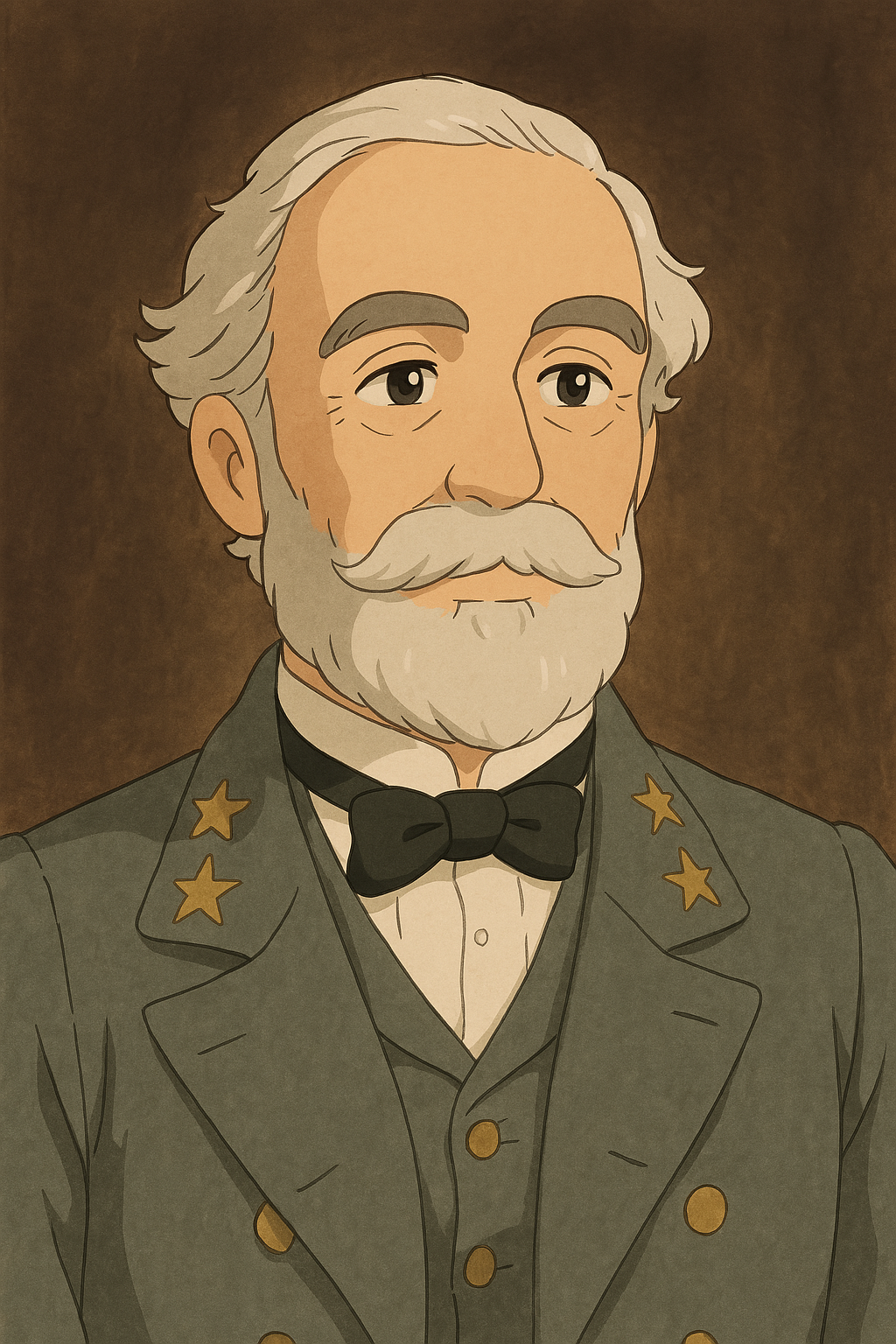
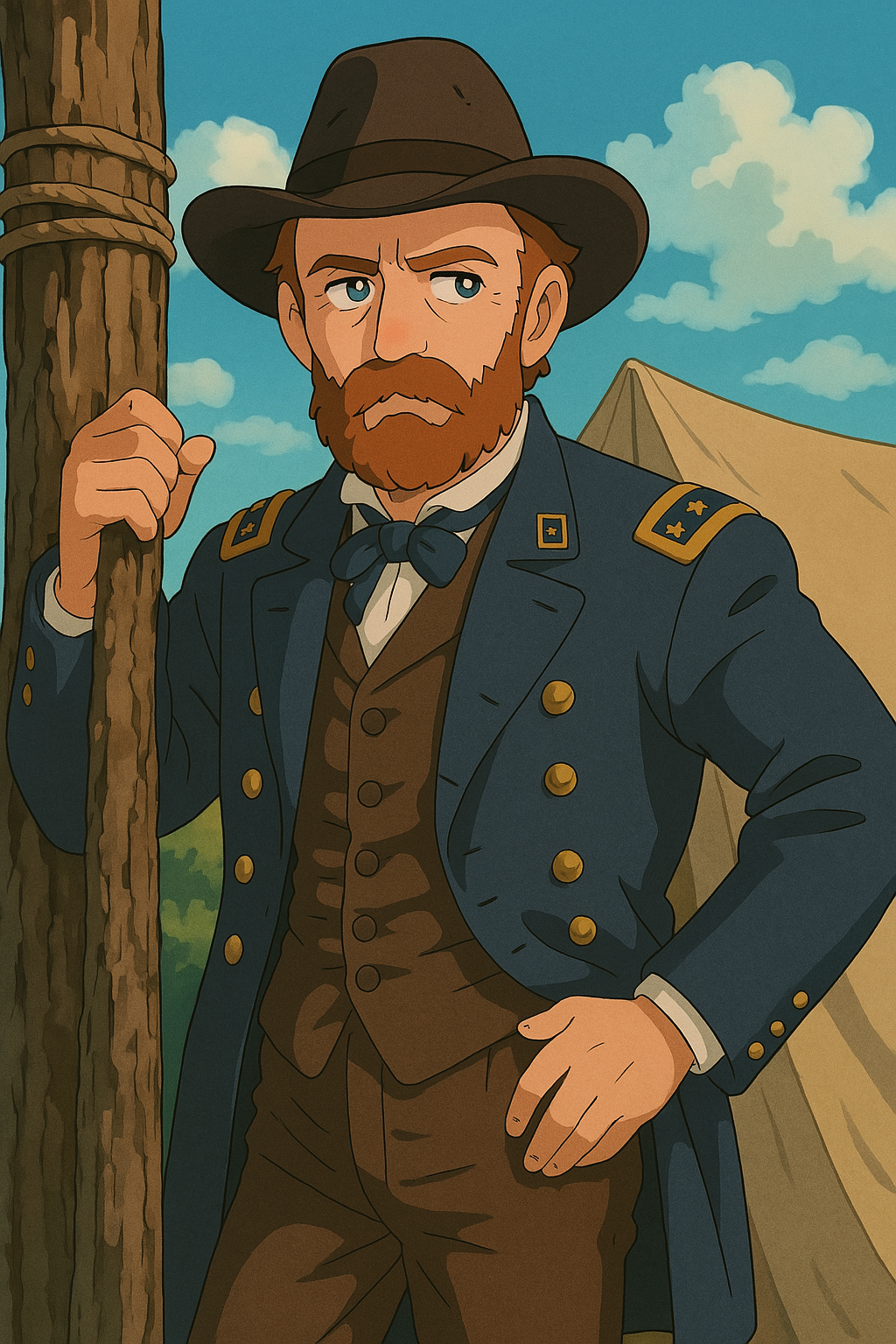
Lee arrived first, dressed in a full-dress uniform with sash and sword. Though exhausted, he bore himself with the calm dignity of a man meeting destiny face-to-face. Grant, on the other hand, arrived in a muddy private’s tunic. His only insignia of rank were the stars on his shoulders.
The meeting was awkward at first. Grant spoke of old acquaintances and the Mexican War. Lee, ever formal, guided the conversation to its purpose.
Grant offered generous terms:
- Officers would be allowed to keep their sidearms.
- All men could return home without fear of prosecution, provided they observed the terms of parole.
- Soldiers could take their horses with them — essential for spring planting.
Lee accepted. “This will have a very happy effect upon my army,” he said. The surrender documents were drafted and signed. Grant’s aide, Ely Parker, a Seneca Native American, penned the official copy. Lee noted his heritage and remarked, “It is good to have one real American here.” Parker replied, “We are all Americans.”
As Lee departed the McLean house, Union troops began to cheer. Grant immediately ordered silence. “The Confederates were now our countrymen,” he said. There would be no gloating.
Two days later, April 12, the formal surrender ceremony took place. Union Brigadier General Joshua Lawrence Chamberlain was chosen to receive the Confederate arms. As John B. Gordon’s men approached, Chamberlain ordered his men to salute. Gordon returned the gesture, raising his sword in acknowledgment. It was an act of deep respect, soldier to soldier — not for the cause, but for the courage.
Many Confederates wept as they laid down their arms. Some stared at the ground, unable to lift their eyes. Others saluted. The war, at last, was over — though few could grasp it.
Appomattox did not end all fighting, but it ended the Confederacy in spirit and in fact. Other surrenders followed — Johnston in North Carolina, Taylor in Alabama, Kirby Smith in the Trans-Mississippi. But none held the symbolic weight of Lee’s surrender.
In that quiet parlor, something greater than arms was laid down. The Confederacy had been a rebellion born in pride and sustained by blood. Now, with the stroke of a pen, it yielded to a future it could not control.
Lee would live only a few more years, his fame intact, his silence dignified. Grant would rise to the presidency, burdened by scandal but unshaken in his commitment to reunifying the country. Both men understood the cost of what they had endured. Neither would glorify it.
The war had tested the Constitution, shattered families, and claimed more than 620,000 lives. It left behind scars not only on bodies and battlefields, but on the American soul.
In surrender, Lee preserved what remained of his army, his people, and — perhaps unknowingly — the possibility of reunion. He could have chosen chaos, but he chose closure. Grant could have humiliated his adversary, but he chose mercy. Lincoln, days from death, had the peace he so desperately prayed for.
And what did it all mean?
It meant that principle and pragmatism had found rare harmony. That the dignity of surrender, freely offered and graciously received, could be the first step toward reconciliation.
The men who fought on both sides would spend the rest of their lives rebuilding, remembering, and trying to understand what it all meant. For them, the war never truly ended — it simply faded into memory, leaving behind echoes and epilogues.
But Appomattox stands still — not only as the end of a great rebellion, but as a moment when a nation, weary and wounded, took its first step back from the abyss.
And perhaps that is enough.
“The war is over,” said Grant. “The rebels are our countrymen again.”
And so they were.
And so they remain.




 DAVE DOES HISTORY
Leave a comment