
Hey, folks, let’s talk about March 7th—not just any March 7th, but two of them that hit America like a freight train, over a century apart. Picture this: 1850, a senator stands up in Washington, pleading for unity over a nation tearing itself apart over slavery. Then, fast forward to 1965, and you’ve got brave folks in Selma, Alabama, marching across a bridge into history—and into a brutal showdown—for the right to vote. These two days, both landing on March 7th, aren’t just footnotes in a history book. They’re a double-barreled blast of America wrestling with its soul. Daniel Webster’s “Seventh of March” speech propped up the shaky Missouri Compromise, trying to keep the Union from splintering, but it set the stage for a moral reckoning that erupted on that bridge in Selma. Today, we’re diving into how one day’s compromise fueled another day’s courage—and what it all means for us in 2025.
For more on Bloody Sunday ’65, Check out the History Diaries…
Let’s set the scene: it’s 1850, and America’s a powder keg. The North’s free states and the South’s slave states are glaring at each other across a growing divide. Back in 1820, the Missouri Compromise tried to slap a Band-Aid on it—drawing a line to keep slavery contained. But by 1850, that Band-Aid’s peeling off fast, and the Compromise of 1850 is the desperate next step to hold this country together. Enter Daniel Webster, a Massachusetts senator and a big name who’d spent years railing against slavery. On March 7th, he steps up to the Senate floor—not as a Northerner, not as an abolitionist, but as an American begging for the Union to survive.
Webster’s speech is a gut punch. He says, “I speak to-day for the preservation of the Union. ‘Hear me for my cause.’” He’s not mincing words: the country’s in chaos, “the imprisoned winds are let loose,” and he’s terrified of what happens if it all falls apart. He warns secession’s no picnic—it’s war, plain and simple. “Peaceable secession! Sir, your eyes and mine are never destined to see that miracle.” But here’s the kicker: he backs the Fugitive Slave Act, telling Northern states to quit dodging their duty and hand over escaped slaves. To him, unity trumps everything—even the moral rot of slavery.
The North loses its mind. Webster, once their hero, is now a traitor in their eyes. Abolitionists feel stabbed in the back. The South? They’re fine with it—slavery’s safe for now. But Webster’s not blind. He knows slavery’s a mess, admitting the North sees it as “a wrong” while the South’s raised to treat it as normal. He’s stuck in the middle, trying to balance a nation’s survival against its sins. The speech buys time, sure, but it deepens the rift. It’s a moral dodge that’ll haunt us later.
Now, leap forward to 1965. Slavery’s long gone, but its ghost is alive and kicking in the Jim Crow South. African Americans are fighting tooth and nail for voting rights, and Selma, Alabama, is ground zero. Governor George Wallace and his cronies are digging in, keeping black folks from the polls with every trick in the book. On March 7th, about 600 marchers—led by John Lewis and Hosea Williams—set out from Selma to Montgomery to demand justice. They’re not armed, just determined.
Then they hit the Edmund Pettus Bridge. Alabama state troopers are waiting—clubs, tear gas, the works. It’s a massacre. The marchers get beaten bloody, and the nation watches in horror on TV. “Bloody Sunday” isn’t just a name—it’s a scar. John Lewis, a young firebrand, takes a skull-cracking hit but doesn’t back down. The outrage explodes—folks from coast to coast are done with this nonsense. President Lyndon Johnson steps in, federal troops guard a second march that finally makes it to Montgomery, and boom—the Voting Rights Act of 1965 is born. It’s a game-changer, smashing barriers that kept millions from voting. That bridge became a turning point—not just for Selma, but for America.
So how do we get from Webster’s podium to that bridge? It starts with the Missouri Compromise and the 1850 deal Webster championed. They were Faustian bargains—trading justice for a shaky peace. Webster and his crew saw slavery as a problem to kick down the road, not fix. The Fugitive Slave Act he pushed? It lit a fire under abolitionists, making them louder and fiercer. But delaying the fight didn’t kill it—it festered. After the Civil War, Reconstruction flopped, and Jim Crow slithered in, locking black Americans in a new cage.
By 1965, the Civil Rights Movement was the reckoning Webster’s generation dodged. Bloody Sunday wasn’t just about voting—it was about finishing what emancipation started. March 7th, 1850, was a statesman choosing unity over justice. March 7th, 1965 was citizens saying, “Enough’s enough”—justice over forced unity. That pivot from compromise to action is America growing up, one painful step at a time.
Here we are in 2025, and these two March 7ths are screaming at us. Webster’s logic—delay the tough stuff to keep the peace—stretched out suffering and kicked the can to Selma. What are we postponing today? Immigration? Economic fairness? Voting rights are still a hot potato—look at the fights over ID laws and mail-in ballots. Webster feared disunion; Civil Rights heroes feared sitting still. History doesn’t reward the timid—it lifts up the folks who charge forward, even when it’s messy.
Democracy’s a beast. It demands we wrestle with our principles, not just nod at them. Those marchers in Selma didn’t compromise—they bled for what’s right. Webster’s heart was in the Union, but his caution cost us. Today, we’ve got to ask: are we building a stronger chain for liberty, or just patching up old links?
From 1850 to 1965 to now, America’s been a work in progress. Webster’s speech and Bloody Sunday show us justice isn’t a straight line—it’s a fight every generation’s got to pick up. We’re not done yet. Whether we choose to compromise, or push for progress, that’s on us. So, let’s honor both March 7ths—not as dusty history, but as a call to keep this nation’s promise alive.



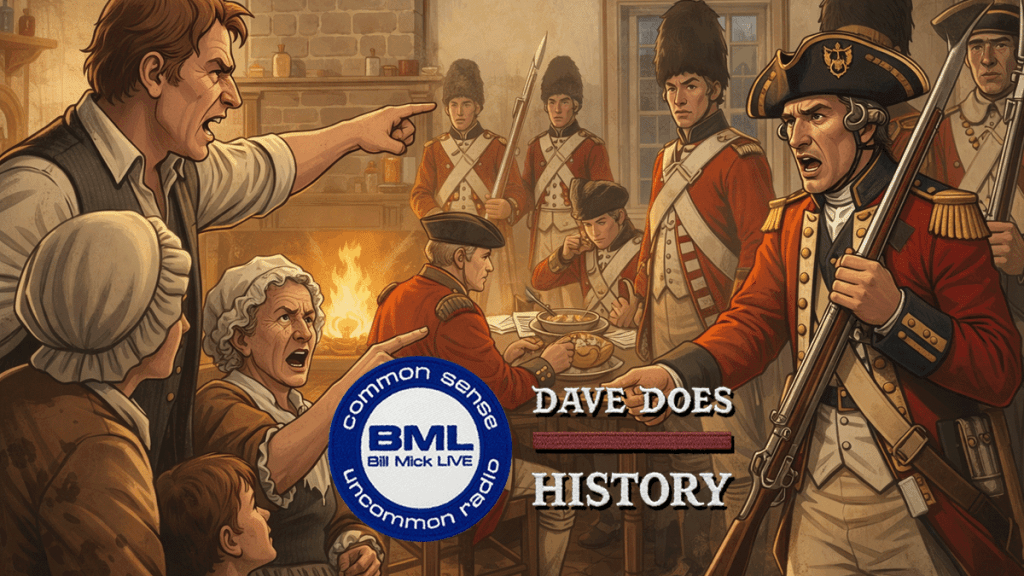
 DAVE DOES HISTORY
Leave a comment