
Boston in 1770 was a city on edge. The streets were thick with frustration, simmering anger, and a growing sense of rebellion. British troops had been stationed in the city for two years, supposedly to keep order, but in reality, they were there to enforce unpopular taxes and remind the colonists who was in charge. The Townshend Acts, which taxed everyday goods like paper and tea, had enraged the people, leading to protests, boycotts, and outright defiance. Tensions hit a breaking point in late February when an 11-year-old boy, Christopher Seider, was shot and killed by a British customs official during a protest. His funeral became a massive public event, fueling the outrage of working-class men, sailors, and dockworkers—the people who kept Boston alive. And among them was Crispus Attucks.
Attucks was a man of African and Native American descent, a sailor and dockworker who knew what it meant to live on the margins. Some say he was a runaway slave, others argue he was a free man, but what mattered that night was that he was in the thick of it, standing up to British troops in a moment that would echo through history.
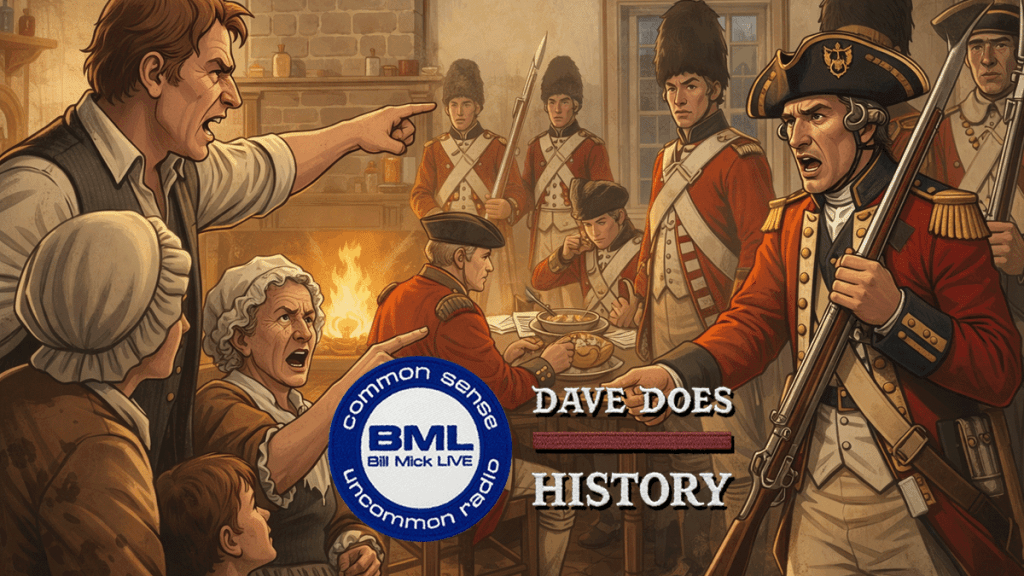
On the night of March 5, 1770, Boston’s tension finally snapped. It started small—a British sentry, Private Hugh White, was standing guard outside the Custom House on King Street when a teenage apprentice, Edward Garrick, started taunting a British officer about an unpaid bill. White told the boy to show some respect, and when Garrick wouldn’t back down, White cracked him over the head with his musket. That was all it took. A crowd began to gather, growing from a handful of curious onlookers to an angry mob. Church bells rang out—usually a fire alarm—but on this night, it was a call to action. People poured into the streets. And at the front of it all was Crispus Attucks.
Described by some witnesses as holding a large piece of wood, Attucks was in the lead as the crowd confronted the British soldiers. Captain Thomas Preston arrived with reinforcements—eight men from the 29th Regiment of Foot, muskets loaded, bayonets fixed. The crowd, now numbering in the hundreds, wasn’t about to be intimidated. They shouted, hurled insults, snowballs, and whatever debris they could find. “Fire, if you dare!” some taunted, daring the soldiers to act.
Then, chaos. Private Hugh Montgomery was struck by something—an object thrown from the crowd. He lost his balance, fell, and when he got back up, he fired his musket. The first shot. That was all it took. The other soldiers, panicked and untrained for riot control, followed suit. It wasn’t an organized volley, just a ragged, frenzied burst of gunfire. And the first man to fall was Crispus Attucks—two musket balls ripped through his chest, killing him instantly. Samuel Gray and James Caldwell died on the spot as well. Seventeen-year-old Samuel Maverick, hit by a ricocheting bullet, died the next day. Patrick Carr, the final fatality, clung to life for two weeks before succumbing to his wounds. Eleven others were injured in the barrage.
When the smoke cleared, the soldiers stood frozen, stunned by what they had just done. The crowd, momentarily shocked, erupted in cries of horror and rage. The massacre had lasted only moments, but its impact would last forever. Acting Governor Thomas Hutchinson arrived, desperately trying to calm the situation. He promised an investigation, pleaded for people to go home. But it was too late—the news spread like wildfire. The British soldiers were arrested the next morning, including Captain Preston. Patriot leaders like Samuel Adams and Paul Revere wasted no time in shaping the story. Revere’s engraving of the massacre, though not entirely accurate, painted the British as cold-blooded murderers. John Adams, future president, defended the soldiers in court, arguing that they had fired in self-defense. Six were acquitted. Only Montgomery and Matthew Kilroy were convicted of manslaughter, sentenced to nothing more than branding on the thumb.
Crispus Attucks and the other victims were buried in the Granary Burying Ground, a striking decision in an era when Black and white citizens were rarely laid to rest together. In the years that followed, Attucks became a powerful symbol. Abolitionists in the 19th century embraced his legacy, arguing that Black Americans had played a role in the country’s fight for freedom from the very beginning. In 1888, Boston erected a monument in his honor, depicting him at the center of the struggle.
The Boston Massacre didn’t start the American Revolution, but it set the stage. The killing of unarmed colonists by British troops only added fuel to the fire of rebellion. Within five years, war would break out. Within a decade, America would be independent. And the first man to die in that struggle was someone who had lived his whole life on the edges of society, yet in death, became one of its greatest symbols.
Crispus Attucks wasn’t a politician. He wasn’t a general. He wasn’t even a recognized leader. But that night, he stood his ground. He faced down British muskets and refused to back down. And in that moment, he became something greater—he became the first to fall in the fight for what would one day become the United States of America.


 DAVE DOES HISTORY
Leave a comment