
If you listened to our Dave Does History on Bill Mick Live show a few weeks ago, you’ll remember we took a deep dive—scratch that, we thoroughly examined—the election of 1800 and the infamous “Midnight Judges” of John Adams. That was a story of political maneuvering, backroom deals, and a bitter transfer of power between two fiercely opposed factions. But if that saga was the opening act, today we’re covering the dramatic conclusion—the moment when the Supreme Court seized its greatest power and forever changed the balance of American government. This is the case of Marbury v. Madison, and if you think it’s just a dusty legal ruling from 1803, think again.
This Supreme Court case is the reason we live under a system where nine unelected justices can strike down laws passed by Congress and signed by the president. It established the principle of judicial review, giving the Supreme Court the final say on what is and isn’t constitutional. That’s a power so enormous that it shapes nearly every major legal and political issue we face today. Abortion, gun rights, civil rights, executive power—you name it, Marbury v. Madison made it possible for the Court to rule on it. And it all started with a man named William Marbury, a piece of undelivered paperwork, and a very shrewd Chief Justice named John Marshall.
Here’s the setup: In the final hours of his presidency, John Adams, still seething over his election loss to Thomas Jefferson, appointed a slew of Federalist judges to the courts in a last-ditch effort to secure his party’s influence. These so-called “Midnight Judges” included William Marbury, who was promised a position as a justice of the peace in Washington, D.C. But before he could take office, Adams was out, and Jefferson was in. Jefferson’s new Secretary of State, James Madison, refused to deliver Marbury’s official commission. So Marbury sued, demanding that the Supreme Court force Madison to hand over his appointment.
This put Chief Justice John Marshall in a tough spot. If he ruled in favor of Marbury and ordered Jefferson’s administration to comply, Jefferson could simply ignore the ruling, weakening the Court’s authority. If he ruled against Marbury, it would look like the Court was submitting to political pressure. Instead, Marshall pulled off a legal masterstroke: he ruled that while Marbury did have a right to his commission, the law he was using to demand it—the Judiciary Act of 1789—was actually unconstitutional. With that ruling, Marshall handed Jefferson a political win while simultaneously cementing the Supreme Court as the ultimate interpreter of the Constitution.
And just like that, the Supreme Court gained the power to strike down laws. A move that was bold, unprecedented, and—depending on your perspective—either the greatest safeguard of American democracy or the beginning of an unelected branch of government becoming too powerful.
So what does Marbury v. Madison mean for us today? That’s exactly what we’re diving into. Strap in, because this case didn’t just decide one man’s fate—it decided the fate of constitutional law itself.



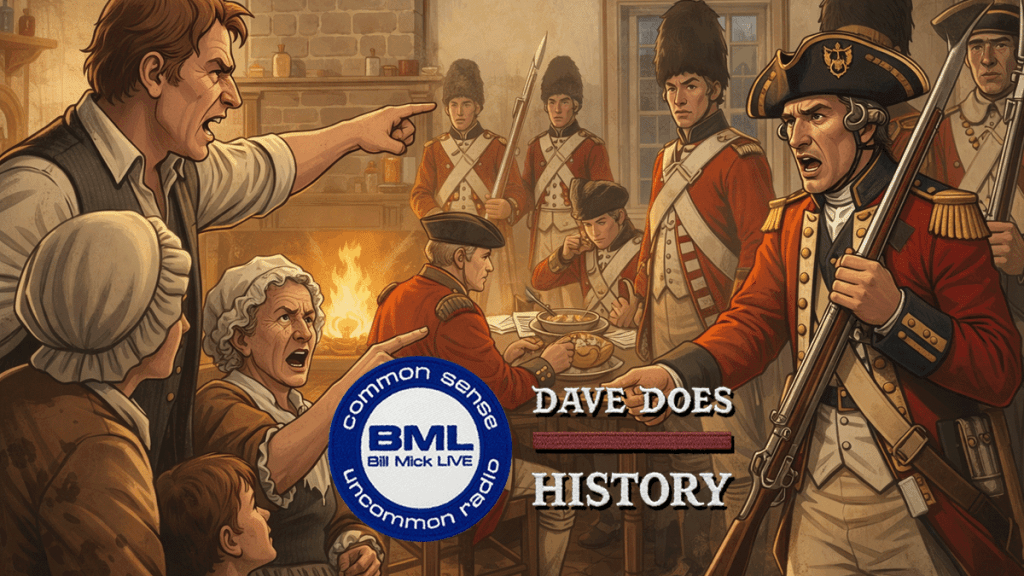
 DAVE DOES HISTORY
Leave a comment