
 In this episode of Dave Does History, we delve into one of the most pivotal and dramatic standoffs in early American history: the Nullification Crisis of 1832-1833. This was no ordinary political disagreement—it was a high-stakes showdown that brought the United States to the brink of disunion. At the center of it all were two towering personalities: President Andrew Jackson, the tough-as-nails Tennessean devoted to preserving the Union at all costs, and John C. Calhoun, the fiery South Carolinian and Vice President turned champion of states’ rights and nullification.
We’ll explore the roots of the crisis, from the controversial Tariff of Abominations in 1828 to South Carolina’s bold declaration of nullification and threats of secession. Witness Jackson’s unwavering response, including his famous “Proclamation to the People of South Carolina” and his support for the Force Bill. And don’t miss the behind-the-scenes negotiations led by the “Great Compromiser” Henry Clay, whose efforts helped steer the nation away from the abyss.
Join us as we unpack the personalities, politics, and passions that defined this pivotal moment in American history. Whether you’re fascinated by Jackson’s no-nonsense leadership, intrigued by Calhoun’s fiery rhetoric, or curious about the broader legacy of this crisis, this episode will bring history to life in vivid detail. Perfect for history buffs, casual listeners, and anyone looking to understand the roots of America’s struggles over federal and state power.
The United States in the early 19th century was still a young nation trying to feel its way through adolescence. The War of 1812 was a not-so-distant memory, and the economy was trying to stabilize in a world dominated by shifting global trade and industrial revolutions. But like a family quarrel that erupts after years of simmering tensions, the Union faced one of its first major internal crises in the 1830s. At the heart of this storm was the state of South Carolina, bristling against federal tariffs they believed were not just unfair but outright unconstitutional. This is the story of the Nullification Crisis, a showdown of fiery rhetoric, bold political maneuvering, and a nation standing on the brink of dissolution.
Setting the Stage: The Roots of Tariff Trouble
The trouble began decades earlier, with a question as old as the Constitution itself: just how much power should the federal government wield over the states? By the 1820s, this abstract debate had become painfully real in the realm of economic policy. Tariffs—taxes on imported goods—became a flashpoint. To Northern manufacturers, they were a godsend, shielding fledgling industries from foreign competition. To the agrarian South, which relied on imported goods and exported raw materials, they were nothing short of an economic burden.
The Tariff of 1816, passed in the wake of the War of 1812, was intended to protect American industry, and for a time, it enjoyed broad support. But as tariffs became steeper with the Tariff of 1824, Southern resentment began to brew. By the time the so-called “Tariff of Abominations” was passed in 1828, that resentment had boiled over. This legislation imposed sky-high duties on imported goods, benefiting Northern industry at the expense of Southern economies, which depended on cheap imports and the export of cotton.
South Carolina, in particular, found itself in a uniquely precarious position. Its economy, built almost entirely on cotton and rice, was acutely vulnerable to fluctuations in global markets. Moreover, the state was haunted by fears of slave uprisings—a fear exacerbated by Denmark Vesey’s failed revolt in Charleston in 1822. Economic stress and social anxiety made for a volatile political atmosphere.
To the extent of our ability, we must defend the reserved powers of the states, or we shall sink into a consolidated government, and with it lose our liberty.
– John C. Calhoun
 Enter John C. Calhoun, the fiery South Carolinian who served as vice president under both John Quincy Adams and Andrew Jackson. Calhoun had once supported tariffs but now emerged as their fiercest critic, calling them not only unfair but unconstitutional. Drawing on the Kentucky and Virginia Resolutions of 1798, which had argued that states could nullify federal laws deemed unconstitutional, Calhoun articulated the doctrine of nullification. His South Carolina Exposition and Protest, published anonymously in 1828, laid the groundwork for what was to come: a declaration that South Carolina could simply refuse to enforce federal tariff laws.
The Crisis Unfolds: Firebrands, Toasts, and Forceful Responses
By 1832, the stage was set for a confrontation. Congress passed a new tariff that slightly reduced the rates of the 1828 law, but to South Carolinians, it was too little, too late. On November 24, 1832, a state convention adopted the Ordinance of Nullification, declaring the tariffs of 1828 and 1832 null and void within South Carolina. The state legislature authorized the use of military force to resist federal enforcement of the tariffs, while also threatening secession if the federal government intervened.
Andrew Jackson, a Tennessean with a soldier’s temperament and a deep devotion to the Union, was not about to back down. At a Democratic Party banquet in April 1830, Jackson had famously raised his glass and declared, “Our federal Union: it must be preserved!”—a pointed rebuke to Calhoun, who responded with his own toast to “the Union, next to our liberty, most dear.” Now, as president, Jackson made it clear he would use every tool at his disposal to prevent South Carolina from defying federal authority.
On December 10, 1832, Jackson issued his Proclamation to the People of South Carolina. In no uncertain terms, he declared nullification illegal, unconstitutional, and treasonous. “The laws of the United States must be executed,” he wrote, “I have no discretionary power on the subject.” Jackson hinted that he would send federal troops to enforce the tariffs if necessary, and he threatened to close customs houses in South Carolina’s key ports, such as Charleston, Beaufort, and Georgetown, effectively cutting the state off from international trade.
Congress, meanwhile, backed Jackson by passing the Force Bill in early 1833, granting the president the authority to use military force to ensure compliance with federal laws. This was no idle threat; Jackson had already begun moving troops and ships into position. Yet even as he prepared for confrontation, Jackson signaled his willingness to compromise. With the help of Henry Clay, the consummate dealmaker, Congress also passed the Compromise Tariff of 1833, which gradually reduced tariff rates over the next decade.
Negotiations, Confrontations, and Resolutions
The debates over the Force Bill and the Compromise Tariff were a masterclass in political theater. In the Senate, Daniel Webster, a staunch nationalist, sparred with Calhoun, who defended nullification as a legitimate check on federal overreach. Clay, ever the pragmatic statesman, worked behind the scenes to craft a tariff that would placate South Carolina without undermining federal authority.
The resolution, when it came, was an exercise in face-saving. South Carolina rescinded its Ordinance of Nullification on March 15, 1833, but not without a symbolic parting shot: the state nullified the Force Bill itself, a gesture that underscored its continued belief in the doctrine of nullification. Jackson, for his part, remained convinced that tariffs were merely a pretext for South Carolina’s real aim: disunion and the creation of a Southern Confederacy.
Aftermath and Legacy: Prelude to a Greater Conflict
The Nullification Crisis was resolved, but its scars lingered. Jackson’s decisive response reinforced the primacy of federal authority, but it also exposed deep fissures in the Union. For many Southerners, the crisis underscored their growing sense of alienation and vulnerability in a nation increasingly dominated by Northern interests. For South Carolina, the doctrine of nullification became a blueprint for future defiance, laying the intellectual groundwork for secession in 1860.
Jackson’s belief that nullification was a stalking horse for disunion proved prescient. In the decades that followed, the issue of slavery—rather than tariffs—became the central axis of conflict between North and South. But the political playbook of the Nullification Crisis—state conventions, fiery rhetoric, and threats of secession—would be reprised in the lead-up to the Civil War.
Reflecting on the Nullification Crisis, one cannot help but see it as a tragic prelude. The compromises of 1833 postponed a reckoning, but they did not resolve the underlying tensions that threatened to tear the Union apart. For Jackson, the crisis was a victory for the Union; for South Carolina, it was a bitter reminder of their subordinate position within that Union. And for the nation as a whole, it was a sobering glimpse of the storm that lay ahead.
The Nullification Crisis reminds us that the bonds of union are not self-sustaining. They require vigilance, compromise, and, above all, a shared commitment to the idea that we are stronger together than apart. As we look back on this chapter of American history, we see not just a conflict over tariffs, but a test of the very idea of a United States—a test that, while passed in 1833, would return with a vengeance in the years to come.



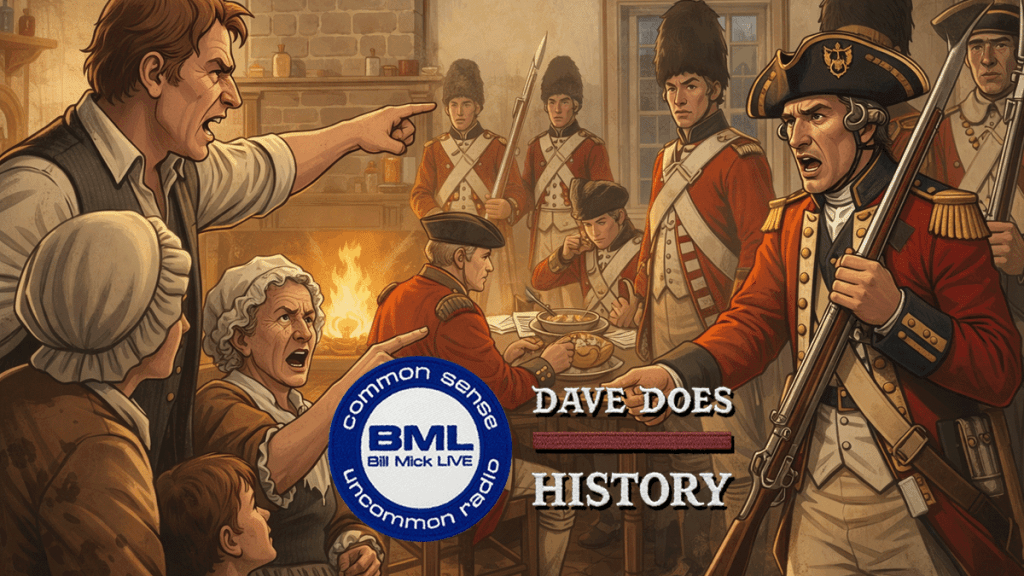
 DAVE DOES HISTORY
Leave a comment