
George Read, born on September 18, 1733, in Cecil County, Maryland, stands as one of the lesser-known yet essential figures of the American Revolution and the Constitutional Convention. His life bridged the colonial and early Republic periods, during which he played a pivotal role in shaping both his home state of Delaware and the nation at large. Despite his significant contributions, he remains largely overlooked, often overshadowed by more prominent figures like George Washington, Thomas Jefferson, and Benjamin Franklin.
Raised in a well-connected family, Read moved to Delaware at a young age and pursued an education in law, eventually rising to prominence as a successful lawyer. In 1763, he was appointed Attorney General of Delaware, a position that launched his long political career. By the time tensions between the American colonies and Britain escalated in the 1760s, Read was already a recognized leader. He was an early critic of British policies, notably opposing the Stamp Act of 1765, and his advocacy for colonial rights began to draw him into the growing revolutionary movement.
However, Read’s political philosophy was marked by caution and pragmatism. While many of his contemporaries pushed for immediate independence, he initially sought reconciliation with Britain, believing that a peaceful resolution might still be possible. He signed the Olive Branch Petition in 1775, hoping it would lead to compromise. But as the revolutionary cause grew inevitable, Read shifted his position, fully committing to the fight for independence. His signature on the Declaration of Independence marks him as one of the few men who tried diplomacy but ultimately embraced the need for a break with Britain.
Read’s contributions to the Revolution went beyond the national stage. He was instrumental in drafting Delaware’s state constitution, which became the first state constitution adopted after the colonies declared independence. Delaware’s transition from a colony to an independent state owed much to Read’s careful legal and political leadership. When the British occupied Wilmington during the war, Read, serving as Delaware’s President (essentially the governor), worked tirelessly to maintain stability in the face of turmoil, ensuring the fledgling state remained intact.
Following the war, George Read continued his public service. His political career resumed in the Continental Congress, where he played a role in shaping the post-Revolutionary governance. Yet his most lasting contributions came in 1787 when he was chosen to represent Delaware at the Constitutional Convention in Philadelphia. It was here that Read truly left his mark on the future of the United States.
At the Convention, Read was a staunch advocate for the rights of small states like Delaware. During debates over representation, he pushed hard for equal representation in the Senate, ensuring that smaller states would not be dominated by larger ones. This effort was crucial in securing the Great Compromise, which led to the bicameral structure of the U.S. Congress. Without Read’s insistence, smaller states might have been sidelined in the new federal government. His contributions at the Convention were not limited to this, as he took part in other key debates over federalism and the balance of powers, always pushing for a system that would protect the sovereignty of individual states within a stronger national framework.
After signing the U.S. Constitution, Read returned to Delaware, where he helped ensure its swift ratification. Delaware became the first state to ratify the Constitution, largely due to Read’s leadership and advocacy. Following the Convention, Read served as one of Delaware’s first U.S. Senators, helping to guide the young nation through its turbulent early years. Later, he returned to state politics, becoming Chief Justice of Delaware, a role in which he served until his death in 1798.
Despite his impressive resume, George Read is not as widely remembered as other Founding Fathers. There are several reasons for this relative obscurity. For one, Read’s personality and political style were cautious and pragmatic. Unlike firebrands like Samuel Adams or Patrick Henry, he preferred to work behind the scenes, carefully weighing decisions and seeking compromise. His initial opposition to independence may have also dimmed his historical legacy, as figures who embraced the revolutionary cause early on tend to receive more recognition.
Additionally, Delaware’s small size meant that it had less political influence than states like Virginia or Massachusetts, further pushing Read to the margins of historical memory. He was also overshadowed by his more vocal contemporaries at the Constitutional Convention, such as James Madison and Alexander Hamilton, whose sweeping visions for the new government often took center stage. Yet, despite his lack of fame, Read’s role in securing equal representation for small states and shaping the early American legal framework was indispensable.
George Read’s life offers a valuable reminder that history often remembers the loudest voices but frequently overlooks those who worked diligently in the background to ensure lasting success. His legacy, while quieter than some, is no less critical. He was a man of moderation and balance, guiding both Delaware and the new nation through tumultuous times. Today, though his name might not appear in as many textbooks or public memorials, George Read’s impact on the American Revolution, the Constitutional Convention, and the early Republic endures. His contributions should remind us that the creation of a nation was not only the work of the famous but also of figures like Read, who worked behind the scenes to ensure the success of the American experiment.



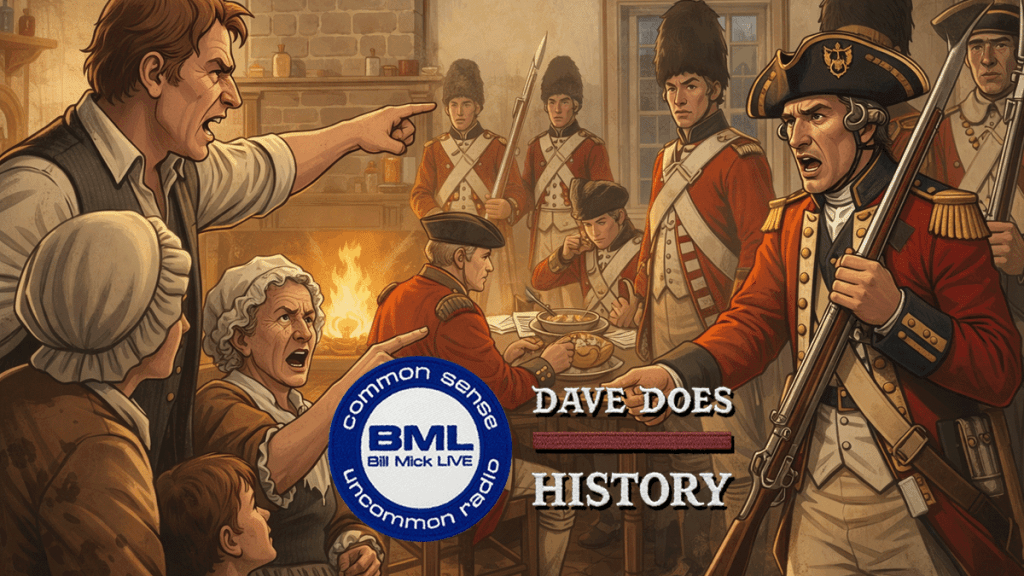
 DAVE DOES HISTORY
Leave a comment