
The American Revolutionary War, a conflict that would forever alter the course of history, was in its early stages by the summer of 1775. The relationship between the American colonies and the British Crown had reached a boiling point, with skirmishes breaking out and political tensions mounting. It was in this fraught atmosphere that King George III issued the Proclamation of Rebellion on August 23, 1775. This proclamation was not merely a declaration; it was a pivotal moment that escalated the conflict from a colonial uprising to a full-scale war for independence. In this article, we will delve into the background, content, and reception of the proclamation, both in England and the American colonies, to understand its significance in the broader context of the American Revolution.

The roots of the American Revolution can be traced back to the aftermath of the French and Indian War (1754-1763), which left Britain with a staggering national debt. To recoup some of the costs, the British government decided to impose a series of taxes and regulations on the American colonies, including the infamous Stamp Act of 1765 and the Townshend Acts of 1767. These measures were deeply unpopular in the colonies, where many colonists felt they were being unfairly taxed without proper representation in Parliament. The rallying cry of “no taxation without representation” began to echo through the streets and meeting halls of the American colonies.
In response, the colonies organized boycotts, protests, and, eventually, the First Continental Congress in 1774. The colonial resistance was not just about taxes; it was about autonomy, rights, and a growing sense of a separate identity. The tension between the colonies and the British government continued to build, with neither side willing to back down.
The first real spark of the Revolutionary War was ignited on April 19, 1775, with the battles of Lexington and Concord. These skirmishes, though small in scale, marked the beginning of open armed conflict between British troops and colonial militias. The colonial response was swift and resolute: the Second Continental Congress convened and created the Continental Army, appointing George Washington as its commander-in-chief.
As the summer of 1775 progressed, more clashes occurred, including the Battle of Bunker Hill, which, despite being a costly victory for the British, demonstrated that the colonial forces were capable of standing up to the might of the British Empire. The colonies were moving closer to the brink of full rebellion, and it was against this backdrop that King George III made his proclamation.
On August 23, 1775, King George III issued a formal Proclamation of Rebellion in response to the escalating violence and defiance in the American colonies. The proclamation, addressed to “all Our loving subjects,” declared that the colonies were “in a state of open and avowed rebellion.” The King framed the actions of the colonists as “treasonous,” accusing them of attempting to “destroy the legal authority of the government.”
The proclamation was a clear signal that the King viewed the conflict not as a series of isolated incidents or mere protests but as a concerted effort to overthrow British rule. The language used in the proclamation was stern and uncompromising, emphasizing the Crown’s determination to suppress the rebellion by force if necessary. The King sought to justify the use of military power to quell the uprising, portraying it as a necessary step to maintain order and uphold the law.
The Proclamation of Rebellion did more than just condemn the actions of the colonists; it also called upon all loyal subjects of the Crown to take up arms against the rebels. It urged loyalists in the colonies to resist the rebellious forces and warned that anyone who continued to support the rebellion would be subject to severe consequences, including punishment for treason.
The proclamation also underscored the role of the British military and loyalist forces in enforcing the Crown’s authority. It was a call to arms, not just for soldiers, but for all British subjects who remained loyal to the King. The message was clear: there would be no compromise, and the rebellion would be crushed by any means necessary.
In England, the Proclamation of Rebellion was met with mixed reactions. The British government and loyalists strongly supported the proclamation, viewing it as a necessary step to restore order in the colonies. For many in the government, the proclamation was a long-overdue assertion of British authority and a clear message that rebellion would not be tolerated.
Public opinion in Britain, however, was more divided. While many supported the King’s stance, seeing the colonists as ungrateful subjects who needed to be brought back in line, there were others who sympathized with the colonial grievances. The British press played a significant role in shaping public perception, with newspapers and pamphlets either praising the King’s resolve or criticizing the harshness of his measures.
Despite the strong support for the proclamation among loyalists, there was significant criticism from those who believed that reconciliation was still possible. Some members of Parliament, as well as prominent figures in British society, argued that the proclamation would only further alienate the colonies and make a peaceful resolution more difficult.
Notable critics, such as Edmund Burke, warned that the use of force would only deepen the rift between Britain and the colonies and that the best course of action was to address the legitimate grievances of the colonists. The proclamation also intensified debates within British politics about the wisdom of the government’s policies toward the colonies, revealing the growing divide over how to handle the escalating crisis.
In the American colonies, the Proclamation of Rebellion had a galvanizing effect. The Continental Congress, already moving towards a break with Britain, responded with defiance. Rather than cowing the colonists, the proclamation solidified their resolve to resist British rule and increased support for the cause of independence.
The proclamation was widely circulated and discussed in the colonies, often with accompanying editorials and speeches that condemned the King’s actions. Newspapers and pamphlets, such as those written by Thomas Paine and other colonial leaders, used the proclamation as evidence that the Crown was determined to strip the colonies of their rights and subjugate them by force. This narrative helped to rally public opinion in favor of the rebellion and pushed more colonists towards the idea of full independence.
The Proclamation of Rebellion marked a turning point in the conflict, transforming what had been a series of disputes and skirmishes into an all-out war for independence. With the proclamation, the colonies were no longer seeking to negotiate with the Crown; they were preparing for a protracted struggle to free themselves from British rule.
The impact of the proclamation was profound. It helped to unify the colonies in their resistance, leading to increased recruitment for the Continental Army and greater cooperation among the colonies. It also influenced the drafting of the Declaration of Independence in July 1776, as colonial leaders recognized that reconciliation with Britain was no longer possible.
The Proclamation of Rebellion issued by King George III on August 23, 1775, was a defining moment in the American Revolution. It marked the point of no return for both Britain and the American colonies, setting the stage for a conflict that would ultimately lead to the birth of a new nation. The proclamation’s stern language and call to arms made it clear that the Crown would not tolerate rebellion, but instead of quelling the uprising, it only strengthened the resolve of the colonists to fight for their independence.
In England, the proclamation deepened the divisions over how to handle the colonies, while in America, it unified the colonists in their pursuit of liberty. The legacy of the Proclamation of Rebellion endures as a testament to the power of resistance and the determination of a people to fight for their rights, even in the face of overwhelming odds.
References
– Middlekauff, Robert. *The Glorious Cause: The American Revolution, 1763-1789*. Oxford University Press, 2005.
– Ferling, John. *Almost a Miracle: The American Victory in the War of Independence*. Oxford University Press, 2007.
– Wood, Gordon S. *The American Revolution: A History*. Modern Library, 2002.
– Bailyn, Bernard. *The Ideological Origins of the American Revolution*. Harvard University Press, 1967.
– Paine, Thomas. *Common Sense*. 1776.



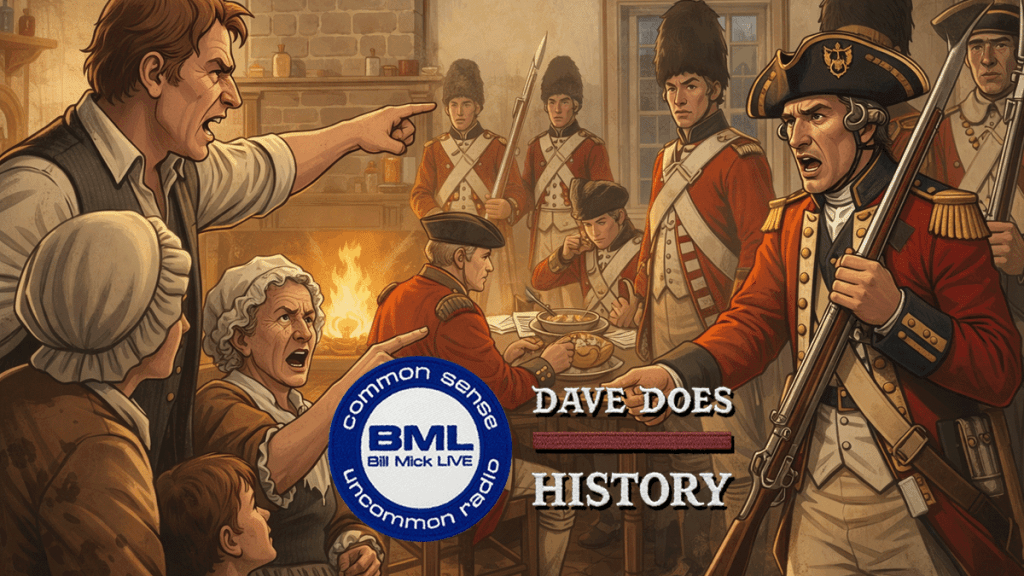
 DAVE DOES HISTORY
Leave a comment