
In the early 19th century, the Pacific region became a hotbed of colonial ambitions, with various powers vying for influence and control. Among these, the Russian-American Company sought to expand its reach, leading to an audacious but ultimately failed attempt to conquer the Hawaiian Islands. This episode, led by George Anton Schaffer, serves as a fascinating chapter in the history of colonialism and international relations.
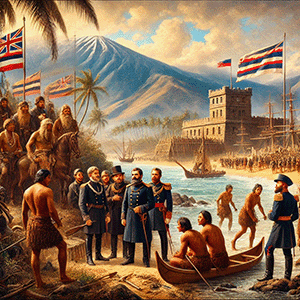
George Anton Schaffer was born in the Kingdom of Prussia and later became a physician. His adventurous spirit and professional skills led him to the service of the Russian-American Company, an organization dedicated to Russian expansion in North America and the Pacific. Schaffer’s ambition and the strategic objectives of his employer set the stage for his mission to Hawaii.
The Russian-American Company, established in the late 18th century, played a crucial role in expanding Russian influence in North America, particularly in Alaska. With imperial ambitions driving their actions, the company sought to extend its reach into the Pacific. The Hawaiian Islands, situated strategically between Asia and the Americas, became a target for these ambitions, promising a valuable base for trade and military operations.
In 1815, George Anton Schaffer embarked on his mission to the Hawaiian Islands, arriving with the intention of establishing a foothold for Russia. He initially found a warm reception from King Kamehameha I and the local chiefs, who were intrigued by the potential benefits of aligning with a powerful European nation. Schaffer managed to secure permission to build a fort on the island of Kauai, laying the groundwork for his ambitious plans.
Schaffer’s strategy involved leveraging local conflicts and the promise of Russian protection to gain influence. He entered into agreements with Hawaiian leaders, promising military support and trade benefits. His actions included establishing Fort Elizabeth on Kauai and attempting to assert Russian control over the islands. Despite some initial successes, Schaffer’s efforts were marred by miscommunication and overreaching ambitions.
Resistance to Schaffer’s plans emerged from various quarters. Hawaiian chiefs grew wary of his intentions, leading to increasing tensions. Additionally, the Russian-American Company faced internal challenges, including limited resources and logistical difficulties in maintaining a presence so far from its base of operations. Internationally, other colonial powers, particularly Britain and the United States, viewed Russia’s actions with suspicion and took steps to counteract them.
Several factors contributed to the failure of Schaffer’s conquest attempt. The most significant was the growing resistance from Hawaiian leaders, who united against the perceived threat to their sovereignty. A pivotal moment came when King Kamehameha I withdrew his support, leading to the collapse of Schaffer’s agreements. The Russian-American Company, recognizing the futility of continued efforts, ordered Schaffer to withdraw. On July 19, 1817, Schaffer left Hawaii, marking the end of the Russian attempt to conquer the islands.
Schaffer’s failed attempt had lasting implications for both Russian-Hawaiian relations and the political landscape of Hawaii. It underscored the complexities of colonial ambitions and the resilience of local leaders in the face of foreign encroachment. While Schaffer’s efforts did not result in Russian control, they highlighted the strategic importance of Hawaii, influencing future interactions between indigenous leaders and colonial powers. Schaffer himself faded into obscurity, but his audacious endeavor remains a notable episode in the annals of history.
The story of George Anton Schaffer and his failed attempt to conquer the Hawaiian Islands serves as a reminder of the tumultuous era of colonial expansion and the interplay of ambition, resistance, and geopolitical intrigue. It is a testament to the resilience of the Hawaiian people and the complexities faced by colonial powers in their quests for dominance. This historical episode provides valuable lessons on the consequences of overreaching ambitions and the enduring significance of local sovereignty.




 DAVE DOES HISTORY
Leave a comment