
Today I turned in my first assignment for school HST 109 (US History to 1865). We were to write a series of three “reflections” on the subjects we were covering, which were the Columbian Exchange, New Spain, New France and other New Arrivals and the Middle Passage. This was my submission for the third element (the Middle Passage) which has to do with the slave trade. I was captured by the idea of the sailors on the ships who didn’t want to be there, nor did they want – necessarily – to be cruel. But… like other occasions in history, the circumstances overwhelmed many of them.
(AUDIO VERSION)
Alright, let’s delve into a topic that’s both intriguing and deeply unsettling: the sailors who manned the ships of the transatlantic slave trade. As your history teacher for this session, I’m going to take you through a journey that’s not just about dates and facts, but about the human aspect, the stories, and the complex layers of this historical episode.
First off, let’s paint a picture of what life was like on these ships. Imagine being a sailor in the 17th or 18th century. You’re likely from a lower socioeconomic background, possibly an out-of-luck farmer, a down-and-out urbanite, or even a convicted criminal. The sea offers a chance, albeit a perilous one, at earning a living. But here’s the catch: life on these ships is brutal.
The crew is a motley crew, literally. There’s a hierarchy onboard, with the captain and his officers at the top, and then you, the common sailor, right at the bottom. You work long hours, face the constant threat of disease, and, of course, there’s the ever-present danger of the sea itself. It’s tough, it’s grueling, and it’s downright dangerous.
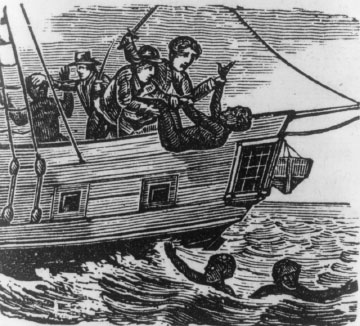
Now, here’s where it gets even more complicated. These ships you’re working on aren’t just any ships. They’re part of the transatlantic slave trade. This means your job isn’t just navigating the treacherous Atlantic; it’s also about managing the enslaved Africans onboard. These are human beings, captured and treated as cargo. The moral implications? Huge and horrifying.
This brings us to a vital point: the moral dilemma faced by these sailors. Some of them might have been abhorred by the trade, but here’s the kicker – they often had little choice. It’s a classic case of survival, where the lines between complicity and coercion blur. It’s easy to judge from our comfortable, modern standpoint, but back then, it was a different story.
Imagine the journey itself. The ‘Middle Passage’, as it was known, was notorious for its cruelty. Sailors are tasked with keeping the ‘cargo’ alive but barely so. The conditions are appalling – overcrowding, disease, and death are rampant. It’s a journey marked by suffering, both for the enslaved Africans and, in a very different way, for the sailors too.
And here’s something we often overlook – the psychological toll on these sailors. Witnessing and partaking in such inhumanity leaves scars, both visible and invisible. Some sailors might have been desensitized, others deeply traumatized. It’s a complex, often overlooked aspect of their lives.
As we reflect on this history, it’s crucial to understand the layers. Yes, these sailors were part of a heinous system. But they were also individuals, caught in the gears of a larger machine, often against their will or moral inclinations. Their story is a stark reminder of the human cost of such cruel chapters in our history.
So, as we wrap up this narrative, let’s remember: history isn’t just about the big names and events. It’s also about these forgotten faces, the sailors of the slave trade. Their story is a complex weave of coercion, survival, and complicity. It’s a tough, uncomfortable history, but one that we need to confront to understand the full spectrum of the human experience.
And there you have it. A peek into the lives of those who manned the ships of the slave trade. It’s a narrative that’s as much about the human condition as it is about historical events. Let’s carry this understanding forward, remembering the past not just in black and white, but in all its complex hues.

 DAVE DOES HISTORY
Leave a reply to viciousoptimist Cancel reply