
The USS Carolina, a revered name among the naval vessels of early American history, met her fate on December 27, 1814, in the swirling mists of the War of 1812. This ship, though not as famed as her larger counterparts, played a critical role in the skirmishes and battles that marked the second war for American independence.
Commissioned in the early years of the war, the USS Carolina was a nimble brig or sloop, part of the burgeoning United States Navy tasked with challenging the dominance of the Royal Navy. Her exact specifications and details are sparse, but like many ships of her time, she would have been armed with several cannons and manned by a dedicated crew, ready to engage in the hit-and-run tactics that American ships had become known for.
The War of 1812 saw the Carolina participating in several key operations. She was involved in disrupting British supply lines, engaging enemy vessels, and supporting American operations on the Great Lakes and along the Atlantic seaboard. Her speed and maneuverability made her a valuable asset in the hit-and-run tactics employed by the United States against the larger, more cumbersome British ships.
The most significant action of the USS Carolina came in the days leading up to the Battle of New Orleans. As British forces prepared to seize New Orleans and control the Mississippi River, the Caroline was part of a small fleet of American ships tasked with delaying their advance. Her mission was to provide critical intelligence and engage in skirmishes that would slow down the British, buying time for General Andrew Jackson to prepare the city’s defenses.
On the fateful day of December 27, 1814, the USS Carolina was anchored in the Mississippi River, where she became a prime target for a British night attack. Under the cover of darkness, British forces launched a surprise assault on the American ships. The Carolina, caught unprepared and outnumbered, fought valiantly but was overwhelmed. After a fierce exchange of cannon fire, she was set ablaze by the British and eventually drifted downstream, a fiery wreck.
The loss of the USS Carolina was a tactical blow to the American forces, but her efforts were not in vain. The delay she caused, along with the other American ships, provided crucial time for Jackson’s preparations. The ensuing Battle of New Orleans became a decisive American victory, one that would resonate as a symbol of American resilience and martial prowess.
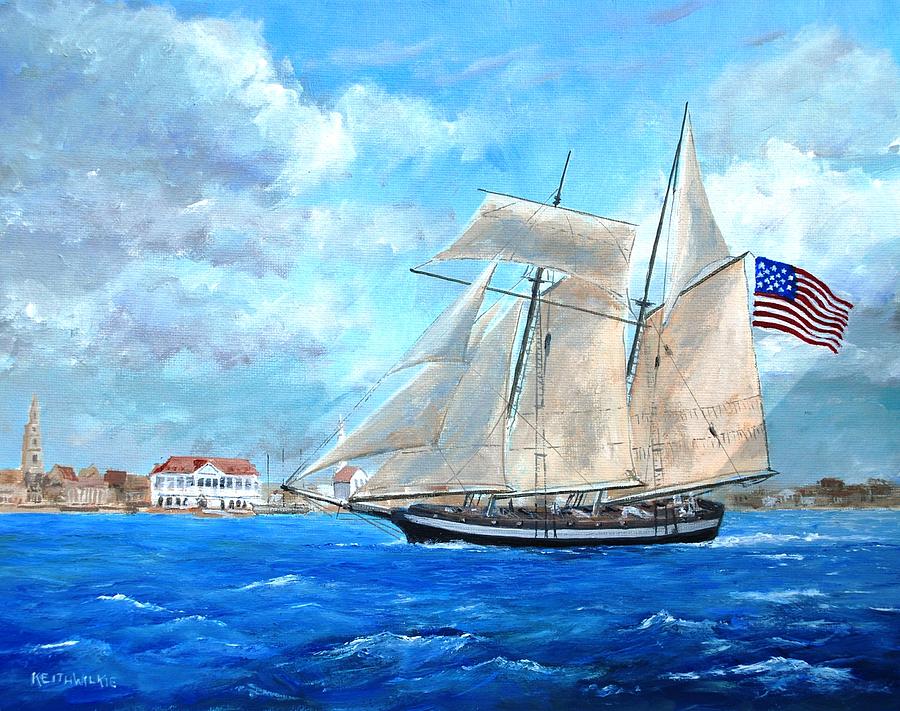
The sinking of the USS Carolina is more than a tale of loss; it is a story of bravery, sacrifice, and the strategic importance of naval power. Her engagement and subsequent destruction demonstrated the high stakes of naval warfare and the critical role that even smaller ships played in the larger conflict.
In the annals of naval history, the USS Carolina might not be the largest or most powerful ship, but her story is emblematic of the fighting spirit and tenacity of the early United States Navy. Her legacy lives on as a testament to the brave sailors who fought against overwhelming odds, helping to secure the young nation’s future and forging a path for the growing American naval tradition.




 DAVE DOES HISTORY
Leave a comment