
The Erie Canal, a marvel of 19th-century engineering and vision, was opened on October 26, 1825. It stands as a testament to America’s ambition to conquer nature, connect distant regions, and fuel economic growth. Here’s a brief journey through its history.
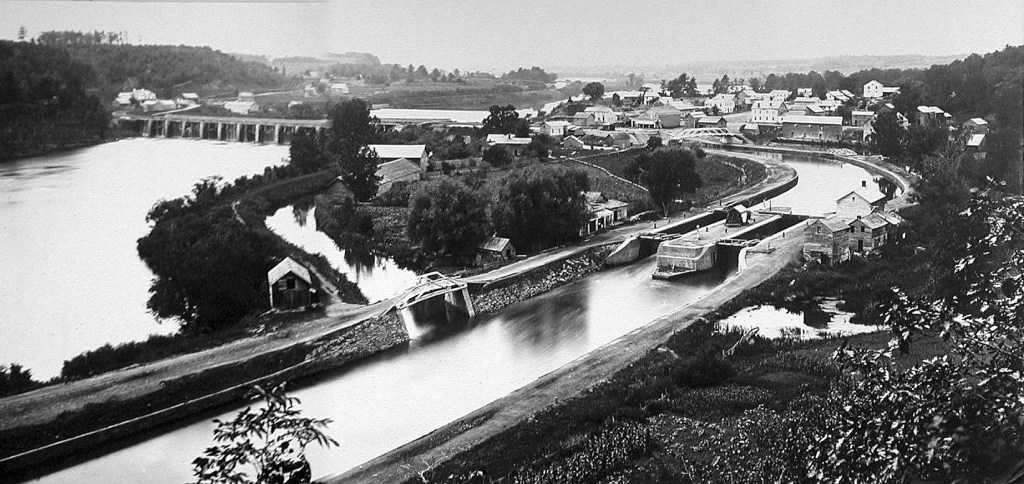
Public Domain
The idea for a waterway connecting the Great Lakes to the Atlantic Ocean was not new. However, the vastness of the endeavor, the challenging terrain, and the high costs involved had long made it seem unfeasible. The vision was to create a navigable water route from Albany, New York, on the Hudson River to Buffalo on Lake Erie, a distance of 363 miles.

Public Domain
DeWitt Clinton, then the Governor of New York, was a staunch supporter of the project. Often mocked as “Clinton’s Ditch” or “DeWitt’s Folly” by skeptics, the canal, once completed, would forever immortalize Clinton’s name.
Construction began in 1817, with thousands of laborers working on the project. These men faced numerous challenges, from malarial outbreaks to the sheer difficulty of removing so much earth without the aid of modern machinery.
Once completed, the Erie Canal had a profound impact on America:
1. Economic Growth: The canal dramatically reduced the cost of shipping goods between the Midwest and the East Coast. This led to a boom in New York City’s economy, cementing its status as America’s premier port and gateway to the Midwest.
2. Settlement: The ease of transportation facilitated by the canal led to rapid westward expansion. Many towns and cities along the canal route, such as Rochester and Syracuse, grew rapidly.
3. Cultural Exchange: The Erie Canal not only transported goods but also ideas and cultures. It became a conduit for the exchange of ideas between the East and the expanding West.
4. Inspiration for Other Projects: The success of the Erie Canal spurred other states to undertake similar infrastructure projects, leading to an era of canal-building across the U.S.
While railroads would eventually overshadow canals as the primary mode of transportation in the 19th century, the importance of the Erie Canal cannot be understated. It transformed the economy of the Northeast and the Midwest, shifted population centers, and played a key role in the rise of New York as an economic powerhouse.
Today, while the original canal has undergone numerous modifications and expansions, it serves as a reminder of American ingenuity and vision. Whether one is taking a leisurely boat ride on its waters or visiting its historic locks, the Erie Canal offers a glimpse into a transformative period in American history.
One of those songs from my elementary school days that I still remember just enough of to drive me nuts…




 DAVE DOES HISTORY
Leave a comment