
Moby Dick is a touchstone of American literature, a tome that has wrestled with the psyche of many readers and scholars for generations. Penned by Herman Melville, it’s more than just a story about a man and a whale; it’s an intricate tapestry of philosophy, obsession, and the human condition. Let’s delve deeper into the background, its publication, reception, and the indelible legacy it has left behind.
Public Domain
Herman Melville, born in 1819 in New York City, led an adventurous life that deeply influenced his writings. Before he penned “Moby Dick,” Melville had sailed the South Seas, lived among the cannibals in the Marquesas Islands, and spent time aboard whaling vessels. These experiences laid the foundation for his exploration into the depths of man’s soul through Captain Ahab’s relentless pursuit of the white whale. The novel transcends the adventure story to become a deep introspective into human obsession, morality, and our place in the vast cosmos.
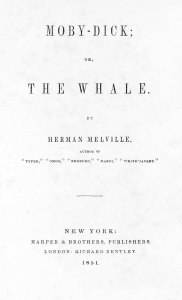
“Moby Dick” was first published in London as “The Whale” on October 18, 1851, followed by its American debut a month later, retaining the title we are familiar with today. Melville had been a known author by then, having found success with earlier novels such as “Typee” and “Omoo.” However, “Moby Dick” marked a departure from his earlier works both in tone and scope. The complexity and depth of the narrative required an equally meticulous approach to its publication.
Contrary to what one might expect from such a monumental piece of literature today, “Moby Dick” was met with mixed reviews upon its initial release. While some lauded its profound depth and innovative narrative structure, many found its dense symbolism and philosophical musings difficult to penetrate. In Britain, some reviews were downright scathing, criticizing its length and perceived tediousness. Sales were also disappointing, and by the time of Melville’s death in 1891, the book had been largely forgotten by the general reading public.
The 20th century, however, witnessed a resurgence of interest in Melville and his magnum opus. Literary scholars and critics began to recognize the genius embedded within its pages. As modernism took root in literature, readers and critics alike started to appreciate the novel’s intricate structure, symbolism, and exploration of the depths of human psyche.
Today, “Moby Dick” is heralded as one of the greatest novels in the American canon. It is studied in schools and universities, dissected by scholars, and appreciated by readers worldwide. The tale of Captain Ahab’s relentless pursuit of the elusive white whale has become emblematic of man’s eternal struggle against the vast unknown, making it a timeless narrative that resonates even in our contemporary age.
In conclusion, “Moby Dick” stands as a testament to Melville’s genius and the ever-evolving nature of literary appreciation. What was once overlooked is now celebrated, reminding us that true art often requires time to be truly understood and appreciated.




 DAVE DOES HISTORY
Leave a comment